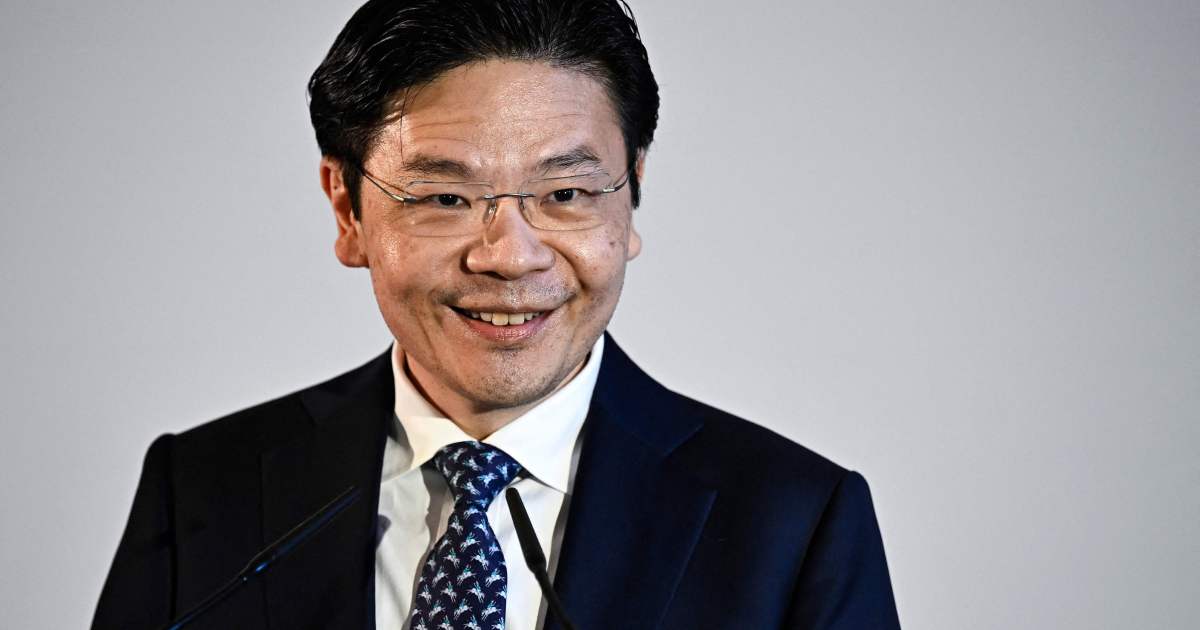
Singapore Prime Minister Lawrence Wong unveiled a sweeping cabinet reshuffle on Wednesday, marking a substantial reconfiguration of the city-state's government structure amid an ongoing transition in its political hierarchy. The announcement came as the administration consolidates leadership positions following the departure of several senior office holders from their roles, signalling a deliberate effort to refresh the republic's top echelons of power.
Wong's decision to orchestrate these changes reflects the natural evolution of Singapore's political succession planning, a carefully managed process that has long characterised the island nation's governance model. Rather than abrupt upheaval, the adjustments represent a methodical repositioning designed to inject new talent into critical portfolios whilst maintaining institutional continuity. This approach aligns with Singapore's institutional preference for predictability and orderly transitions, qualities that have underpinned its political stability over decades.
The cabinet reshuffle carries particular significance for Malaysia and the broader Southeast Asian region, given Singapore's role as a central economic hub and key player in regional diplomacy. Changes in ministerial portfolios often translate into shifts in bilateral relations and regional cooperation initiatives. Malaysian observers monitor such transitions closely, particularly those affecting trade, investment, and cross-border coordination portfolios that directly impact economic ties between the two neighbouring nations.
Recent resignations from political office in Singapore, whilst not uncommon in any political system, had created vacancies that required addressing. Wong's announcement demonstrated the leadership's capacity to refresh its ranks whilst maintaining the meritocratic principles that Singapore has traditionally emphasised in its appointments process. The timing of the reshuffle suggests a proactive approach rather than reactive crisis management, allowing the Prime Minister to shape the narrative around succession and organisational renewal.
The appointment of new political figures to key positions signals Wong's vision for his administration's direction and priorities. In Singapore's political system, such moves typically reflect careful calculations about which individuals possess the requisite competence and public standing to handle sensitive ministerial portfolios. The Prime Minister's choices will likely influence policy directions across critical areas including finance, transport, housing, and foreign relations—domains with direct implications for Singapore's neighbours.
For Malaysia's business community and policymakers, the cabinet changes merit attention insofar as they may affect bilateral engagement mechanisms. Singapore and Malaysia maintain numerous cooperative frameworks covering everything from trade agreements to border management, tourism, and cultural exchanges. A refreshed cabinet in Singapore might bring new perspectives to long-standing issues or introduce different negotiating styles to existing agreements.
The political appointments announced by Wong also reflect generational considerations within Singapore's leadership pipeline. The ruling People's Action Party has long maintained a structured approach to developing future leaders, and this reshuffle appears consistent with that philosophy. By elevating individuals to new responsibilities, the government signals which officials it views as potential future prime ministerial material—a matter of regional interest given Singapore's geopolitical influence.
Wong himself assumed the Prime Minister's office relatively recently, succeeding Lee Hsien Loong in May 2024. His cabinet reshuffle can therefore be interpreted partly as an assertion of his leadership authority and partly as an opportunity to install loyalists in key positions. This mirrors practices in neighbouring democracies, though Singapore's system operates somewhat differently given the PAP's dominant political position and the absence of robust parliamentary opposition.
The reshuffle's emphasis on managing political transitions smoothly underscores Singapore's bureaucratic efficiency and institutional maturity. Unlike situations where sudden resignations precipitate chaotic leadership contests, Singapore's orderly approach allows careful preparation of replacement candidates. This institutional stability has historically been attractive to international investors and serves as a competitive advantage in Singapore's positioning as a premier Asian financial centre.
For Malaysian observers, the cabinet changes merit monitoring particularly in relation to economic and defence portfolios. Singapore's influence on regional trade flows, its role as a financial hub intermediating ASEAN-level transactions, and its defence relationships with regional and extra-regional powers all hinge partly on ministerial-level engagement and capability. Wong's choices for these portfolios will shape the tenor of bilateral and multilateral engagement over coming years.
The announcements also reflect broader generational and demographic shifts within Singapore's political establishment. As senior figures retire or move to advisory roles, younger technocrats and political operatives assume greater prominence. This evolution potentially introduces different priorities and approaches to long-standing regional issues, from maritime security to ASEAN coordination.
The cabinet reshuffle ultimately demonstrates that even in a system as stable as Singapore's, continuous renewal and repositioning remain necessary. Wong's moves suggest confidence in his government's trajectory whilst acknowledging that effective governance requires periodic adjustment of personnel and responsibilities. For the region more broadly, Singapore's demonstrated capacity for orderly political transition provides reassurance of continued stability in a crucial regional economy.

