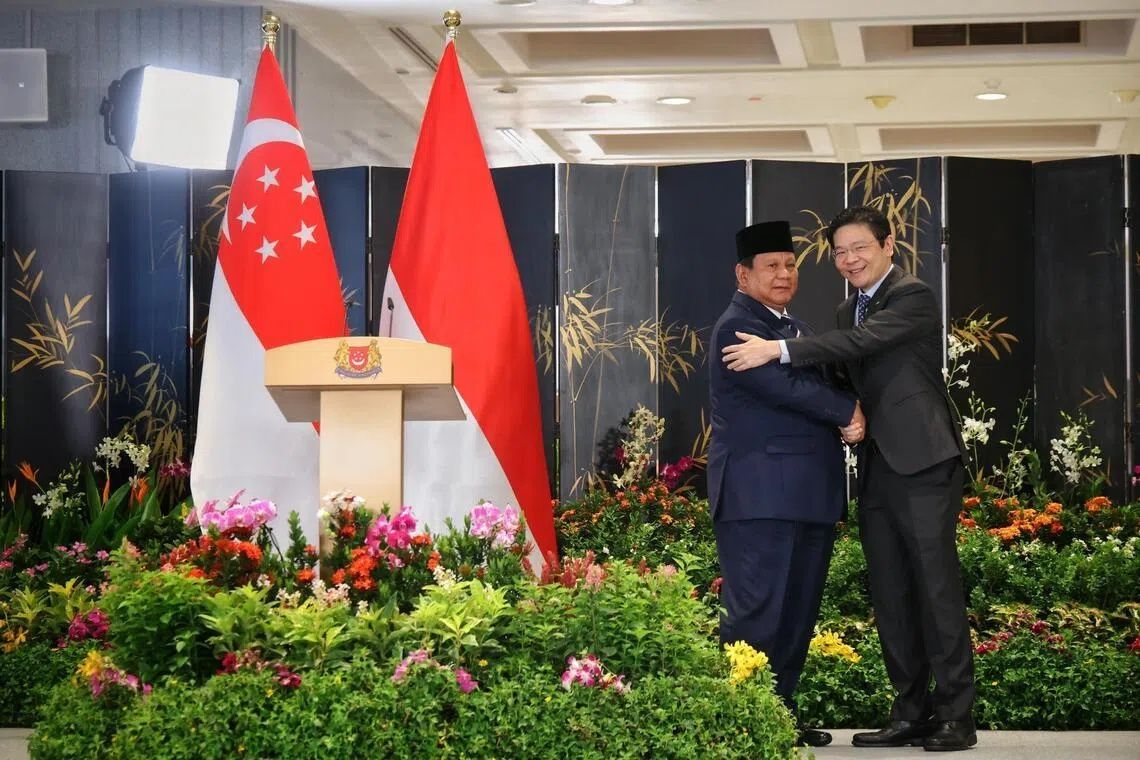
Prime Minister Lawrence Wong heads to Jakarta on Monday for a high-level bilateral meeting that underscores the strategic importance both Singapore and Indonesia place on their relationship. The Singapore-Indonesia Leaders' Retreat, scheduled for July 6, will bring together Wong and President Prabowo Subianto in what the Prime Minister's Office describes as an occasion to reaffirm the enduring partnership between the two Southeast Asian neighbours. This retreat represents the second such formal gathering of the two leaders, with the previous edition taking place in Singapore in June 2025.
The annual retreat serves as the paramount diplomatic platform through which Singapore and Indonesia coordinate their broader agenda. It brings together not only the two national leaders but also their most senior ministerial teams, creating space for comprehensive discussions across economic, security, and social dimensions. By design, these summits allow both governments to take stock of ongoing collaborative projects, chart new directions for cooperation, and align their positions on matters of regional and global significance. The structured nature of this engagement reflects how seriously both capitals treat their bilateral relationship.
Indonesia will host the retreat at the presidential level, with President Prabowo presiding over the discussions. This hosting arrangement mirrors the pattern established in previous years and signals Indonesia's commitment to maintaining momentum in the partnership. The presence of Wong alongside a high-level Singapore delegation demonstrates equal commitment from the island nation's side. The composition of Wong's entourage—including Deputy Prime Minister Gan Kim Yong, Coordinating Minister Chan Chun Sing, Foreign Minister Vivian Balakrishnan, and four additional senior ministers—reflects the comprehensive nature of the bilateral relationship and the range of issues slated for discussion.
While trade, investment, and defence have traditionally anchored the Singapore-Indonesia partnership, both governments are now actively exploring collaboration in emerging sectors. The green economy has become a priority area, driven by regional commitments to environmental sustainability and the economic opportunities within clean energy transitions. Cross-border electricity trade represents a particularly significant initiative, given Indonesia's vast renewable energy potential and Singapore's need for secure, sustainable power sources. Carbon capture and storage technology, artificial intelligence development, and digital connectivity infrastructure all feature prominently in discussions about how the two countries can create value together in the twenty-first century economy.
The economic dimensions of the relationship remain substantial. In 2025, Singapore maintained its position as Indonesia's largest source of foreign direct investment, channelling US$17.4 billion into the Indonesian economy. This figure underscores how deeply integrated the two economies have become and the confidence Singapore's investors place in Indonesia's business environment. The bilateral investment flows create tangible incentives for both governments to maintain stable, predictable relations and to remove barriers to commerce and capital movement. During the retreat, both leaders will likely review progress on major investment projects and explore mechanisms to facilitate further capital flows.
The timing of this retreat also carries broader geopolitical significance. The meeting occurs as regional tensions persist and great power competition intensifies in Southeast Asia. By reinforcing their bilateral relationship and expanding cooperation into new domains, Singapore and Indonesia are signalling their commitment to deepening regional integration and reducing vulnerabilities. Their strengthened partnership contributes to stability within ASEAN and demonstrates how two of the bloc's most important economies can work constructively together on shared challenges.
For Malaysian readers and observers across Southeast Asia, the Singapore-Indonesia retreat merits close attention. The bilateral relationship between these two key regional powers influences the broader dynamics within ASEAN and shapes how Southeast Asian countries navigate international affairs. The expansion of their cooperation into green energy and digital connectivity has implications for the entire region's development trajectory. Additionally, the mechanism through which Singapore and Indonesia coordinate—the high-level annual retreat—represents a model of bilateral engagement that maintains momentum and addresses issues systematically at the leadership level.
The retreat will provide both leaders with opportunities to exchange perspectives on regional developments. Given the fluid international environment and ongoing shifts in the balance of power affecting Southeast Asia, these exchanges of views between Wong and Prabowo carry weight beyond their bilateral dimension. Indonesia, as the largest country in ASEAN by population and economy, and Singapore, as a financial hub and strategic node connecting East and West, occupy particular positions of influence within regional affairs. Their alignment on key issues strengthens ASEAN's collective position.
During Wong's absence from Singapore, Coordinating Minister for National Security and Minister for Home Affairs K. Shanmugam will assume the role of acting prime minister, ensuring continuity of governance. This arrangement reflects standard practice and indicates that the government's critical functions will continue uninterrupted. Wong's willingness to travel for this engagement, supported by a full delegation of ministers, demonstrates how his administration prioritises the Indonesia relationship among Singapore's foreign policy priorities.
The 2024 edition of the retreat, held in Indonesia, had brought together Wong in his then-capacity as deputy prime minister and finance minister alongside then Prime Minister Lee Hsien Loong and President Prabowo in his then-capacity as president-elect. That meeting had laid groundwork for the current administration's approach to the bilateral relationship. The continuity represented by Wong's elevation to prime minister and his immediate engagement with Prabowo's presidency suggests both leaders are committed to deepening rather than disrupting the partnership. The retreat will test whether both sides can translate their stated commitment to cooperation into concrete advances in emerging sectors while maintaining traditional pillars of the relationship.

