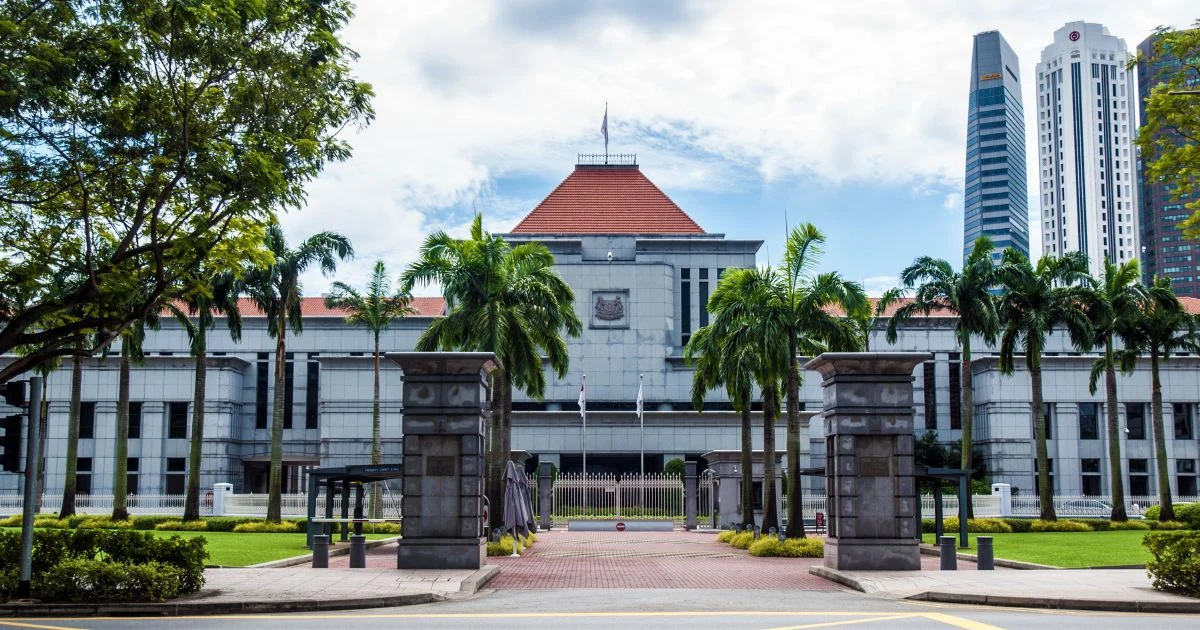
A 40-year-old man now faces investigation in Singapore after authorities established a link between him and two separate bomb threats directed at critical government facilities. The arrest represents law enforcement's swift response to security breaches targeting Parliament House and the Home Team Science and Technology Agency (HTX), institutions central to Singapore's governance and internal security infrastructure.
The anonymous nature of the initial threats underscores a persistent challenge facing developed city-states: the relative ease with which individuals can generate panic through electronic communications, even when authorities possess sophisticated investigative capabilities. Singapore's rapid apprehension of the suspect suggests either that investigators traced digital fingerprints left during the threat communications, or that the suspect made sufficient operational errors to enable identification despite attempting anonymity.
Parliament House represents the legislative heart of Singapore's government, housing the nation's elected representatives and serving as a symbol of democratic institutions. The Home Team Science and Technology Agency, meanwhile, operates across Singapore's internal security apparatus, supporting police, civil defence, and immigration services with technological capabilities. Threats against either facility carry symbolic weight beyond the immediate security risk, reflecting the vulnerability of even well-protected government buildings to psychological warfare tactics that require minimal resources but generate disproportionate institutional response.
The timing and nature of such incidents matter significantly for Southeast Asia's broader security landscape. Singapore, despite its reputation as a secure financial hub and meticulously managed city-state, occasionally confronts domestic security challenges that test response protocols. These incidents typically prompt renewed examination of how governments balance surveillance capabilities with privacy protections—a tension that resonates across the region's more developed economies, including Malaysia, where similar considerations shape national security policy.
Investigative authorities would have deployed multiple techniques to establish the suspect's involvement. Digital forensics examining electronic communications records, telecommunications metadata, and online activity patterns likely featured prominently. The rapid progression from threat reception to arrest suggests investigators possessed strong circumstantial or digital evidence connecting the suspect to the communications, rather than relying solely on circumstantial suspicion that might have required longer observation periods.
The psychological impact of bomb threats extends beyond immediate physical danger. Such communications disrupt normal government operations, require evacuation procedures, trigger emergency responses from specialized units, and create uncertainty among staff and visitors. Each threat necessitates that authorities treat the communication seriously—the cost of dismissing a genuine threat far exceeds the resource investment required to respond to a false alarm, creating a structural incentive for threat-makers to generate maximum disruption with minimal capability.
Singapore's legal framework treats such matters with considerable gravity. Penalties for making threatening communications targeting public institutions typically carry substantial prison sentences and potential fines, reflecting the state's determination to deter such conduct. The arrest and anticipated prosecution will likely serve as a public statement about consequences facing individuals who utilize bomb threats as vehicles for extortion, attention-seeking, or political expression.
For Malaysian observers and regional security analysts, Singapore's incident highlights the importance of robust investigation capabilities and information-sharing protocols among law enforcement agencies. As Southeast Asian governments increasingly confront threats transmitted through electronic channels, the capacity to identify perpetrators while maintaining operational security becomes critical. The success in identifying this suspect within what appears to be a compressed timeframe offers lessons for other regional states developing cybercrime investigation capacity.
The broader context includes Singapore's sophisticated counter-terrorism and internal security apparatus, developed through decades of addressing genuine threats and maintaining public safety in a densely populated environment. The swift response reflects institutional maturity and resource availability that enables rapid deployment of forensic capability and investigative personnel. However, even well-resourced security services face challenges when perpetrators employ careful operational security and exploit the inherent difficulty in tracing communications through digital networks.
Parliamentary security necessarily balances openness to the public with protective measures against potential threats. Bomb threats complicate this balance, forcing institutions to enhance screening procedures and restrict access during elevated alert periods. The cumulative effect of repeated threats gradually ratchets up security burdens on democratic institutions, potentially creating subtle pressure toward greater insularity and reduced public accessibility—consequences that extend beyond the immediate security domain into broader questions about institutional transparency and citizen engagement.
The investigation will likely examine the suspect's motivation, background, and any ideological, financial, or personal grievances that may have prompted the threatening communications. Understanding these drivers matters for threat assessment and prediction, helping authorities identify patterns that might indicate heightened risk of escalation or copycat incidents by other individuals.
As this investigation progresses through Singapore's legal system, regional governments will monitor outcomes and prosecutorial approaches, informing their own policy development around electronic threats and digital security. The incident reinforces that even small city-states with extensive surveillance infrastructure and capable investigative services remain vulnerable to individuals determined to generate disruption, though their capacity to identify and apprehend perpetrators quickly distinguishes them from less resourced jurisdictions.

