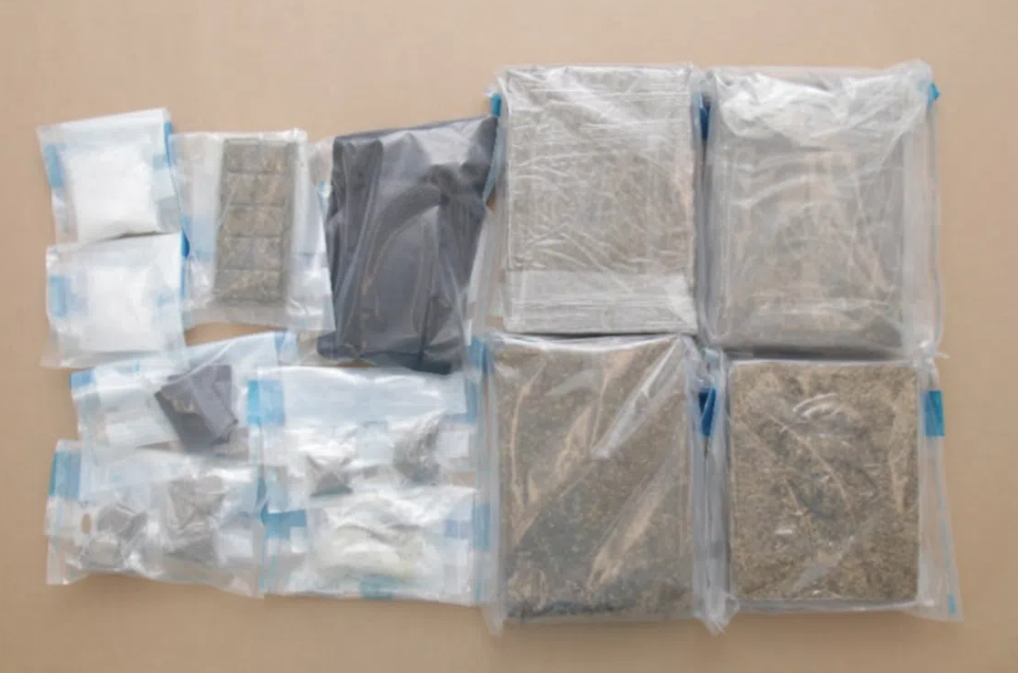
Singapore law enforcement has dismantled a significant drug operation following arrests of three men in coordinated raids conducted on July 27, with the Central Narcotics Bureau announcing the seizure of approximately $142,000 worth of controlled substances spanning multiple drug types. The scale of the operation underscores persistent challenges facing Singapore in combating drug trafficking despite strict penalties, with authorities recovering enough narcotics to sustain the habits of roughly 860 dependent users for a week.
The trio arrested comprised individuals aged 27, 29, and 34, with investigations revealing a network involving both drug suppliers and users. Two of the men were suspected of trafficking operations, while the third faced charges related to consumption. The coordinated nature of the operation, spanning three separate locations within Singapore's residential landscape, suggests that authorities had been monitoring the suspected trafficking network over a period before executing the raids.
The eldest suspect, a 34-year-old, became the focal point of the initial enforcement action when CNB officers apprehended him at a void deck location near Ang Mo Kio Avenue 4 on the afternoon of July 27. Upon arrest, officers immediately escalated their search by escorting the man to his residence in an adjacent block, where a methodical examination of the premises yielded four LSD stamps along with substantial quantities of cannabis totalling 879 grams and approximately 123 grams of crystalline methamphetamine, commonly known as 'Ice'.
Following leads generated from the first apprehension, enforcement officers pivoted their efforts toward a second location near Pasir Ris Street 11, where they arrested a 29-year-old man suspected of trafficking operations. The suspect was found at a lift landing and subsequently escorted to his residential unit in the same block. The search of this residence proved significantly more productive in terms of volume, with officers recovering approximately 4.641 kilograms of cannabis distributed across multiple packets and blocks stored both inside and outside the unit, complemented by 145 grams of ketamine, a dissociative anaesthetic increasingly encountered in recreational drug markets across Southeast Asia.
The third and youngest suspect, aged 27, was apprehended later that afternoon at his residential unit located near Jalan Bukit Ho Swee. The search of his premises yielded nine grams of 'Ice', indicating a lower level of involvement in the operation, consistent with his classification as a suspected drug abuser rather than a trafficker. The differentiated quantities recovered from each location suggest a hierarchical structure within the operation, with the 29-year-old appearing to serve as a primary distributor.
The total seizure encompassed 5.52 kilograms of cannabis, 132 grams of 'Ice', 145 grams of ketamine, and four LSD stamps. These figures reflect the diverse nature of drug markets in Singapore, where cannabis remains the predominant seized substance by volume, whilst synthetic drugs like methamphetamine and designer substances such as ketamine and LSD occupy growing market segments. The combination of plant-based and synthesised narcotics in a single operation reflects broader supply chain dynamics affecting the region.
Singapore maintains among the world's most stringent drug laws, creating a significant deterrent framework that distinguishes the city-state's approach from regional neighbours. Trafficking offences involving more than 500 grams of cannabis carry potential imposition of mandatory capital punishment, a penalty structure that has remained largely unchanged despite international advocacy campaigns. This enforcement context makes any successful major trafficking operation particularly significant from a law enforcement perspective.
The ongoing investigation into the arrested men's broader drug activities suggests authorities are pursuing additional lines of inquiry that may extend beyond the three individuals already in custody. Intelligence gathered during searches and interrogations frequently leads to identification of upstream suppliers or downstream distribution networks, potentially triggering secondary enforcement actions. Such follow-up operations are standard procedure within Singapore's CNB protocols and may yield further arrests or seizures.
The operation carries implications for regional drug trafficking patterns, as Singapore functions as a transshipment hub and consumption market within broader Southeast Asian narcotic flows. The recovery of significant cannabis quantities alongside synthetic drugs points to both local cultivation or importation of plant material and chemical synthesis or importation of processed narcotics. Understanding these supply routes remains crucial for regional cooperation efforts, particularly given increasing cross-border trafficking challenges affecting Malaysia and other neighbouring jurisdictions.
For Malaysian readers and policymakers, the Singapore case illustrates ongoing vulnerabilities within regional drug control frameworks despite individual countries implementing severe penalties. The diversity of seized substances—spanning cannabis, methamphetamine, ketamine and LSD—mirrors patterns observed in Malaysian enforcement operations, suggesting common source countries and distribution networks operating across political boundaries. Enhanced cross-border intelligence sharing and coordinated enforcement operations remain essential tools for disrupting these networks.
The arrest and seizure data also highlights how residential areas, even in densely policed urban environments, continue serving as bases for drug operations. The spread of arrests across three separate residential blocks suggests decentralised distribution strategies designed to minimize interdiction risks. This operational pattern, increasingly documented across Southeast Asian cities, presents challenges for law enforcement agencies seeking to balance surveillance capabilities with civil liberties protections.
As investigations proceed, the CNB's success in this operation demonstrates the effectiveness of coordinated enforcement tactics and sustained intelligence work. However, the continued emergence of trafficking networks suggests that supply-side enforcement alone faces inherent limitations. Regional approaches addressing demand reduction, treatment and rehabilitation infrastructure, and supply chain interdiction at source countries remain necessary complementary strategies for addressing the persistent drug challenges affecting Singapore and the broader Southeast Asian region.

