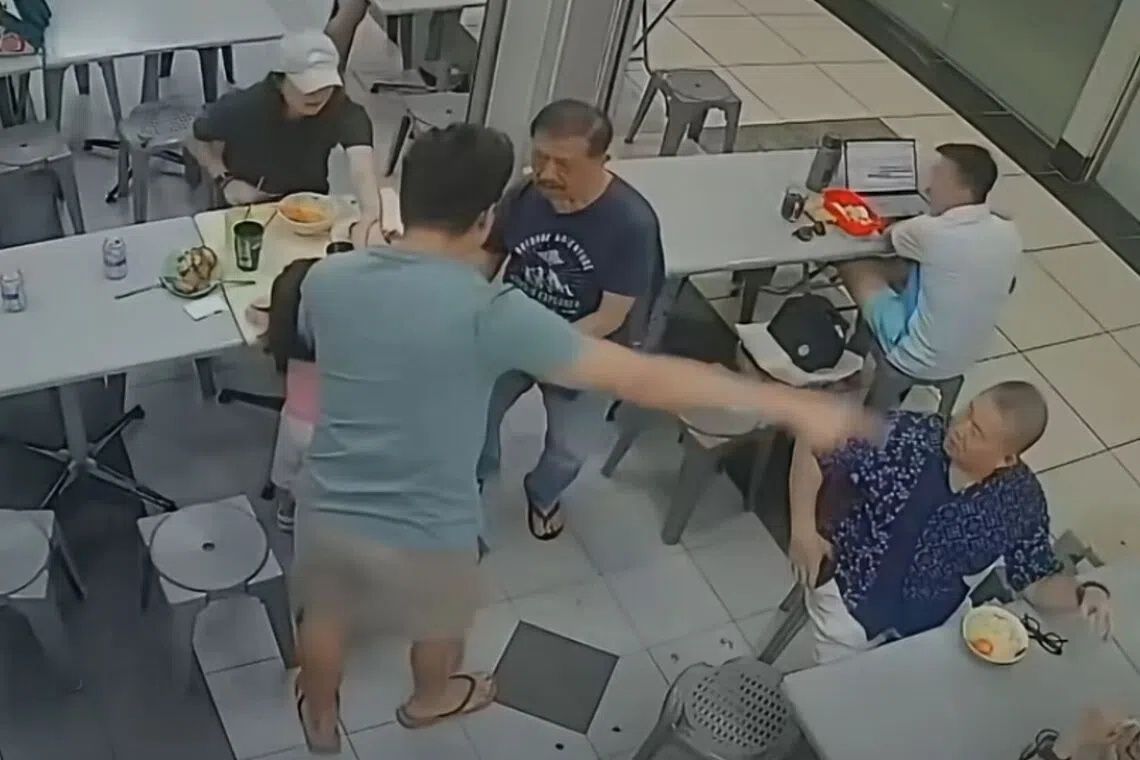
Singapore authorities have launched an investigation into a confrontation at an East Coast coffee shop that left an elderly man injured after what appeared to be an innocent gesture gone wrong. The incident, which occurred in mid-August, has drawn public attention after video footage circulated online, raising questions about community responses to perceived threats toward children and the appropriate use of force in such situations.
Police confirmed on Sunday, August 16, that a formal report had been lodged regarding the altercation. According to the account shared by the elderly man's son on social media, the incident unfolded when his father, in his 70s and experiencing mobility challenges, was at a local coffee shop in the East Coast area. The older man, who assists at a food stall despite his physical limitations, was moving through the establishment by gripping nearby tables for stability as he navigated the crowded space.
Security camera footage attached to the son's Facebook post provides a clear visual record of the sequence of events. The footage shows the elderly man walking carefully through the coffee shop, methodically supporting himself with tables as he progresses. As he passes a table where a young girl is seated with an accompanying woman, he reaches out and gently pats the child on the head in what appears to be a casual, grandfatherly gesture. The woman at the table immediately reacts, pushing his hand away to prevent further contact.
What followed escalated the situation dramatically. A man who had been sitting at the table abruptly stands and walks back toward the elderly man, initiating a verbal confrontation. Within moments, the confrontation turns physical when the man forcefully shoves the elderly pensioner, causing him to fall to the ground. The subsequent claim that the man apologized and offered the elderly individual a beverage does little to mitigate the seriousness of the physical contact, particularly given the victim's age and existing mobility difficulties.
The elderly man sustained significant injuries from the fall. His son reported that his father developed severe back pain in the aftermath of being pushed, a consequence that carries particular weight given the vulnerability of older individuals to serious injury from falls. For someone already navigating mobility challenges, such an incident poses genuine health risks that extend beyond immediate bruising or soreness.
The son's initial appeal for public assistance in identifying the assailant reflects the family's desire for accountability and clarity about the man's motivations. His follow-up post on August 16, expressing gratitude for community concern and information shared by social media users, suggests that the incident resonated with the broader public. However, the continued lack of confirmed identification raises questions about whether the assailant cooperated fully with authorities or whether additional investigative work remained necessary.
The incident touches on several sensitive issues within urban communities. The reaction to a simple gesture of affection toward a child illustrates the heightened sensitivity many caregivers now maintain regarding interactions between unknown adults and youngsters. While such vigilance reflects legitimate child safety concerns, the response here involved physical aggression against an elderly person, raising questions about whether the force used was proportionate to any perceived threat. The elderly man's status as a community member helping at a local stall, rather than a stranger passing through, adds another layer to understanding the context.
Singapore's approach to such matters reflects broader regional concerns about public safety and community standards. The police investigation will need to assess whether the shove constituted assault, what factors the assailant believed justified his response, and whether any prior interaction or misunderstanding contributed to the escalation. For Malaysian observers, the incident offers a reminder of how quickly mundane moments can transform into conflict, particularly in densely populated public spaces where social norms around physical contact and child safety remain points of sensitivity.
The case also illustrates the role of social media in shaping public discourse around community incidents. The son's decision to post security footage and seek public identification of the assailant mobilized community attention and generated response from concerned netizens. This mechanism of digital accountability operates independently of formal police processes, creating parallel investigative channels that can either assist or complicate official inquiries.
From a regional perspective, this incident reflects patterns seen across Southeast Asian cities where rapid urbanization, changing family structures, and heightened safety awareness sometimes create friction in public spaces. The response to the elderly man's gesture—whether it reflected genuine concern for child safety or an overreaction to ambiguous behavior—depends partly on cultural context and individual interpretation. What seems like harmless affection to one person may appear concerning to another, particularly in contemporary environments where awareness of child safety issues has increased significantly.
As police continue their investigation, the case serves as a reminder of the importance of proportionate responses to perceived threats and the vulnerability of elderly community members. The balance between protecting children and respecting the dignity and physical safety of older people represents an ongoing challenge for cohesive urban communities. For Singapore and neighboring countries managing similar demographic and social pressures, such incidents offer opportunities to reflect on how communities can maintain both child safety and respect for elders.

