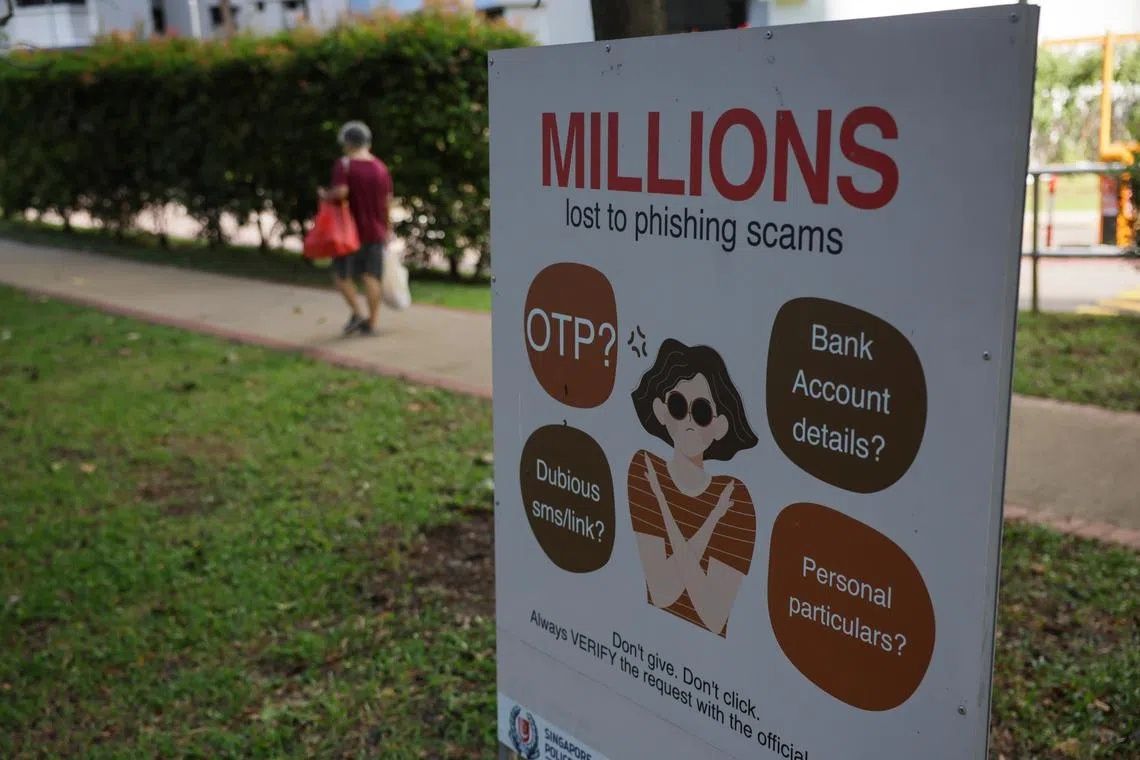
Singapore's police force has expanded its crackdown on scam networks, placing 230 individuals under investigation following a coordinated two-week operation that uncovered sophisticated fraud schemes responsible for approximately S$9 million in reported losses. The suspects, aged between 16 and 77, include 159 men and 71 women believed to have played various roles within the criminal ecosystem—from orchestrating fraudulent schemes to facilitating the movement of illicit funds. The breadth of the operation, conducted jointly by the Commercial Affairs Department and all seven police land divisions between mid-June and early July, demonstrates the scale at which organised scam syndicates now operate across the island nation.
The scale of deception revealed in this sweep is notable for its diversity. The 230 individuals are suspected of orchestrating or facilitating more than 713 distinct scam incidents, with victims losing funds through remarkably varied fraudulent mechanisms. E-commerce scams—where victims are deceived into purchasing non-existent goods or services—remain prevalent, as do friend impersonation schemes in which criminals pose as trusted acquaintances requesting urgent financial transfers. Job scams that lure vulnerable individuals with lucrative employment offers constitute another significant category, while investment frauds promise unrealistic returns to entice savings. Government official impersonation scams exploit public trust in authorities, and rental scams prey on those seeking accommodation, demonstrating the breadth of social engineering tactics employed by these networks.
A particularly striking aspect of the investigation is the involvement of individuals at opposite ends of the age spectrum. The presence of a 16-year-old among the suspects underscores a concerning trend: the recruitment of minors into scam operations, often as money mules who unwittingly or knowingly facilitate the movement of stolen funds. The involvement of a 77-year-old, conversely, illustrates how scam syndicates exploit individuals across all demographic groups—whether as perpetrators or as vulnerable targets. This generational spread reflects the reality that scam networks are not monolithic criminal enterprises but rather loose coalitions of participants with varying degrees of culpability and awareness.
The legal consequences for those convicted are severe and escalate based on the nature of participation. Individuals found guilty of the primary offence of cheating face potential imprisonment for up to a decade and substantial fines. Those convicted of money laundering—a charge likely to ensnare many of the suspected money mules—face similarly draconian sentences of up to ten years' imprisonment alongside fines reaching S$500,000. A third category of charges relates to providing payment services without proper licensing, which carries penalties of up to three years' jail time and fines of S$125,000. Critically, Singapore's judiciary has long imposed mandatory caning sentences for scam-related offences, with primary perpetrators facing six to 24 strokes and money mules facing up to 12 strokes, a form of corporal punishment that remains controversial among human rights advocates but reflects Singapore's hardline stance on financial crime.
Beyond criminal prosecution, authorities have developed additional enforcement tools to disrupt scam infrastructure. Individuals convicted of money mule-related offences face potential restrictions on accessing banking services and obtaining mobile line subscriptions—measures designed to sever the technical and financial conduits through which scammers operate. By limiting convicted mules' ability to open new accounts or acquire new SIM cards, which are essential tools in perpetuating fraud schemes, Singapore aims to create friction that makes participation in future scams significantly more difficult. These collateral consequences often extend the practical impact of convictions well beyond the sentence itself.
The timing of this enforcement operation comes against a backdrop of modest improvements in Singapore's scam statistics. According to data released in February 2026, reported scam cases declined from over 50,000 in 2024 to 37,308 in 2025—a meaningful reduction of roughly 25 percent year-on-year. The total financial losses to scammers similarly contracted, falling from S$1.1 billion in 2024 to S$913.1 million in 2025. These figures suggest that intensive police operations, public awareness campaigns, and technological countermeasures are yielding measurable results. However, the absolute numbers remain sobering: still nearly 38,000 scam cases and over S$900 million in losses within a single year for a city-state of five million people.
Within the scam landscape, certain fraud categories have emerged as particularly prevalent. E-commerce scams topped the list in 2025 with 6,703 reported cases and cumulative losses of S$16.7 million, demonstrating that as shopping habits shift increasingly online, fraudsters adapt their techniques accordingly. The relative success of e-commerce fraud likely reflects the challenge consumers face in verifying the legitimacy of online merchants before committing funds, combined with the difficulty of recovery once payment has been sent. This category's dominance also underscores how scams have evolved from traditional telephone and email-based schemes to infiltrate digital marketplaces where consumers already expect to conduct transactions with strangers.
For Malaysian readers and regional observers, Singapore's approach offers instructive lessons about the structure and scale of scam operations in Southeast Asia. The sophistication evident in the deployment of money mules, the recruitment of minors, and the deployment of impersonation tactics across multiple channels reflects networks that likely operate across borders, targeting victims throughout the region. Malaysia, with its larger population and comparable levels of digital adoption, almost certainly faces similar or greater volumes of fraud, though public reporting mechanisms and enforcement capacity may differ. The interplay between individual scammers, organised syndicates, and money mules documented in Singapore's operation likely mirrors patterns occurring across the region.
Singapore's response mechanism provides a potential template for regional cooperation. The integrated approach combining multiple police divisions, distinct charges for various forms of participation, and collateral restrictions on financial services demonstrates a comprehensive strategy acknowledging that dismantling scam networks requires addressing not merely the perpetrators but the entire ecosystem that enables fraud. The mandatory caning sentences and harsh imprisonment terms reflect a societal determination to deter participation at all levels, though their effectiveness compared to alternative enforcement models remains subject to academic debate.
For potential victims, Singapore authorities have established accessible reporting channels and prevention resources. The ScamShield helpline at 1799 provides direct access to anti-scam specialists, while the dedicated website at www.scamshield.gov.sg offers educational materials and reporting mechanisms. Information can also be submitted to the police hotline at 1800-255-0000 or through the online witness portal at www.police.gov.sg/i-witness, with authorities emphasising strict confidentiality protections for those providing tips. This infrastructure recognition that public participation in reporting is essential to disrupting criminal networks.
Looking forward, the investigation's success in identifying and detaining 230 suspects within a two-week operation suggests that police possess increasingly sophisticated methods for tracking financial flows and identifying participants in scam networks. Mobile phone data, banking records, and digital forensics likely played crucial roles in connecting disparate individuals to specific fraud schemes. As scammers continuously adapt their techniques and seek new victim populations, law enforcement agencies across Southeast Asia face the perpetual challenge of staying ahead of innovation in fraud methodology. The Singapore operation exemplifies this ongoing cat-and-mouse dynamic, with authorities deploying concentrated enforcement efforts while scam operators simultaneously refine their recruitment and operational tactics to evade detection.

