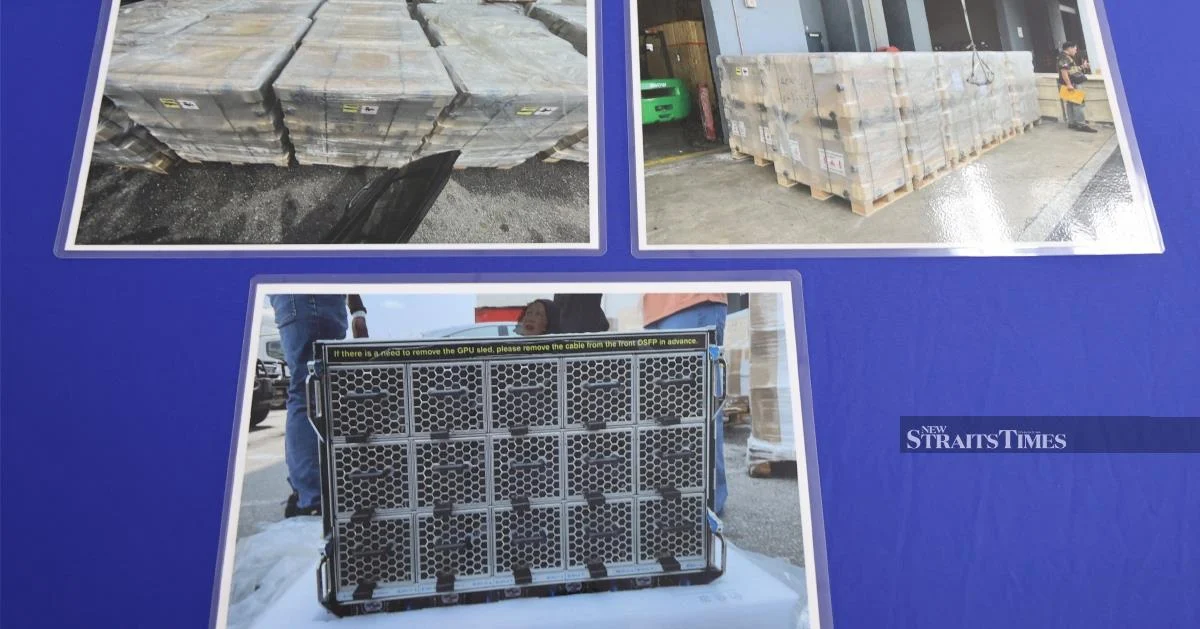
Singapore's law enforcement announced on Wednesday the seizure of a high-end residential property worth over US$40 million as authorities pursue fraud investigations tied to the suspected illegal transfer of artificial intelligence chips in violation of American export restrictions. The development signals intensifying scrutiny across the region into how sophisticated computing equipment reaches restricted markets, a concern that has become increasingly central to international trade policy enforcement.
The property seizure represents a significant escalation in what appears to be a multi-faceted investigation into technology smuggling networks. While authorities have not disclosed comprehensive details about the extent of the alleged scheme or the specific entities involved, the decision to target such a high-value asset suggests investigators believe considerable proceeds from illegal transactions may have been converted into tangible property holdings within Singapore's real estate market.
US export controls on advanced semiconductor technology have become a cornerstone of American foreign policy under successive administrations, designed to prevent cutting-edge artificial intelligence and computing capabilities from reaching adversarial nations or entities of concern. These regulations typically cover chips capable of supporting large language models, machine learning applications, and data centre operations. The enforcement mechanisms operate across international boundaries through cooperation frameworks with allied nations, making cases like Singapore's investigation particularly significant for regional compliance structures.
Singapore's involvement in this investigation carries particular weight given the city-state's role as a major regional hub for technology trade and investment. The financial services and technology sectors form critical components of Singapore's economy, and the government has historically maintained strict regulatory frameworks to protect the jurisdiction's reputation and international standing. That authorities have moved decisively to seize property suggests confidence in their investigative foundation and commitment to demonstrating compliance with global export control regimes.
The incident highlights a persistent challenge facing Southeast Asian governments: the region's geographic position, sophisticated financial infrastructure, and established trade networks make it an attractive target for those seeking to circumvent international restrictions. Transnational smuggling operations often exploit the complexity of legitimate regional commerce to mask illicit transactions. Intelligence agencies across the region have increasingly documented attempts to obscure the origins and destinations of technology shipments through complex corporate structures and intermediaries.
For Malaysian observers and businesses, the implications extend beyond Singapore's borders. Malaysia itself hosts significant semiconductor manufacturing capacity and serves as a transit point for technology trade throughout Southeast Asia. The intensification of enforcement against technology smuggling networks creates cascading compliance requirements for Malaysian firms involved in electronics manufacturing, logistics, and trade. Companies operating across the region must now contend with heightened scrutiny and documentation requirements, particularly those handling imported components or serving as distribution nodes.
The broader geopolitical context remains critical to understanding these enforcement actions. Strategic competition between major powers has increasingly centred on controlling access to advanced semiconductors and artificial intelligence capabilities. Governments worldwide view technology supply chains as essential infrastructure requiring protection, while simultaneously recognizing that sophisticated smuggling networks continually evolve their tactics. This dynamic generates ongoing pressure for enhanced cross-border cooperation among law enforcement agencies, creating both challenges and opportunities for legitimate regional commerce.
Singapore's investigative authorities have not yet disclosed whether charges have been filed or whether additional defendants remain under investigation. The property seizure mechanism indicates the investigation has progressed substantially beyond preliminary phases, as authorities typically require substantial evidence before moving to asset confiscation. The targeting of immovable property suggests investigators have traced financial flows and identified specific assets acquired through proceeds allegedly derived from the illegal transactions.
The investigation underscores how export control violations extend beyond technology itself to encompass the financial dimensions and asset accumulation patterns associated with illicit transactions. By focusing on property acquisition, authorities address the mechanisms through which illegal profits become embedded in legitimate economies. This approach has become increasingly sophisticated as enforcement agencies recognize that disrupting smuggling networks requires identifying not only the criminal transactions themselves but also the subsequent conversion of proceeds into assets that generate ongoing economic benefit.
Regional business communities have grown increasingly attentive to export control compliance in recent years, recognizing that even inadvertent involvement in sanctioned transactions can generate severe legal and commercial consequences. Professional service providers across Southeast Asia, including legal practitioners, accountants, and corporate compliance specialists, have expanded their focus on technology trade verification and sanctions screening. This professionalization of compliance infrastructure reflects acknowledgment that export control regimes have become permanent features of the international business environment.
The seizure also demonstrates Singapore's willingness to employ its substantial enforcement capacity in service of international compliance frameworks, positioning the jurisdiction as a reliable enforcer of global norms around technology trade. For technology-dependent economies throughout Southeast Asia, including Malaysia, such enforcement sends signals about the costs of non-compliance and the importance of maintaining robust internal screening mechanisms. Companies trading in technology must now assume that inadequate due diligence and compliance procedures will attract regulatory attention.
Looking ahead, the investigation may reveal broader patterns about how illicit technology networks operate across regional financial systems. If additional entities or individuals emerge as involved parties, the case could establish important precedents for subsequent prosecutions and enforcement actions. The property seizure itself provides a tangible reminder that violations of export controls generate consequences extending far beyond administrative penalties, potentially encompassing criminal prosecution and substantial asset losses.

