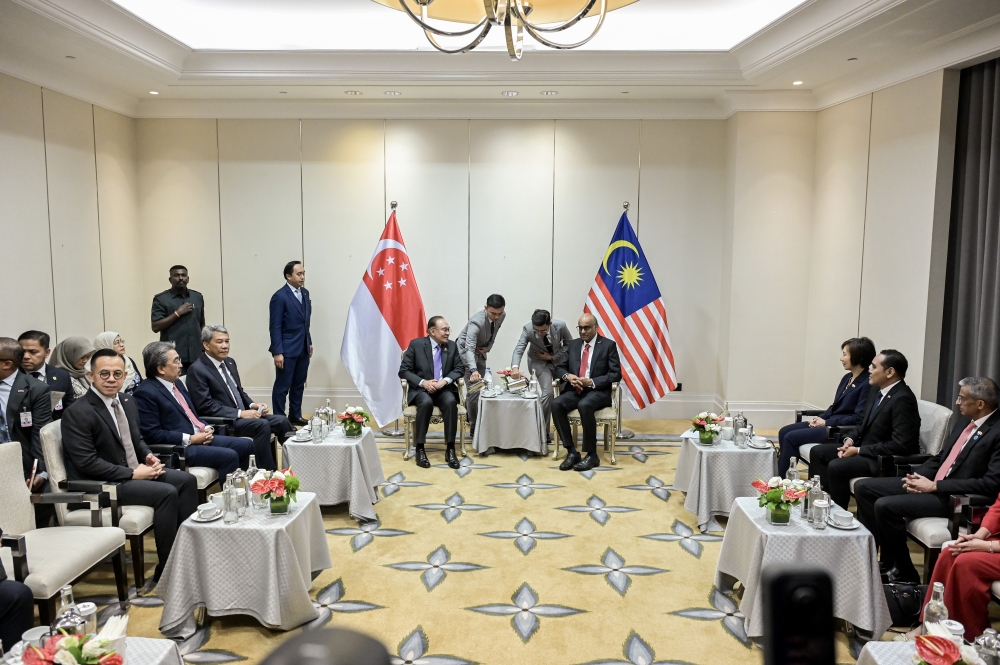
Prime Minister Datuk Seri Anwar Ibrahim received Singapore President Halimah Yacob at his official residence in Kuala Lumpur on Monday, in a 40-minute session that underscored the intensity of engagement between Malaysia's elected leadership and Singapore's ceremonial head of state. The meeting represented a carefully choreographed diplomatic moment between two neighbouring nations whose relationship carries outsized significance for the broader stability and prosperity of Southeast Asia.
While the precise contents of their discussions remain characteristically guarded—typical of high-level diplomatic protocol—observers noted that both officials appeared focused and engaged throughout the encounter. The duration and format of the meeting suggested substantive matters were addressed beyond the ceremonial pleasantries often accompanying state visits. Such visits serve as pressure valves and relationship-building opportunities for neighbouring governments, allowing leaders to establish personal rapport and signal political commitment to bilateral ties.
The Singapore President's presence in the Malaysian capital marked a significant diplomatic moment, as such high-level visits are typically reserved for matters of substantial national interest. State visits carry considerable symbolic weight in Southeast Asian diplomacy, particularly between countries with complex historical relationships and ongoing practical cooperation challenges. Malaysia and Singapore, despite their geographical proximity and deep economic interdependence, navigate a relationship that requires constant diplomatic attention and careful management of competing interests.
Bilateral relations between the two nations span maritime boundaries, water agreements, trade arrangements, and cultural matters that periodically generate domestic political sensitivities in both countries. The meeting provided an opportunity for both leaders to take stock of progress on these fronts and potentially address emerging issues requiring high-level attention. PM Anwar's reception of the Singapore President signalled Malaysia's commitment to maintaining warm diplomatic ties with its most developed neighbour, a particularly important gesture given Malaysia's broader regional positioning in Southeast Asia.
Regional observers view such engagement through the lens of broader competition and cooperation dynamics shaping Southeast Asia. The relationship between Malaysia and Singapore influences perceptions of stability throughout the region and affects the calculus of other regional powers monitoring developments in the area. Singapore's strategic importance as a financial hub and shipping centre means its government maintains elevated diplomatic profiles with all neighbouring states, making such meetings consequential for regional affairs.
The timing of President Halimah Yacob's visit to Kuala Lumpur comes as both nations continue managing post-pandemic economic recovery and addressing evolving regional security challenges. Maritime security, trade facilitation, and environmental cooperation represent areas where Malaysia and Singapore find mutual advantage in collaborative approaches. The Prime Minister's willingness to dedicate time to receiving the Singapore President suggests these issues remain elevated on Malaysia's diplomatic agenda.
Diplomatic traditions around state visits emphasize the importance of personal relationships between leaders, and Monday's meeting represented another chapter in the ongoing narrative of Singapore-Malaysia engagement. The formality of such visits, while sometimes appearing ceremonial to outside observers, serves practical purposes in maintaining communication channels and demonstrating political will to resolve differences constructively. Both governments understand that neighbourly relations require consistent attention and investment in diplomatic relationships.
For Malaysian readers and regional observers, the significance of such meetings extends beyond bilateral matters. Malaysia's relationship with Singapore shapes the country's broader position within ASEAN and influences its capacity to engage effectively with other regional powers. Strong bilateral ties with Singapore provide Malaysia with a stable foundation for pursuing broader regional objectives and maintaining balance among competing interests in Southeast Asia.
The 40-minute duration of the meeting, while brief by some standards, reflects the condensed nature of high-level diplomatic encounters where time is managed carefully to accommodate multiple engagements. Both President Halimah Yacob and PM Anwar Ibrahim maintain demanding schedules with numerous domestic and international obligations, making such focused sessions an efficient means of maintaining relationship continuity. The meeting's brevity should not diminish its diplomatic importance; rather, it underscores the calculated nature of such high-level interactions.
Going forward, observers will watch for any official statements or subsequent developments that might illuminate the substance of Monday's discussions. Such meetings frequently precede announcements regarding bilateral initiatives, agreements, or coordinated approaches to regional challenges. The courtesy call between these two leaders represents an investment in the bilateral relationship that may yield tangible outcomes in coming weeks or months as both governments translate diplomatic engagement into concrete cooperation frameworks.
For Malaysian businesses and citizens engaged with Singapore across trade, employment, and cultural domains, strong government-to-government relations provide the foundation for smooth cross-border interactions. The meeting between PM Anwar and President Halimah Yacob therefore carries practical implications extending well beyond diplomatic circles, affecting how smoothly bilateral commerce and people-to-people exchanges function. Such high-level engagement serves to maintain the institutional health of Singapore-Malaysia relations, ensuring both nations can address inevitable frictions through established channels and diplomatic protocols.

