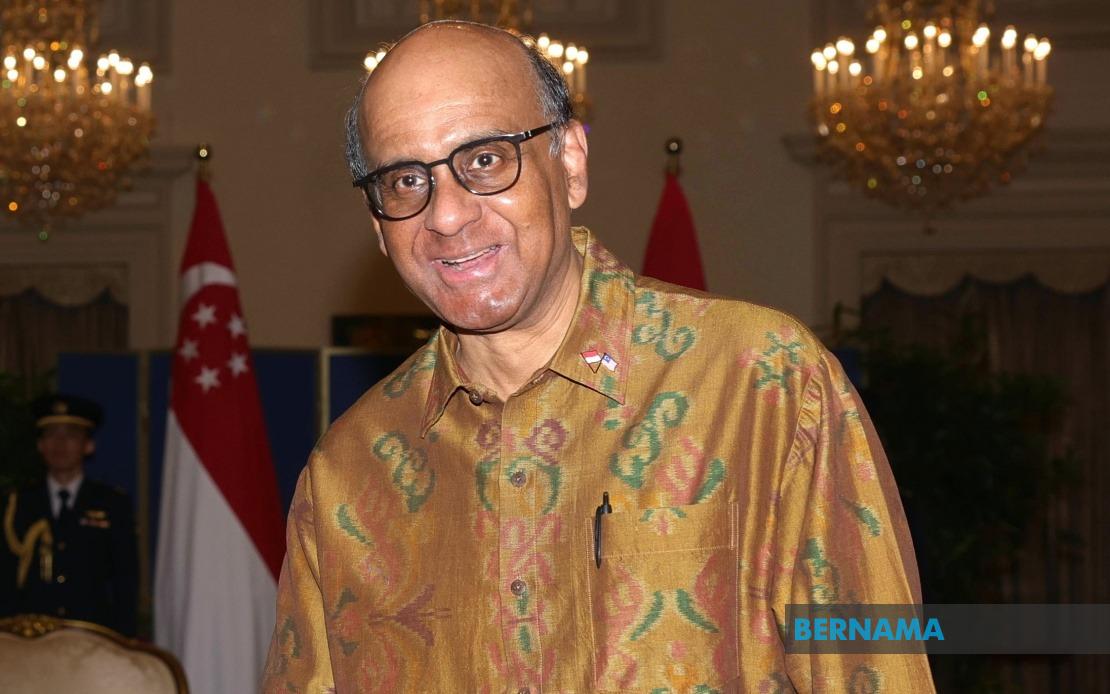
Singapore's ninth President, Tharman Shanmugaratnam, is set to arrive in Malaysia this weekend for an official three-day state visit, marking his first trip to the country in his presidential capacity since taking office last September. The visit, running from July 13 to 15, comes at the invitation of His Majesty Sultan Ibrahim, King of Malaysia, and represents a reciprocal gesture following the Malaysian sovereign's state visit to Singapore in early May.
The timing of Tharman's visit underscores the cyclical nature of high-level diplomatic engagement between the two neighbouring nations. Malaysia's Ministry of Foreign Affairs released a statement emphasising that the presidential journey reflects the deepening commitment both countries share to their enduring partnership. This rhythm of mutual state visits between leaders demonstrates the diplomatic priority both governments assign to their relationship, ensuring continuity and reinforcement of bilateral bonds at the highest institutional levels.
Tharman will travel with his spouse, Jane Ittogi Shanmugaratnam, alongside senior cabinet ministers and diplomatic officials. The delegation's composition signals Singapore's intent to strengthen cooperation across multiple portfolios beyond ceremonial protocol. During his stay, the President will participate in a State Welcoming Ceremony at Istana Negara, where he will be received by His Majesty in formal audience. A State Banquet has been arranged to honour the visiting dignitary and his entourage, reflecting the ceremonial significance accorded to the engagement.
Among his scheduled engagements, Prime Minister Datuk Seri Anwar Ibrahim will extend a courtesy call to the Singapore President, providing an opportunity for bilateral discussions on matters of mutual concern. These formal meetings typically address regional security, trade advancement, and coordination on multilateral forums where both nations hold significant influence. The inclusion of such engagements reveals the substantive nature of the visit beyond symbolic gestures.
The visit arrives against a backdrop of robust commercial interdependence between Malaysia and Singapore. Singapore ranks as Malaysia's second-largest trading partner globally and holds the distinction of being Malaysia's premier trading partner within the broader ASEAN membership. This trading relationship represents one of Southeast Asia's most developed and resilient partnerships, reflecting decades of integration across supply chains and investment networks.
Bilateral commerce between the two nations reached RM402.35 billion, equivalent to approximately US$93.97 billion, during 2025, representing a marginal growth rate of 1.5 per cent compared to the preceding year. While this growth rate appears modest, it reflects the mature nature of the bilateral trade relationship, where substantial volumes have already been established and incremental expansion indicates underlying economic strength rather than extraordinary market expansion. The consistency of trade flows underscores the stability both economies derive from their partnership.
More notably, the first five months of 2026 have witnessed accelerated momentum in bilateral commerce. Trade volumes during this period totalled RM189.90 billion, approximately US$47.87 billion, representing a substantially higher growth trajectory of 14.5 per cent compared with the corresponding timeframe in 2025, when bilateral trade stood at RM165.93 billion or US$37.65 billion. This significant uptick in the first half of 2026 suggests renewed dynamism in the commercial relationship and may reflect recovery from global supply chain disruptions or emerging opportunities across key sectors.
For Malaysian policymakers and business communities, the acceleration in trade growth during early 2026 presents meaningful implications. The 14.5 per cent increase signals that diversification efforts and sector-specific initiatives may be yielding tangible returns. This expansion occurs within the context of regional competition, where other ASEAN nations compete vigorously for Singapore's investment and trade attention. Malaysia's ability to capture growing commercial activity with Singapore demonstrates competitive strength in areas ranging from petrochemicals and agriculture to manufacturing and technology services.
The presidential visit provides an occasion to explore avenues for deepening this commercial trajectory. Discussions between Tharman and Malaysian leadership may address infrastructure connectivity, digital economy integration, and financial services expansion. The participation of Singapore's ministers suggests potential agreements or collaborative initiatives spanning multiple sectors, from energy security to technological innovation. Such arrangements often emerge from high-level visits and subsequently translate into concrete business outcomes over subsequent quarters.
Regionally, the Malaysia-Singapore relationship carries significance beyond bilateral considerations. Both nations occupy central positions within ASEAN's architecture and maintain considerable influence over regional economic and security frameworks. Singapore's diplomatic calendar and high-level engagements reflect its strategic positioning, while Malaysia's engagement with Singapore demonstrates commitment to maintaining constructive relations with a crucial economic partner despite periodic tensions over maritime boundaries and resource allocation.
The state visit also carries implications for ASEAN cohesion at a moment when regional forums navigate complex geopolitical dynamics. Strong Malaysia-Singapore engagement signals stability within Southeast Asia's core and provides ballast against broader regional uncertainties. Successful bilateral relations between these two sophisticated economies create positive momentum affecting other ASEAN relationships and institutional effectiveness.
As Tharman's visit proceeds, observers will monitor outcomes regarding trade facilitation, investment frameworks, and possible announcements on future collaboration. The convergence of accelerating bilateral commerce, high-level diplomatic engagement, and ministerial participation suggests this visit may catalyse further deepening of the Malaysia-Singapore partnership across multiple dimensions, positioning both nations advantageously within an increasingly competitive and complex regional environment.

