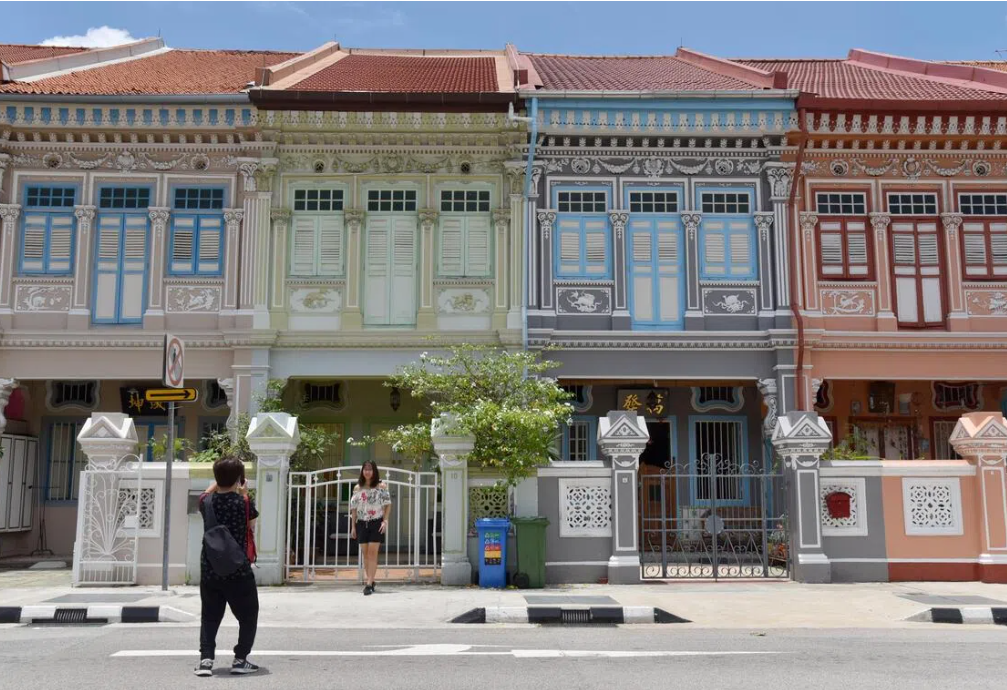
Starting in August, Singapore is deploying a three-month promotional campaign designed to entice visitors into exploring the city-state's distinct neighbourhoods through subsidised mobility. The Singapore Tourism Board and ride-hailing platform Grab have jointly rolled out bonus vouchers available to international tourists who register for a dedicated travel pass on the app, marking an effort to shift tourism spending patterns toward precincts beyond the conventional tourist corridor.
The incentive structure operates on two parallel tracks. Visitors signing up for the Singapore Grab Travel Pass will access a first voucher providing 20 per cent discounts for journeys to and from four designated neighbourhood clusters: Katong-Joo Chiat, Tiong Baru, Mandai and Sentosa, with each user permitted two redemptions. A complementary voucher targets nocturnal exploration, granting a singular 20 per cent discount on any Grab ride between 7pm and 4am to four nightlife precincts—Holland Village, Clarke Quay, Boat Quay and Robertson Quay. The timing deliberately encapsulates Singapore's autumn event calendar, overlapping the Singapore Grand Prix running October 2 to 11 and the Singapore River Festival from September 11 to 20, periods historically associated with elevated visitor inflows.
The campaign represents a strategic pivot in how Singapore positions tourism to regional audiences. Rather than relying solely on flagship attractions, the initiative emphasises granular neighbourhood discovery, a messaging framework STB has been amplifying since February through its "We don't wait for fun" campaign targeting younger demographics aged 25 to 39. That earlier initiative, rolled out across nine markets including China, Indonesia, Thailand and Vietnam, spotlighted lesser-known areas such as New Bahru and Joo Chiat as counterweights to conventional tourist infrastructure. The Grab partnership extends this approach by reducing the friction—both financial and navigational—that might otherwise deter visitors from venturing beyond familiar zones.
For Malaysian travellers and those across Southeast Asia, the programme carries particular relevance given the region's dominance in Singapore's visitor composition. Grab's extensive operating footprint throughout Malaysia, Thailand, Vietnam and Indonesia positions the ride-hailing firm as a logical distribution channel for attracting regional tourists already familiar with its interface and pricing conventions. By promoting the travel pass through targeted digital advertising in key Southeast Asian markets, STB is essentially leveraging existing user behaviour and digital habits to lower the adoption barrier for Singapore-bound trips.
The underlying economic calculation driving this initiative reflects Singapore's ambitions to capitalise on post-pandemic tourism recovery momentum. In 2025, Singapore achieved an all-time tourism receipts record of $32.8 billion, underpinned by 16.9 million international arrivals—an increase from 16.5 million visitors in 2024. STB's projections for 2026 anticipate international arrivals reaching between 17 million and 18 million, with corresponding tourism spending climbing to $31 billion to $32.5 billion. These targets necessitate not merely volume growth but also optimised visitor spending patterns, achieved partly through distributing tourism value across multiple precincts rather than concentrating it in traditional hubs.
Alexandro Osorio, Grab Singapore's managing director, framed the partnership as facilitating experiential immersion, emphasising that "each part of Singapore offers something different" from heritage and food scenes in Katong-Joo Chiat to daytime activities in Mandai and evening experiences in nightlife districts. This granular segmentation acknowledges that contemporary tourism, particularly among younger visitors, increasingly prioritises authenticity and neighbourhood character over flagship attractions. The discounting structure—by concentrating benefits on specific precincts during specific hours—subtly guides visitor movement and timing in ways that amplify both discovery and operational efficiency for participating merchants.
Government support for this tourism repositioning has been substantive. In May, Trade Relations Minister Grace Fu, who also holds the Sustainability and Environment portfolio, announced a $740 million injection into tourism projects over the subsequent five years, signalling sustained policy commitment to expanding the sector's economic contribution. This funding backdrop legitimises private partnerships like the Grab initiative while indicating broader structural investments in tourism infrastructure and experience development that complement short-term promotional campaigns.
The after-hours discount component warrants particular analysis given Southeast Asian tourism dynamics. Many regional visitors traditionally associate Singapore tourism with daytime shopping, dining and attraction visitation, with evening activities remaining comparatively underdeveloped in visitor itineraries. By explicitly incentivising nocturnal movement to Clarke Quay, Boat Quay and Robertson Quay—historically social congregation points—the campaign aims to extend average visitor dwell times and increase total spending per trip. This approach acknowledges that tourism value accrual depends not solely on visit frequency but on depth of engagement during each visit.
The programme's reliance on digital channels and app-based distribution reflects Singapore's positioning as a technologically integrated destination. Unlike campaigns requiring complex redemption procedures or multiple vendors, the Grab mechanism ensures seamless integration with tourists' existing travel workflows. Visitors accustomed to app-based mobility in their home markets encounter minimal friction when applying analogous tools in Singapore, reducing adoption friction while simultaneously generating transaction data valuable for future targeting.
For competing regional destinations, Singapore's strategic deployment of mobility partnerships carries instructive implications. Rather than competing purely on accommodation or attraction pricing, the initiative demonstrates how transport subsidies can function as experience brokers, fundamentally reshaping how visitors perceive and navigate urban space. By partnering with existing platforms rather than developing proprietary systems, Singapore minimises deployment costs while maximising reach among users already embedded within particular digital ecosystems.
The campaign also reflects evolving understandings of what constitutes tourism value in mature developed markets. Singapore, facing inevitable saturation among conventional tourist segments, increasingly targets experiential seekers and neighbourhood explorers—demographics less interested in tick-list attractions than in authentic local engagement. Grab's role as mobility provider transcends mere transportation, functioning instead as curator and guide directing visitors toward curated precincts aligned with contemporary travel preferences. This conceptual reframing positions ride-hailing not as a commodity service but as an integral component of destination experience architecture.

