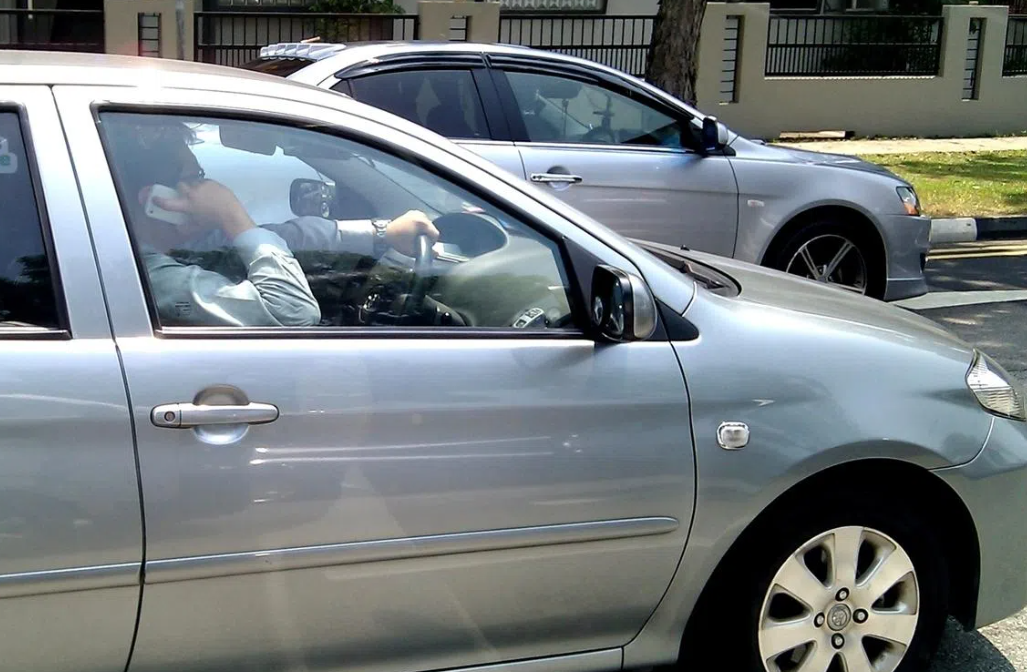
Singapore's government has moved to significantly strengthen road safety enforcement with proposed legislation that will penalise drivers for simply holding a mobile phone while driving, marking a shift from the current requirement to prove the device was actively being used. The Ministry of Home Affairs tabled the Road Traffic (Miscellaneous Amendments) Bill on Tuesday, July 7, responding to an alarming deterioration in traffic safety across the island nation over recent years.
The legislative package addresses a crisis that cannot be ignored. Between 2021 and 2025, traffic fatality rates climbed by approximately 24 per cent while violations surged by 38 per cent. Most strikingly, Singapore recorded 149 traffic deaths in 2025, the highest figure in a decade, compared with 141 deaths recorded in 2016. The previous year's toll of 142 deaths suggests an accelerating trend, and the number of injured persons jumped from 9,342 in 2024 to 9,955 in 2025, painting a picture of increasingly chaotic conditions on the roads.
Under existing laws, drivers caught texting or calling while holding a phone typically receive 12 demerit points and fines ranging from $400 to $500. More serious cases can result in court prosecution, where first-time offenders face up to six months' imprisonment and $1,000 fines, with repeat offenders liable to one year's jail and $2,000 penalties. Yet the system has proven cumbersome to enforce because authorities must demonstrate that the device was actually being used—a requirement that necessitates observing the violation directly and verifying it manually, creating significant administrative burden.
The proposed amendment removes this evidentiary burden entirely. Simply holding a phone while a vehicle is in motion will constitute an offence, recognising that the act itself—regardless of whether the driver is actively texting or browsing—represents a distraction that compromises road safety. This shift enables the Traffic Police to deploy camera technology and publicly submitted photographs or videos as enforcement tools, substantially expanding detection capacity. The change does not, however, restrict the use of mounted devices such as phone holders or dashboard navigation systems, nor does it prevent drivers from holding phones when their vehicles are stationary.
Beyond phone use, the Bill tackles the more sinister problem of vehicles weaponised through deliberate endangerment. The current legal framework struggles with cases where drivers cause death or injury through reckless conduct but cannot be convicted of murder or culpable homicide without proving intent to kill or knowledge that death would likely result. Instead, prosecutors typically charge dangerous driving causing death, which carries a maximum sentence of eight years' imprisonment. The case of Jarrett Tee Lee Kiat, who raced another vehicle on an expressway and killed an 18-year-old, illustrated the gap: he received five years and eight months despite showing no remorse, raising questions about whether the penalty reflected the gravity of his actions.
The Bill introduces a new offence specifically addressing purposeful endangerment via vehicle causing death or grievous hurt. Convicted offenders face up to 15 years' imprisonment, fines, caning, and permanent disqualification from driving—or at minimum ten years' disqualification if exceptional circumstances exist. This significantly heightened penalty structure aims to deter the reckless bravado that has characterised some high-profile cases and provides courts with proportionate sentencing options for the most culpable actors.
The legislation also recalibrates penalties for dangerous and careless driving causing grievous hurt, reflecting judicial concerns that current maximum sentences may be inadequate. A December 2025 case involving Yoong Kok Kai underscored this gap: driving drunk after three consecutive drinking sessions, he lost control near Tuas Checkpoint, leaving an auxiliary police officer in a vegetative state. His sentence was increased from three and a half years to five years on appeal, yet the High Court judge expressed doubt that maximum available terms sufficiently addressed such egregious conduct, signalling that legislative reform was necessary.
For dangerous driving causing grievous hurt, first-time offenders' maximum jail terms will increase from five to seven years, while repeat offenders face a jump from ten to thirteen years. Careless driving causing grievous hurt sentences remain unchanged at their maximum, though the Bill enhances additional penalties applicable when aggravating factors—notably drink-driving—are present. Currently, such aggravating factors add up to one year's additional jail time; this will increase to eighteen months, ensuring that the worst offences receive proportionally severer punishment.
The Ministry justified these changes by emphasising that tightening enforcement and escalating penalties are necessary to reverse the dangerous trajectory on Singapore's roads. The data supports this assessment: a 24 per cent increase in fatalities over four years, combined with a 38 per cent rise in violations, indicates systemic deterioration that requires more than cosmetic adjustments to the law. The shift from use-based to possession-based offence for phone-holding also reflects evolving understanding of road safety risk factors; cognitive and visual distraction from holding a device impairs driving capability regardless of whether active communication occurs.
For Malaysia and other Southeast Asian jurisdictions watching Singapore's regulatory evolution, the Bill presents instructive lessons in road safety governance. Many regional nations grapple with similar challenges: rising vehicle ownership, aggressive driving cultures, and enforcement difficulties. Singapore's approach of lowering the evidentiary threshold for phone-based offences—by criminalising the holding act itself—offers a template for jurisdictions seeking to overcome administrative enforcement barriers. The expansion of public participation through photo and video submission also leverages community engagement as a force multiplier for stretched enforcement agencies.
The vehicle endangerment provisions similarly resonate across Southeast Asia, where expressway racing, drink-driving, and aggressive manoeuvres contribute substantially to fatality figures. By creating a dedicated offence with enhanced penalties, Singapore acknowledges that the existing framework conflates genuinely dangerous conduct with simple negligence, allowing courts greater precision in sentencing and deterring the most culpable behaviour. The fifteen-year maximum and lifetime driving disqualification send unmistakable signals about societal expectations for drivers who deliberately imperil others.
The timing of this legislative overhaul is notable: it comes amid broader discussions about urban mobility, autonomous vehicles, and the role of human factors in crash causation. Even as technology promises future autonomy, Singapore recognises that current road safety depends entirely on driver responsibility and regulatory credibility. The 2025 fatality high represents a watershed moment, effectively forcing political action. Implementation of these measures will require coordinated effort across the Traffic Police, the judiciary, and public education campaigns, particularly for the phone-holding provision, which will become normalised only through consistent enforcement and publicity.
The Bill's passage would place Singapore among the stricter jurisdictions globally in addressing distracted driving. Several countries have progressively tightened phone-holding laws over the past decade, but few have entirely eliminated the use-based requirement, shifting instead to a pure possession standard. This represents a philosophical move toward preventive, rather than reactive, regulation—acknowledging that distraction risk begins the moment a driver handles a phone, not when they actively engage it.

