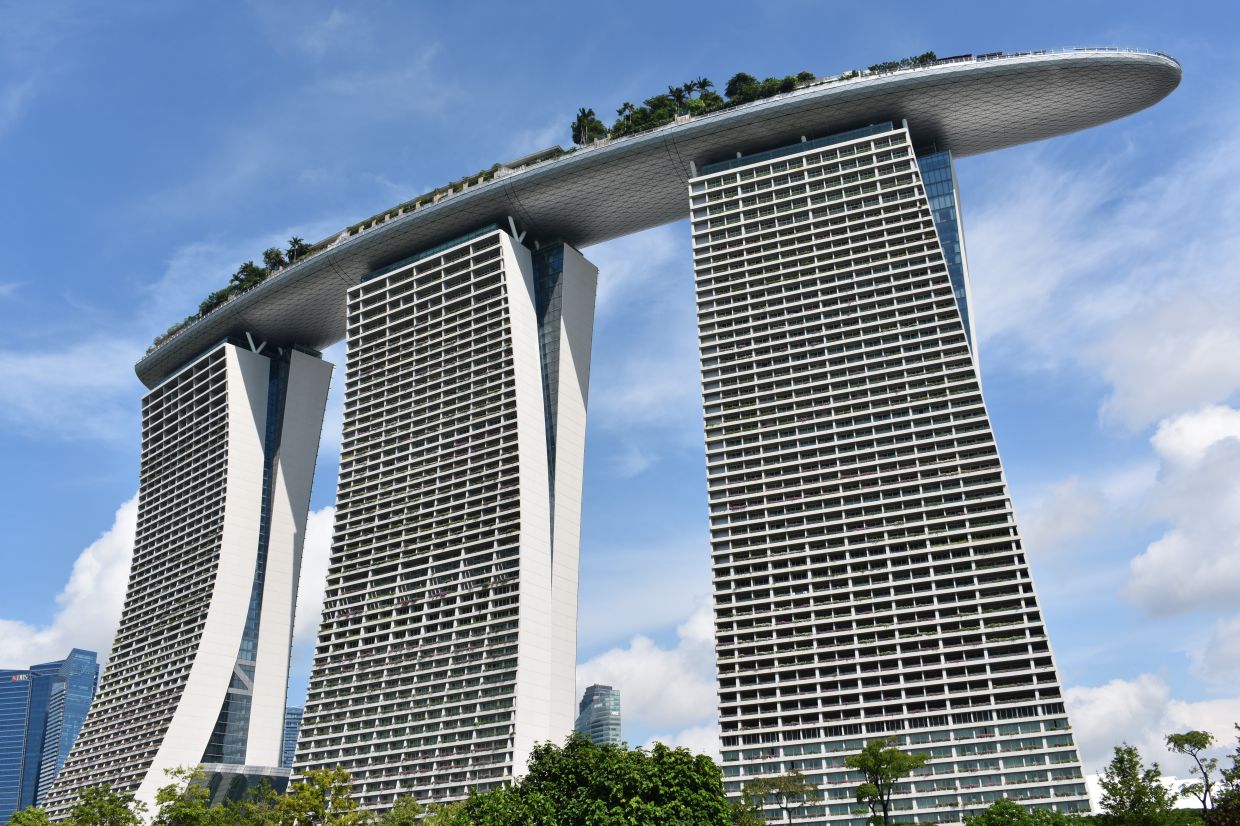
Singapore's two-casino monopoly is becoming lopsided in ways that threaten the long-term viability of Resorts World Sentosa, the weaker of the pair. The disparity surfaced vividly at Lunar New Year celebrations, where Marina Bay Sands lavished a Mercedes-Benz CLA 200 on its top sweepstakes winner while Resorts World Sentosa offered a bottle of Martell Cognac—a symbolic representation of a widening performance gap that has drawn regulatory alarm and put the integrated resort's gaming license in jeopardy.
The financial numbers underline the severity of the divide. During the first half of 2026, Marina Bay Sands generated casino revenues exceeding $2.1 billion, a figure that dwarfs Resorts World Sentosa's take, which fell short of one-third that amount. This disparity has crystallized into a strategic problem for Genting Singapore Ltd., the Malaysian-listed operator of Resorts World Sentosa, as it navigates what amounts to a high-stakes competitive test with its larger, richer competitor.
Singapore's gaming regulator has already signalled its displeasure. In November 2024, the Gambling Regulatory Authority deemed the Sentosa resort's tourism performance "unsatisfactory" and granted it a shorter-than-usual two-year casino license effective February 2025, departing from the standard three-year renewal cycle. The decision functions as a soft warning, compelling Genting Singapore to demonstrate measurable improvement before its next assessment in February 2027. Analysts interpret the move as regulatory pressure dressed in bureaucratic language—a way to push the underperforming operator toward urgent action without formally threatening revocation. "This is a soft threat," noted Zheng Feng Chee, a consumer analyst at DBS Group Holdings, though he acknowledged that "in reality, there are very few casinos that have the financial muscle to buy them out," suggesting that Singapore's government may have limited options if Resorts World Sentosa continues to decline.
The broader context amplifies Sentosa's predicament. Southeast Asia's financial hub has experienced a robust post-pandemic rebound in tourist arrivals, and wealthy gamblers from neighboring countries and mainland China have been streaming in. Notably, some high rollers have diverted gambling activity from Macau to Singapore, motivated by privacy concerns and the mainland's regulatory crackdowns on casino junkets and illicit money-exchange operations. That shift should, in theory, have benefited both Singapore casinos. Instead, nearly all the gains have accrued to Marina Bay Sands, suggesting that Resorts World Sentosa's competitive disadvantages run deep and structural.
The VIP customer segment—where a single high roller's expenditure can dwarf that of dozens of mass-market gamblers—illustrates the severity. Resorts World Sentosa held a larger share of VIP market revenue in 2023, but its position collapsed to roughly 20 percent in the first quarter of 2026 before recovering to 36 percent in recent months. The volatility itself speaks to a customer base prone to defection. To qualify as a VIP, gamblers typically deposit or spend at least S$100,000 (roughly $73,870 USD), then sustain consistent betting activity to secure memberships offering exclusive perks: private gaming suites, complimentary hotel stays, dining credits and invitations to high-end events.
VIP members at Resorts World Sentosa have lodged complaints that expose the resort's competitive weaknesses. They grumble about outdated infrastructure, sluggish management responsiveness to feedback, and cumbersome cash-and-chip exchange processes. Marina Bay Sands, by contrast, seduces high rollers with butler-service hotel suites, tickets to exclusive theatrical productions, lavish dining privileges and memberships in clubs that feel more aspirational than those across the harbor. The Marina Bay Sands integrated resort itself constitutes a premium experience: three soaring 57-story hotel towers crowned by an iconic boat-shaped rooftop, coupled with an art museum and luxury shopping precinct. It ranks among the world's most profitable casino resorts, a status that feeds reinvestment in luxury amenities and marketing to ultra-high-net-worth individuals.
Genting Singapore has not been idle. In April 2026, the company stated it maintains "close engagement" with regulators and positioned itself as "well positioned for the next assessment cycle." A Resorts World Sentosa spokesperson outlined the resort's efforts over the preceding 18 months to add new attractions and experiences, while enhancing hospitality and gaming offerings with an eye toward "sustainable growth over the next decade." Early signs appear encouraging, the company claims, though the broader market data suggests progress remains modest compared to the scale of Marina Bay Sands' dominance.
The integrated resort operator is undertaking a transformational S$6.8 billion revamp intended to be completed by 2030. Plans include an all-suite luxury hotel, an expanded oceanarium and the addition of Super Nintendo World to its Universal Studios Singapore premises. However, Marina Bay Sands has launched its own $8 billion makeover and expansion, adding a 55-story hotel tower and a live entertainment venue. The two resorts are essentially in a capital-intensive arms race, though Marina Bay Sands begins from a position of superior cash generation and market share, giving it greater capacity to invest and attract premium customers.
China-based gamblers have become central to Singapore's casino economics, particularly in the high-roller segment. The mainland offers visa-free entry to tourists, creating a natural pipeline of wealthy players seeking alternatives to Macau. Personal data privacy concerns—specifically the risk that Macau might share information with Chinese authorities—have motivated some high rollers to view Singapore as a safer, more discretionary jurisdiction. This structural advantage should have levelled the playing field between the two casinos, yet Marina Bay Sands has captured the lion's share, suggesting that luxury positioning, architectural prestige and customer service excellence matter more than geographic or regulatory accidents.
Industry observers paint a bleak picture for Resorts World Sentosa's near-term competitive standing. Ben Lee, managing partner at IGamiX, a Macau-focused consulting firm, declared bluntly: "I see them losing the battle, and even more market share." Lee attributed the decline to Resorts World Sentosa's failure to match Marina Bay Sands' "luxuriate experience," the intangible but decisive factor that sways the most coveted and highest-spending customers. Vitaly Umansky, senior analyst of global gaming at Seaport Research Partners, adopted similar language: Marina Bay Sands has "made the property more premium, more appealing to higher-value customers," leaving Resorts World Sentosa with "a lot of wood to chop" in order to recover lost market share.
Singapore's gaming industry has relied on international customers since Resorts World Sentosa opened in early 2010, followed shortly by Marina Bay Sands. Local citizens and permanent residents face a S$150 (approximately $117.19 USD) daily entry fee at either venue, effectively pricing out the vast majority of the resident population and concentrating the customer base among tourists and international high rollers. This structural reliance on foreign spending patterns heightens Sentosa's vulnerability if its competitive position continues eroding, as it cannot fall back on a domestic mass-market base to stabilize revenues.
The licensing renewal process scheduled for February 2027 will determine whether Singapore's government views Resorts World Sentosa's improvement efforts as sufficient or whether it imposes further conditions or a shorter license term. The regulatory pathway remains open, but the stakes are unmistakable: Genting Singapore must demonstrate tangible recovery in its VIP customer base and overall casino revenues, or risk a broader loss of confidence from both the market and the regulator. The contest between the two casinos is far from over, but the momentum and structural advantages have shifted decisively toward Marina Bay Sands, leaving Resorts World Sentosa fighting an uphill battle to recapture lost ground.

