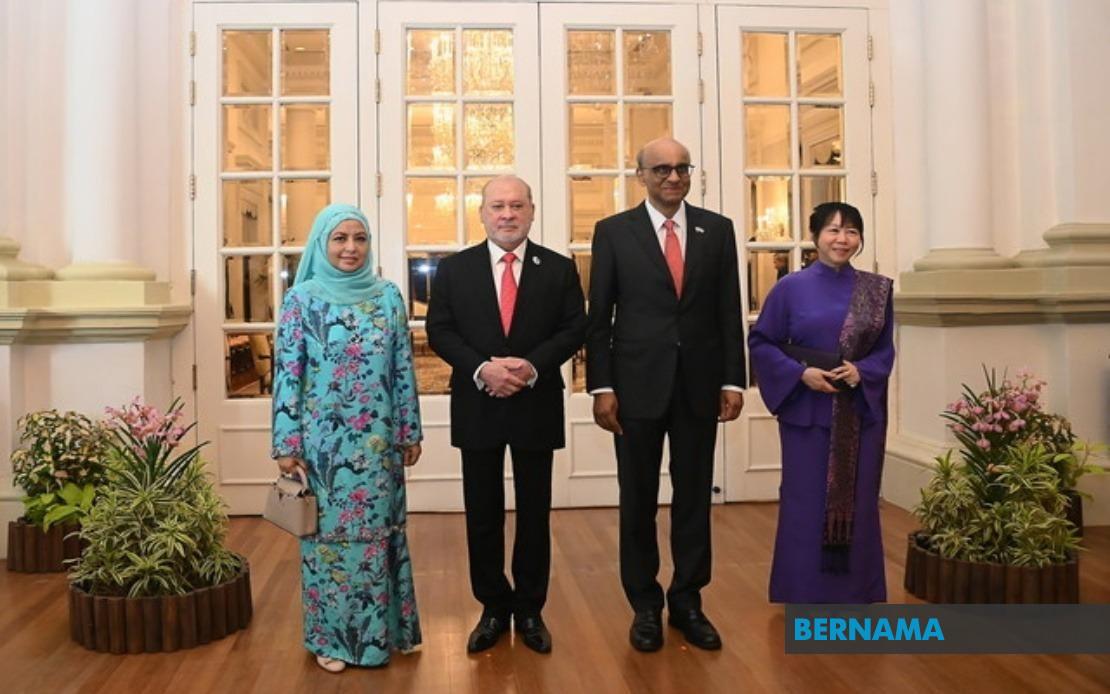
Singapore President Tharman Shanmugaratnam arrives in Malaysia this week for an official state visit carrying a message that the relationship between the two neighbours extends far beyond the pragmatic arrangements that typically define cross-border partnerships. Speaking ahead of his three-day visit at the invitation of His Majesty Sultan Ibrahim, King of Malaysia, President Tharman stressed that six decades of ties rest upon foundations of shared history, mutual trust and a commitment to resolving differences through dialogue rather than allowing disputes to derail broader cooperation.
The visit represents a continuation of longstanding diplomatic tradition, yet President Tharman's framing of the relationship signals an evolution in how both capitals view their interconnectedness. He explicitly rejected the notion that Singapore-Malaysia relations should be primarily transactional, arguing instead that the accumulated trust between the two nations must be actively renewed and deepened. This distinction carries particular weight amid what he describes as an "increasingly troubled world", where regional stability depends not on the absence of tensions but on the discipline to manage them responsibly through established channels.
Economic integration remains a cornerstone of this partnership, yet President Tharman outlined ambitions that extend significantly beyond traditional trade arrangements. The Johor-Singapore Special Economic Zone and the Rapid Transit System Link exemplify how both countries can combine their respective strengths to create mutual value. These projects are not merely infrastructure undertakings but symbols of a broader commitment to reducing barriers and increasing the velocity of people, goods and capital movement across the causeway. For Malaysian and Singaporean workers, students and businesses, such connectivity multiplies opportunities and reduces the friction that might otherwise limit regional development.
Climate and energy represent another frontier where President Tharman sees untapped potential for collaboration. As tropical nations facing similar environmental pressures and sustainability targets, Malaysia and Singapore possess natural incentives to develop renewable energy markets and carbon credit frameworks together. The scale of this cooperation could be substantial: both countries have announced energy transition targets that will require significant investment and technological development. By coordinating these efforts rather than pursuing parallel strategies, they could accelerate the pace of decarbonisation while creating economic opportunities in emerging sectors.
Digital integration and technology cooperation feature prominently in President Tharman's vision for deepened ties. ASEAN's recently concluded Digital Economy Framework Agreement, to be formally signed at the ASEAN Summit in Manila in November 2026, could potentially double the region's digital economy from a projected US$1 trillion to US$2 trillion by 2030 if implemented comprehensively. Malaysia and Singapore, as two of the region's most technologically advanced economies, could serve as pilots and proponents for such frameworks, demonstrating to other ASEAN members how digital integration creates prosperity without sacrificing sovereignty or cultural identity.
Cultural and people-to-people dimensions received particular emphasis from the Singapore President. The joint UNESCO inscription of the kebaya alongside Brunei, Indonesia and Thailand exemplifies how both nations can collectively celebrate shared heritage on the world stage. Similarly, ongoing efforts to secure UNESCO recognition for Chingay—the vibrant street procession that brings multicultural communities together—reflect a recognition that traditions and cultural expression serve as powerful connectors between peoples. Yet President Tharman acknowledged that nurturing these ties requires proactive facilitation rather than assuming they will persist naturally among younger generations. Bilateral exchange programmes, joint internships, youth leadership forums and collaborative community projects must be deliberately expanded to ensure that bonds forged by history continue to be renewed by personal relationships and shared experiences.
The question of managing bilateral disputes received candid treatment from President Tharman. He acknowledged that tensions inevitably arise between close neighbours sharing complex histories and overlapping interests, yet emphasised that successive governments on both sides have consistently chosen not to allow such issues to dominate the overall relationship. This approach—addressing differences directly while maintaining focus on broader cooperation—has built reserves of goodwill and trust that prove invaluable during periods of friction. The high levels of familiarity between leaders, officials and peoples create space for dialogue and mutual understanding that might be unavailable to countries lacking such established relationships. For the wider region, the Singapore-Malaysia model offers a counterpoint to narratives of inevitable conflict, demonstrating instead how discipline, restraint and commitment to international law can enable responsible dispute management.
President Tharman positioned both countries as custodians of ASEAN's future as the organisation navigates an increasingly fractious international environment. He commended Malaysia's 2025 ASEAN Chairmanship, which successfully navigated complex geopolitical currents while achieving significant milestones including the welcoming of Timor-Leste as the bloc's 11th member and substantial conclusion of the digital economy framework agreement. As Singapore prepares to assume the chair in 2027, both nations have mutual interests in maintaining ASEAN's centrality, unity and relevance—outcomes that depend fundamentally on the kind of bilateral trust and cooperation that Singapore-Malaysia relations exemplify.
The broader context for President Tharman's messaging involves intensifying great-power competition and fracturing of the multilateral trading system. Under such circumstances, regional integration takes on heightened strategic importance. By joining their markets more comprehensively and developing greater energy and supply chain resilience through closer partnership, Malaysia and Singapore can increase their collective value proposition to the world. This is not inward-looking regionalism but rather pragmatic recognition that smaller nations benefit from consolidated influence and reduced vulnerability to external shocks. For Malaysian policymakers, the implication is clear: deepening integration with Singapore expands rather than constrains policy options by creating network effects and reducing isolation.
The metaphor that President Tharman deployed—inviting hearts to shake hands—captures the tone of his remarks. Beyond the mechanics of cooperation agreements and infrastructure projects lies a call for a relationship that sustains itself through genuine human connection and shared purpose rather than mere institutional inertia. As Malaysia and Singapore navigate an era of rapid technological change, climate pressure and geopolitical realignment, the quality of their bilateral relationship will increasingly determine their capacity to protect their peoples' interests and prosper together. President Tharman's visit and his comprehensive articulation of this vision suggest that both capitals recognise this moment as one requiring renewed commitment and expanded ambition.

