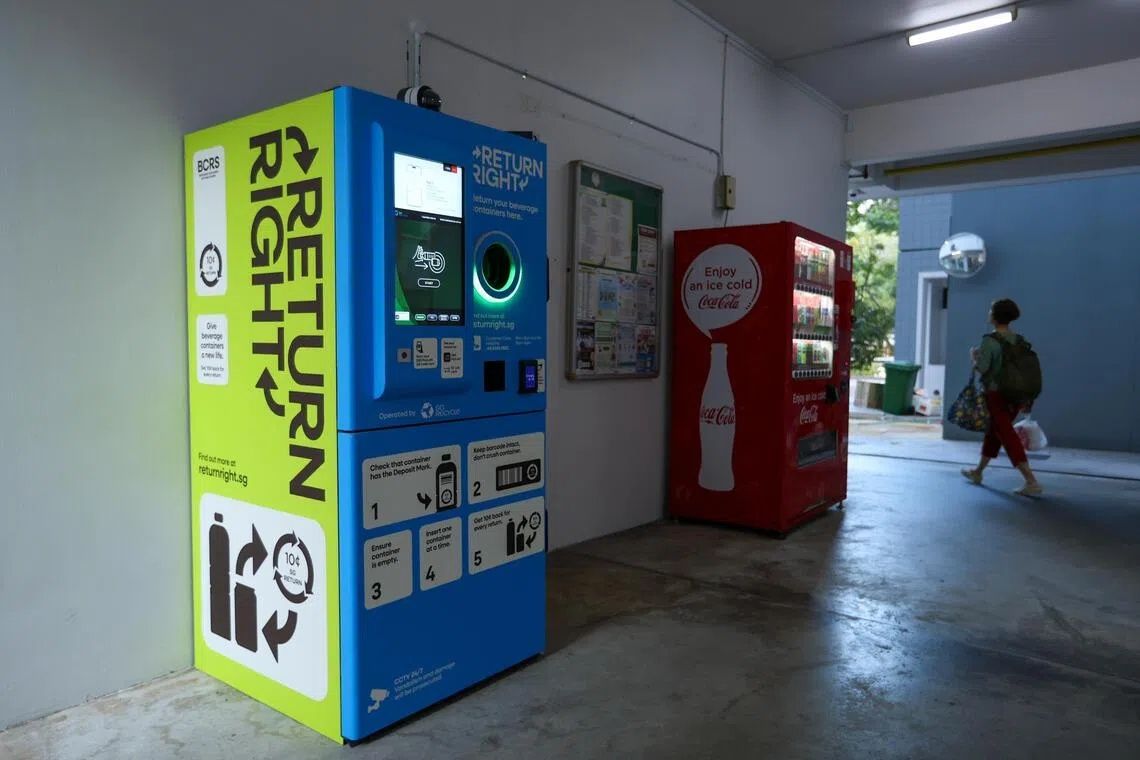
Singapore's National Environment Agency has moved to quash online accusations of financial mishandling and corruption tied to its Beverage Container Return Scheme, asserting that public misunderstandings about how the refund system operates have led to unfounded claims. The agency issued a statement on August 15 through its official channels to address growing confusion about deposit refunds stemming from earlier parliamentary comments that sparked interpretations among social media users about whether all containers were being properly refunded.
The controversy centres on how the public understands the relationship between the number of containers returned and the number of refund transactions processed. Senior Minister of State for Sustainability and the Environment Janil Puthucheary informed Parliament on August 5 that between April and July, the scheme recorded more than one million successful refunds across 5.5 million used bottles and cans deposited into reverse vending machines nationwide. Some online commenters seized on this apparent numerical discrepancy, suggesting that only one million containers received their 10-cent deposits back while the remaining containers' deposits had somehow disappeared—a serious allegation if true.
The NEA's clarification addresses a fundamental misconception about how the machines operate in practice. The agency explained that consumers are not restricted to returning a single container per transaction. Instead, customers routinely insert multiple containers during a single visit to a machine, meaning that the one million-plus successful refund transactions actually represent the cumulative return of all 5.5 million containers. This distinction is crucial to understanding the scheme's mechanics and explaining why the numbers appear inconsistent at first glance. On average, each transaction involved consumers returning approximately 5.5 containers, a figure consistent with typical recycling behaviour where people accumulate beverages over several days before visiting a collection point.
The financial implications are straightforward once the transactional structure is understood. With each container carrying a 10-cent deposit and 5.5 million containers having been returned, the total refunded amount reaches approximately S$550,000 (US$429,822). This calculation assumes that consumers received the full deposit value for their containers, which is the intended operation of the system. The NEA's statement deliberately emphasises that no deposits have been withheld or misappropriated, positioning the online accusations as stemming from misinterpretation rather than actual governmental wrongdoing.
Since its launch on April 1, Singapore's recycling initiative has encountered implementation challenges that merit examination separately from the deposit mechanics controversy. Machine malfunctions affected some users' ability to receive immediate refunds, with individuals reporting that technical errors prevented the smooth processing of their returns. In response, affected consumers had to contact the scheme operator directly through email to claim deposits they were entitled to receive, effectively creating a two-step process for some transactions rather than the intended seamless experience. These operational difficulties, while resolved or improving according to official statements, may have contributed to public wariness about whether deposits were being properly handled.
Parliamentary oversight of the scheme reflects Singapore's approach to environmental policy implementation. Janil acknowledged in his August 5 statement that while the vast majority of machine transactions and returns proceeded without incident, a limited number of technical issues did occur. He credited the scheme operator BCRS and the machine operators for working collaboratively to identify and resolve these problems promptly, suggesting that management had been responsive to difficulties as they emerged. The emphasis on rapid problem resolution is intended to demonstrate governmental competence and oversight of the programme.
The structure of Singapore's beverage deposit scheme mirrors systems operating in other developed economies seeking to boost recycling rates and reduce beverage container litter. By requiring consumers to pay an upfront deposit that they recover upon return, the financial incentive encourages participation and proper container disposal. The 10-cent deposit amount represents a moderate but meaningful incentive within Singapore's economic context, sufficient to motivate behaviour change without creating undue hardship. The reliance on automated reverse vending machines represents an attempt to modernise the deposit-return process, eliminating the need for manual counting at collection points.
Governmental and operational accountability under the BCRS framework includes mandatory financial reporting requirements. The scheme operator is required to submit annual reports to the NEA that detail financial accounts alongside operational data, creating a formal accountability mechanism. This reporting structure theoretically provides oversight of fund flows and prevents the kind of misappropriation that online commenters feared. However, the requirement for annual reporting means that detailed financial disclosure occurs only periodically, potentially leaving gaps in public visibility between reports, which may explain why online confusion crystallised into suspicion in the absence of readily accessible financial information.
The controversy illuminates broader challenges facing Singapore's environmental initiatives: the importance of clear public communication about programme mechanics and the speed at which online speculation can escalate into accusations of corruption. When governmental statistics are presented without sufficient contextual explanation, particularly when comparing absolute numbers that are easily misinterpreted, public confusion becomes inevitable. The NEA's response, while factually adequate, suggests that more detailed initial communication about how transaction volumes differ from container volumes might have prevented the misunderstanding altogether. For Malaysian observers and policymakers considering similar environmental schemes, the Singapore experience offers a cautionary lesson about the necessity of proactive public education and transparent data presentation from programme inception.
The refutation of corruption allegations represents a firm governmental stance against what officials characterise as baseless speculation. The NEA's categorical rejection of misappropriation claims, supported by clear mathematical explanation, aims to restore public confidence in the programme's integrity. Whether this response sufficiently addresses underlying public concerns about governmental financial management or whether residual suspicion persists remains to be seen as the scheme continues operating and awaits its first annual financial report to the NEA.

