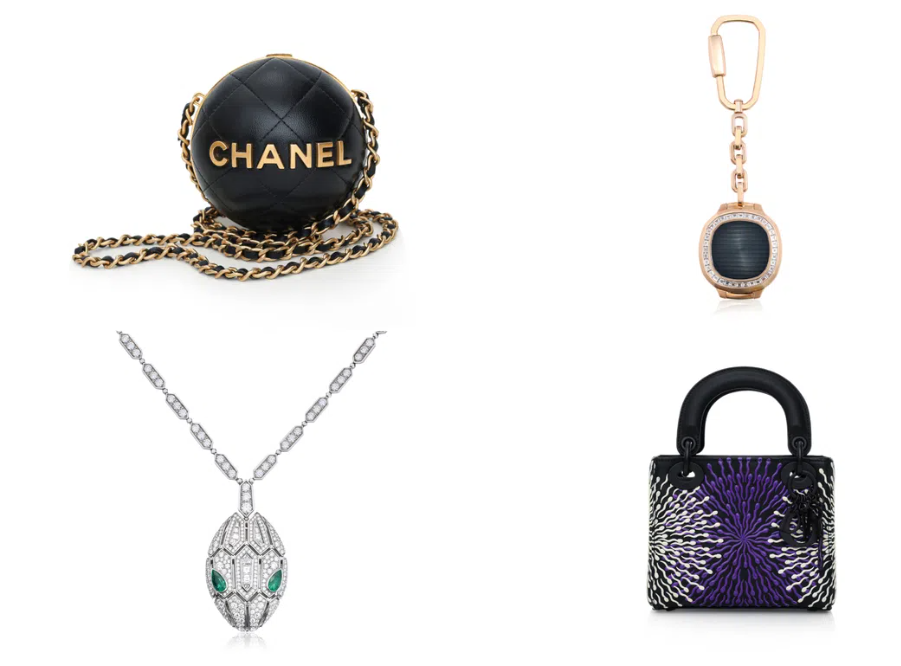
Singapore's authorities have commenced a massive liquidation process for the staggering haul of luxury assets confiscated during the nation's most significant money laundering investigation to date. Deloitte, the professional services firm managing the disposal, announced plans to systematically convert an estimated S$1.25 billion in seized non-cash assets into cash through a carefully orchestrated series of public auctions. The strategy reflects the scale and complexity of the probe, which has yielded extraordinary quantities of designer goods, fine art, vehicles, precious metals and real estate holdings worth considerably more than most private collections in the region.
The first phase of this ambitious asset liquidation campaign commences with two separate online auctions scheduled for September 7, with Hotlotz, a Singapore-based auction house, managing the sale of smaller items across a planned series of 15 auctions running through May 2027. Initial listings will feature more than 300 luxury handbags and accessories spanning coveted international brands including Chanel, Louis Vuitton and Christian Dior, alongside over 250 pieces of fine jewellery from prestigious houses such as Graff, Bulgari and Van Cleef & Arpels. Subsequent tranches will introduce timepieces from the world's most sought-after watchmakers, including Patek Philippe, Richard Mille and Rolex, with these sales expected to commence in November 2026. The catalogue for the opening auctions will be published digitally on September 7 at 10am Singapore time, with bidding opening immediately and continuing until 4pm on September 20, enabling participation from buyers across the globe.
The auction methodology employed in this case underscores Singapore's commitment to transparent asset liquidation practices. Interested bidders must undergo mandatory online registration with full identity verification procedures before participating, ensuring compliance with international anti-money laundering standards. Physical viewings of items have been arranged at Le Freeport, a maximum-security private vault facility in Changi, where registered buyers can schedule appointment-based inspections of specific lots. This layered approach—combining digital access with secure in-person viewing facilities—accommodates international bidders whilst maintaining rigorous security protocols appropriate to the provenance and sensitivity of seized assets in a high-profile criminal investigation.
Beyond the moveable luxury items, Deloitte has engaged major Singapore real estate agencies including SRI, Edmund Tie & Company (SEA) and Knight Frank to handle the progressive sale of more than 80 properties implicated in the money laundering network. Some properties will be marketed through traditional auction processes, while selected portfolios will be offered through expression of interest sales via List International Realty. Deloitte has explicitly cautioned members of the public to participate solely through officially appointed agencies and authorised channels, effectively warning against fraudulent sale schemes that might exploit public awareness of the high-profile asset liquidation. This decentralised approach to real estate disposal, parcelling properties across multiple professional firms, reflects the geographic dispersion and complexity of the seized real estate holdings.
The money laundering investigation itself ranks among Singapore's most consequential law enforcement operations in recent decades. An islandwide enforcement operation conducted on August 15, 2023 culminated in the arrest of 10 foreign nationals, all of whom have since been convicted and deported. The investigation progressively expanded to encompass seizure of approximately 207 properties, 77 vehicles, cryptocurrency holdings valued at over S$38 million, quantities of precious metals including 68 gold bars, and extraordinary quantities of luxury consumer goods including 483 designer handbags, 169 branded watches and 580 jewellery pieces. Additionally, authorities confiscated more than S$1.45 billion held within seized bank accounts and recovered over S$76 million in cash denominated in multiple currencies. The sheer inventory and diversity of seized assets underscore the sophisticated global nature of the criminal enterprise that authorities dismantled.
Through August 2025, approximately S$1.4 billion has already been realised through existing liquidation measures, primarily comprising cash seized from bank accounts and proceeds from initial asset sales. These funds have been deposited into Singapore's Consolidated Fund, effectively transferring the proceeds into national revenue. The remaining S$1.25 billion in non-cash assets represents the current focus of the Hotlotz-led auction programme and the real estate sales initiatives. For Malaysian readers and regional observers, this liquidation process carries particular significance as it demonstrates Singapore's institutional capacity to systematically convert illicit wealth into state revenue, whilst simultaneously signalling to transnational criminal networks that ill-gotten gains seized within the city-state cannot be easily recovered or retained.
The choice to conduct these auctions through a transparent, publicly accessible online platform represents a deliberate policy decision with implications for regional financial governance. By enabling global participation in the purchase of seized assets, Singapore maximises competitive bidding and achieves optimal market-clearing prices, thereby maximising proceeds returned to the state. Simultaneously, the public visibility of these auctions—advertised internationally and accessible to any verified bidder—serves a deterrent function, demonstrating that confiscated luxury assets do not vanish into government warehouses but face certain and complete liquidation. For organised criminal networks operating across Southeast Asia, this approach suggests that assets seized in Singapore represent permanent loss rather than temporary encumbrance.
The professional management of the liquidation process by Deloitte and Hotlotz reflects Singapore's integration into global best practices for complex asset management in criminal confiscation cases. Hotlotz, which has previously managed high-profile sales including a S$461,500 sale of a fountain pen once owned by founding Prime Minister Lee Kuan Yew, brings institutional reputation and market credibility to the process. The requirement for digital cataloguing, third-party professional appraisal and condition reporting ensures that buyers can assess items confidently despite purchasing through online-only channels. This standardised, professional approach stands in contrast to liquidation processes in some jurisdictions, where seized assets may be sold through opaque channels or administrative allocation methods.
The scale of the S$3 billion money laundering operation raises significant questions about financial system vulnerabilities within Singapore and across the broader Southeast Asian region. The investigation exposed the capacity of criminal networks to accumulate such extraordinary quantities of physical luxury goods within a densely regulated financial centre, suggesting sophisticated methods for layering illicit proceeds through legitimate commercial channels. The eventual confiscation and liquidation of these assets represents a post-facto enforcement response to a penetration that occurred despite Singapore's robust regulatory regime. For other Southeast Asian nations with less developed financial intelligence capabilities, the investigation serves as a cautionary tale regarding the persistent risks posed by transnational criminal networks capable of establishing substantial operational footprints even in relatively well-fortified regulatory environments.
The liquidation schedule extending through May 2027 reflects a measured, deliberate approach designed to avoid market-flooding effects that could depress prices if all assets were released simultaneously. By spacing auctions across multiple months and tranches, Deloitte and Hotlotz can tailor marketing strategies to specific buyer communities—handbag enthusiasts in the first phase, watch collectors in later tranches—and allow sufficient absorption capacity within each market segment. This phased strategy acknowledges that the aggregate value of the seized collection, if liquidated instantaneously, would represent a significant supply shock to specialty luxury goods markets. The extended timeline also provides investigative authorities with flexibility to address legal challenges, asset disputes or additional claims against the estate whilst liquidation proceeds incrementally.
For Malaysian authorities and financial regulators monitoring cross-border money laundering risks, the Singapore investigation and subsequent asset liquidation programme provide valuable operational insights. The diversity of illicit asset types—from traditional real estate and bank deposits to cryptocurrency, precious metals and branded luxury goods—underscores the multifaceted nature of contemporary money laundering schemes. Criminal networks increasingly embed proceeds across heterogeneous asset classes to obscure beneficial ownership and complicate tracing efforts. The successful identification, seizure and liquidation of such diverse asset portfolios requires coordinated capacity across multiple regulatory agencies, from financial intelligence units and law enforcement to real estate regulators and customs authorities. Singapore's integrated approach, whilst ultimately successful, required sophisticated investigative coordination that remains aspirational for many developing financial centres in the region.
The auction process will operate under heightened international scrutiny, with compliance and anti-corruption measures representing critical components of the liquidation strategy. All auction proceeds will be transparently accounted for and deposited into official government funds, with no opportunity for asset diversion or corrupt official benefit. The requirement for identity verification, the engagement of internationally recognised auction houses and the appointment of major real estate firms all serve to insulate the process from corruption allegations or claims of impropriety. For Southeast Asian nations developing their own asset recovery frameworks, Singapore's transparent and professional approach to converting confiscated criminal wealth into state revenue establishes a governance model worthy of emulation.
Ultimately, the massive auction programme now commencing represents the denouement of Singapore's largest money laundering investigation, converting abstract enforcement achievement into concrete financial recovery. The process will occupy international attention across the luxury goods market, real estate sectors and criminal justice spheres for the next two years. As online bidding begins in September 2026 and the first designer handbags and jewellery pieces change hands, the liquidation process will reinforce a potent message to the global criminal underworld: assets seized in Singapore face inevitable and complete liquidation through transparent public processes, with zero opportunity for recovery or negotiated compromise.

