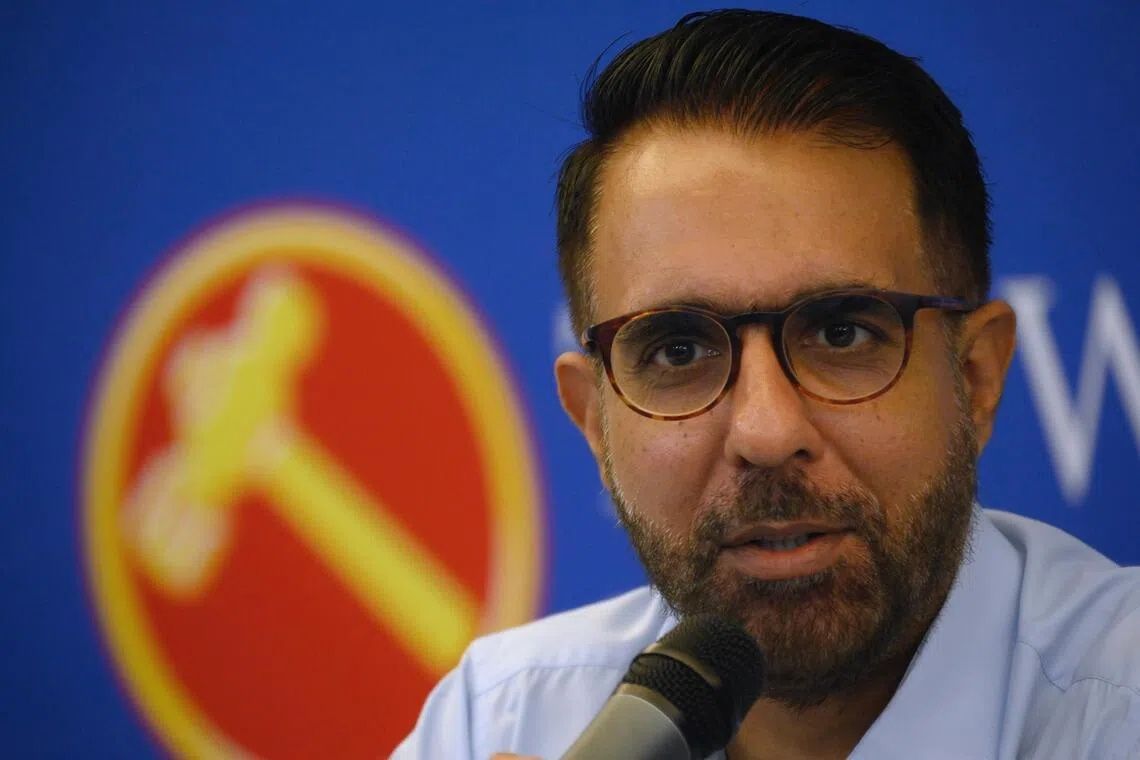
Singapore's main opposition Workers' Party is heading towards a significant internal reckoning as a coalition of dissatisfied cadres mobilises to challenge leader Pritam Singh in elections scheduled for June 28. The rebellion stems directly from a High Court ruling in December 2025 that upheld Singh's conviction for providing false information to a parliamentary committee, a judgment that has catalysed ongoing frustration within the party's leadership ranks and prompted serious moves to find an alternative candidate.
The push to unseat Singh represents a watershed moment for the party, which has enjoyed relative stability under his eight-year tenure without facing any formal leadership challenge. The dissident faction, comprising cadres who include former central executive committee members and election candidates, initiated the process by formally requesting a special conference in December 2025—a gathering that will now take place alongside the party's biennial ordinary cadres' conference. This dual voting structure creates a complex political dynamic: Singh will first be asked to account for his actions at the special conference, where cadres can demand his resignation or force a secret ballot on his leadership, before facing a potential challenge to his position as secretary-general at the ordinary conference.
The roots of this revolt trace back to Singh's handling of former Sengkang GRC MP Raeesah Khan's false parliamentary statement, which she fabricated in August 2021 but did not admit until November of that year. According to findings by Parliament's committee of privileges and later upheld by courts, Singh guided Khan in sustaining her lie rather than encouraging immediate clarification. This lapse in judgment strikes at the heart of the Workers' Party's political identity as an opposition force that has built its electoral appeal on a platform of integrity and trustworthiness—qualities that party cadres argue are now undermined by Singh's conviction. One cadre captured the sentiment succinctly: a party that voters support precisely because they believe it operates differently from the ruling establishment cannot maintain moral credibility when its own leader stands convicted of dishonesty.
Searches for a challenger have intensified recently, with party insiders confirming that overtures have been made to several senior MPs, though none has publicly committed to running against Singh. Names circulating within party discussions include Aljunied GRC MP Gerald Giam, Hougang MP Dennis Tan, and Sengkang GRC MPs He Ting Ru and Jamus Lim—the latter two notably serving on the disciplinary panel that found Singh had violated party constitution provisions. The reluctance of potential candidates to openly declare their intentions reflects the fraught internal environment, with party members citing fear of disciplinary action against those who voice criticism publicly.
The political landscape within the Workers' Party has shifted notably following rumours that former party chief Low Thia Khiang, who led the organisation from 2001 to 2018 and achieved its historic first GRC victory in 2011, has withdrawn support from Singh. Reports suggest Low voted against Singh during a central executive committee discussion of the disciplinary findings, sparking intense speculation about whether the veteran leader might back an alternative candidate. Low's potential endorsement carries considerable weight: party insiders estimate that combining approximately 30 unhappy cadres with those who respect Low's judgment could create a sufficient voting bloc to unseat Singh. However, current and former cadres do not expect Low to run himself for the position, leaving open the question of whom he might support.
The situation represents an echo of party history, as Low himself faced a leadership challenge in 2016 when former Aljunied GRC MP Chen Show Mao mounted an unsuccessful bid against him. Many of the same cadre veterans who supported Chen's challenge now form part of the group calling for Singh's resignation, suggesting that concerns about party direction and leadership performance have evolved rather than simply emerged. The potential for Low to mobilise these experienced party figures behind a new candidate could prove decisive in determining Singh's fate, particularly if the first special conference proceeds without Singh voluntarily stepping down.
Beyond the moral and integrity dimensions, Singh faces criticism on multiple strategic fronts. The party's performance in the 2025 general election disappointed some cadres, who believed the strong slate of candidates warranted gains in at least one additional constituency. Singh's decision to withdraw from Marine Paradise-Braddell Heights GRC on Nomination Day has also drawn private questioning from party members about strategic judgment. More significantly, Singh's removal as Leader of the Opposition by Prime Minister Lawrence Wong in January 2026 cost the party its parliamentary prominence. When Wong invited the Workers' Party to nominate another MP for the role, Singh and party leadership declined, choosing instead to close ranks around the embattled leader—a decision some cadres now view as prioritising personal loyalty over the broader opposition cause and party interests.
The mechanics of the June 28 proceedings create considerable uncertainty about the ultimate outcome. Any cadre in good standing can nominate themselves or another member for secretary-general. Singh requires only a simple majority to retain his position, a relatively modest threshold for someone who has led unopposed for eight years and may still command loyalty among significant segments of the approximately 100-plus cadre membership. However, the outcome of the first special conference could dramatically influence what happens at the second meeting: if Singh is voted out or prevails with only a narrow margin, the likelihood of a challenger stepping forward at the ordinary conference increases substantially. The fluid nature of the situation means that developments could continue shifting even as voting day approaches.
For Malaysian observers and regional analysts, the Workers' Party turmoil offers important insights into opposition party dynamics in Southeast Asia's electoral democracies. The convergence of legal setback, perceived leadership missteps, and strategic disappointments has created a rare window for internal challenge in an opposition party that has otherwise demonstrated cohesion. The role of elder statesman Low Thia Khiang particularly merits attention—his potential interventions illustrate how institutional memory and respected figures can reshape political trajectories even within organisations facing external electoral constraints. The broader question haunting the Workers' Party concerns whether removal of Singh would genuinely restore party credibility or whether the damage to the opposition's integrity brand has run too deep regardless of leadership change.
The resolution of this internal contest will carry implications beyond Singapore's borders. A successful challenge to Singh could signal that opposition parties in the region possess mechanisms for internal accountability and renewal, potentially strengthening democratic institutions. Conversely, if Singh survives the challenge or if the process devolves into destructive factional warfare, it could undermine confidence in the Workers' Party's ability to effectively challenge the ruling establishment. For regional observers tracking the health of opposition politics in tightly-managed electoral systems, the Workers' Party's June 28 proceedings represent a critical test of whether internal democratic processes can function meaningfully even under external constraints.

