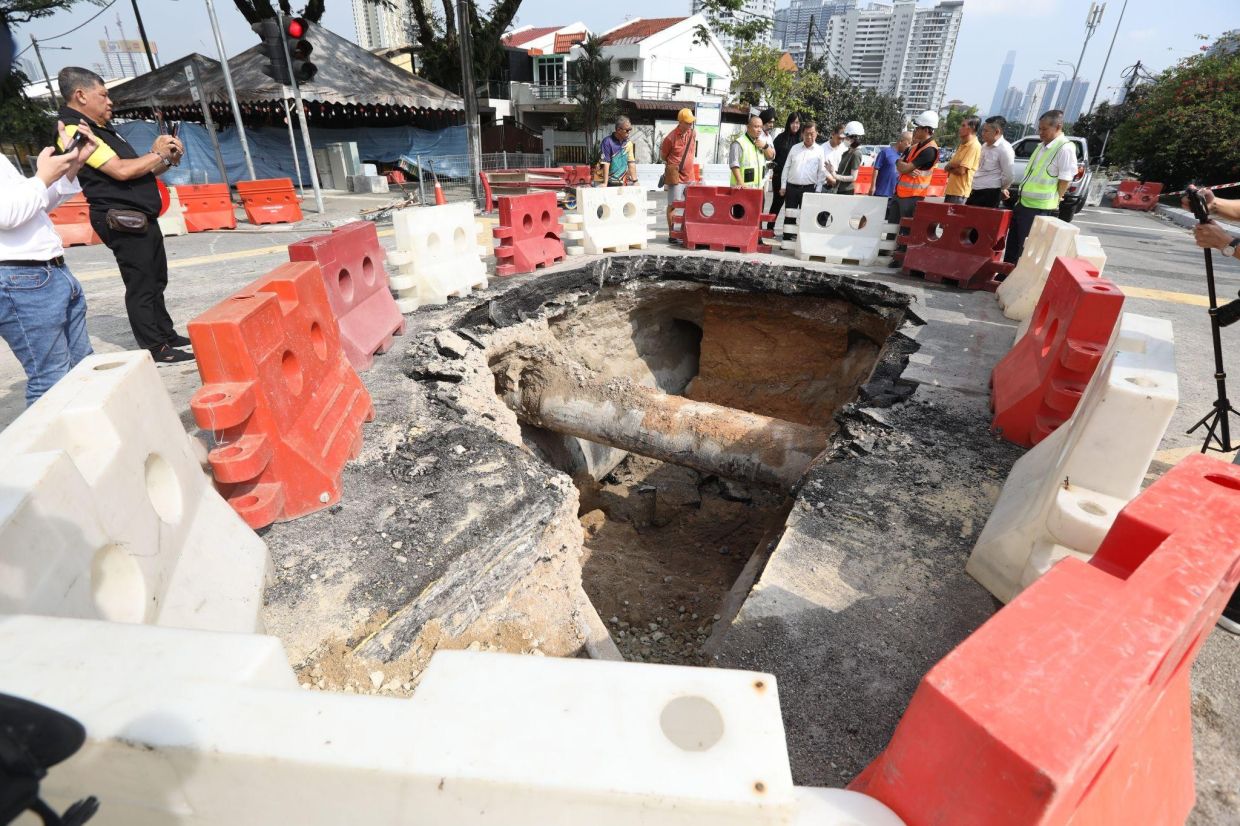
Malaysia's aging sewerage infrastructure faces mounting pressure from increasingly severe weather patterns, with sinkholes emerging as a tangible threat to public safety and urban stability. The convergence of more intense rainfall events and vulnerable underground pipelines has prompted Indah Water Konsortium (IWK) to adopt a comprehensive strategy combining technological innovation, predictive maintenance and emergency preparedness across a network spanning approximately 22,500 kilometres of public sewer lines nationwide.
Sinkholes form through a complex interplay of environmental and infrastructure factors that differ significantly across Malaysia's diverse geography and urban landscapes. The primary culprits include natural geological conditions beneath the surface, the movement of underground water tables, human activities during construction projects, and the deteriorating state of buried pipes and sewerage systems. Because each sinkhole incident presents unique circumstances shaped by local soil composition, drainage patterns and infrastructure age, specialists must conduct detailed technical investigations to isolate the precise cause—a process that underscores the need for sophisticated diagnostic capabilities rather than blanket solutions.
The particular vulnerability of Malaysia's sewerage infrastructure lies in its largest trunk sewers, particularly reinforced concrete pipelines measuring 600 millimetres in diameter and above. These critical arteries carry sewage flow at or near maximum capacity, exposing the concrete to velocities that accelerate wear while prolonged accumulation of hydrogen sulphide gas corrodes the pipeline walls from within. This combination creates a compounding deterioration cycle where structural weakness develops progressively, increasing the likelihood of catastrophic failure during periods of environmental stress.
Responding to these challenges, IWK has embraced a proactive risk-based asset management philosophy that relies on continuous condition monitoring using cutting-edge inspection technologies. Ground Penetrating Radar, closed-circuit television crawler inspections, push rod cameras and pole cameras allow engineers to assess pipeline integrity with precision tailored to site-specific circumstances. This technological arsenal enables IWK to identify emerging problems before they escalate into public emergencies, fundamentally shifting the approach from reactive repair to preventive intervention. Following inspection findings, the operator deploys trenchless rehabilitation techniques or targeted pipeline replacement to restore structural soundness and prevent cascading infrastructure failures.
The mechanics of weather-induced sinkhole formation reveal why Malaysia's tropical rainfall patterns present particular risks to aging sewerage systems. Heavy precipitation destabilises soil by saturating ground layers, which simultaneously reduces their load-bearing capacity and increases the stress placed on buried infrastructure. IWK chief executive officer Narendran Maniam explained that water-saturated ground loses structural integrity precisely when additional precipitation weight and pressure compound the burden on underground pipes. When pipes shift, crack or fail under these combined stresses, surrounding soil washes into underground voids, progressively enlarging empty spaces beneath the surface until the unsupported ground above suddenly collapses.
Beyond ground destabilisation, extreme rainfall directly damages sewerage pipes through pressure surges within the network itself. As rainwater penetrates the system through cracks, joints and manholes, the volume of liquid within pipes increases dramatically, creating hydraulic pressures that ageing infrastructure cannot withstand. Pipe cracks and burst sections then allow sewage to escape while drawing surrounding soil inward, further weakening ground stability. Older systems prove especially susceptible to this degradation cycle, as decades of accumulated minor damage reduce their capacity to tolerate additional stress. The cumulative effect transforms weather events that would previously have caused manageable inconvenience into potentially catastrophic infrastructure failures that endanger public safety and damage surface infrastructure including roads and buildings.
Understanding these mechanisms has led IWK to recognise that emergency preparedness cannot rest solely on maintenance protocols—coordinated crisis response capabilities must be embedded throughout the organisation and integrated with external agencies. Recently, IWK conducted a comprehensive Crisis Simulation Exercise at its Asian Sewerage Training, Research & Innovation Centre of Excellence (ASTRICE) that modelled a major sinkhole incident involving casualties and severe damage to critical pipeline infrastructure. The simulation tested operational team mobilisation, crisis management decision-making, and coordination channels with the Fire and Rescue Department, Royal Malaysia Police and other emergency responders, deliberately pushing systems to their limits within a controlled environment.
The structured simulation environment revealed gaps in response procedures and identified opportunities for improving inter-agency coordination during genuine emergencies. By testing communication pathways, decision protocols and resource deployment mechanisms before an actual crisis occurs, IWK documented vulnerabilities that might otherwise only become apparent during chaotic real-world incidents when response delays could prove fatal. The exercise strengthened and formalised the operator's crisis management standard operating procedures, ensuring every employee understands their specific role and decision authority when emergencies demand rapid coordinated action. This preparation has become increasingly urgent as Malaysia's weather patterns grow more unpredictable, making the occurrence of severe infrastructure failures less a matter of if but when.
Narendran emphasised that the simulation's controlled setting, despite the absence of actual emergency conditions, will meaningfully enhance IWK's capacity to manage future crises effectively. The findings provide concrete intelligence for enhancing crisis management plans and improving the speed and quality of decisions made under pressure. Protecting public safety and maintaining Malaysia's continuous sewerage operations remain IWK's paramount objectives, a priority that demands both constant technical vigilance and systematic preparation for scenarios that could otherwise overwhelm unprepared systems.
As extreme weather becomes an increasingly common feature of Malaysia's climate rather than an occasional aberration, preparedness through continuous planning, specialised training and collaborative relationships with emergency agencies has evolved from prudent practice into operational necessity. IWK's multifaceted approach—combining asset condition monitoring, infrastructure rehabilitation, crisis simulation and inter-agency coordination—reflects recognition that Malaysia's sewerage system must simultaneously function as daily utility and resilient critical infrastructure capable of withstanding environmental stresses that are intensifying and becoming less predictable. Through sustained commitment to this integrated strategy, IWK aims to protect communities and preserve the reliability of infrastructure that underpins public health and urban development across the nation.

