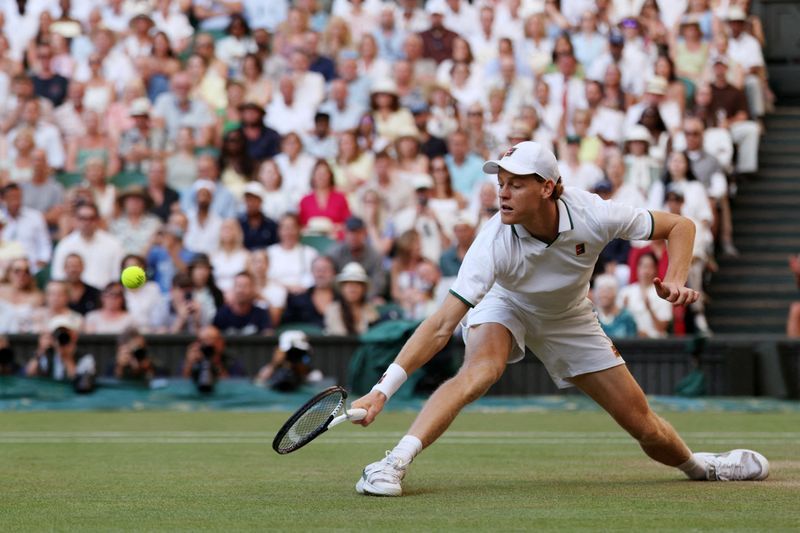
Jannik Sinner's withdrawal from the US Open due to a persistent right knee injury represents a significant blow to the tournament's competitive depth, with the Italian's absence reshaping the final Grand Slam event of the season. The 24-year-old world number one announced on Friday that he would not compete at Flushing Meadows, citing insufficient recovery time despite intensive work with his medical and coaching teams. His decision eliminates one of the strongest contenders for the title and fundamentally alters the landscape of the men's competition.
Sinner sustained the injury earlier this month and has remained sidelined since, unable to participate in two crucial hard-court preparation tournaments. The Cincinnati Open and Canadian Open, traditionally important warm-up events before the US Open, were both missed due to his condition. His absence from these competitions should have served as a warning signal about the severity of the injury, yet his official withdrawal announcement came only as the tournament drew imminent. In a statement released on social media platform X, Sinner explained that despite the considerable effort invested in rehabilitation, recent testing at training sessions in Monte Carlo revealed that additional time remained necessary before he could safely return to competitive play.
The decision underscores the challenges elite athletes face when balancing competitive ambition against medical necessity, particularly when major tournaments loom. Sinner had captured his fifth Grand Slam title at Wimbledon just weeks earlier, demonstrating the physical toll of maintaining peak performance through back-to-back major tournaments. The timing of his injury and subsequent recovery period highlights how demanding the professional tennis calendar remains, even for players at the pinnacle of the sport. His withdrawal also raises questions about the intensity of preparation schedules during the latter stages of the season.
For Southeast Asian tennis enthusiasts and sports observers, Sinner's absence diminishes the global appeal of the US Open at a moment when the tournament seeks to maintain its status as tennis's premier autumn event. The Italian's youthful dominance and consistent performances have contributed to growing international interest in professional tennis. His absence represents a missed opportunity for fans across the region to witness world-class competition at its highest level during one of the calendar year's marquee sporting occasions.
The immediate beneficiary of Sinner's withdrawal is world number two Carlos Alcaraz, who confirmed just days earlier that he would participate in the tournament following a four-month competitive hiatus. Alcaraz brings proven success at Flushing Meadows, having defeated Sinner in last year's final to claim the title. His return from injury layoff, while still an uncertain proposition, now proceeds without the threat posed by the world's top-ranked player. The Spaniard's path to capturing an eighth Grand Slam crown has been considerably smoothed by Sinner's decision, as their fierce rivalry had positioned either player as the primary favorite heading into the fortnight.
Alcaraz's recent injury problems had created genuine uncertainty about his readiness to compete at the highest level. His absence from the professional circuit for an extended period meant that match fitness and competitive rhythm remained significant questions upon his return. However, the removal of Sinner from the equation substantially reduces the quality of opposition he must overcome en route to the final. The head-to-head dynamic between these two generational talents has defined recent Grand Slam tournaments, and their matchups have consistently provided compelling tennis that captivates global audiences.
The broader implications for the tournament extend beyond the Alcaraz-Sinner dynamic. Other elite contenders such as Novak Djokovic, Taylor Fritz, and other seeded players inherit improved chances of advancing deep into the draw without encountering Sinner's formidable baseline game and relentless consistency. The absence of the world number one fundamentally recalibrates expectations about which players possess realistic title-winning aspirations. Tournament organizers and broadcasters face the challenge of marketing a major Grand Slam without its highest-ranked participant, a situation that inevitably affects the narrative surrounding the event.
From a regional perspective, Sinner's withdrawal carries implications for the development and commercial viability of tennis throughout Asia and the Pacific. The growth of professional tennis in countries like Malaysia, Singapore, and beyond has been fueled partly by compelling narratives featuring the sport's brightest stars. The absence of a world number one from a Grand Slam tournament diminishes the inspirational pull for emerging players and potentially affects viewership patterns across the region. However, it also underscores the genuine physical demands of elite professional tennis, serving as a reminder that even the sport's most talented athletes must prioritize long-term career health.
Sinner's injury management decision reflects an increasingly sophisticated approach to athlete longevity within professional tennis. Rather than risk further damage by competing while inadequately recovered, the decision to withdraw acknowledges the importance of comprehensive rehabilitation. This philosophy stands in contrast to historical approaches where players frequently competed through pain and injury. The Italian's willingness to sacrifice immediate competitive opportunities for longer-term wellbeing potentially positions him better for sustained success throughout his career.
The US Open, scheduled to run from August 23 through September 13, will now proceed without its top seed, fundamentally altering predictions and expectations. Analysts and commentators must recalibrate their pre-tournament assessments, while betting markets and performance projections undergo substantial revision. The tournament's compelling draw of elite international talent remains substantial, yet the absence of the world's best player cannot be overlooked. Alcaraz emerges as the de facto favorite, while other contenders now possess clearer pathways to deep tournament runs that were previously obstructed by Sinner's formidable presence and consistent performance standards.

