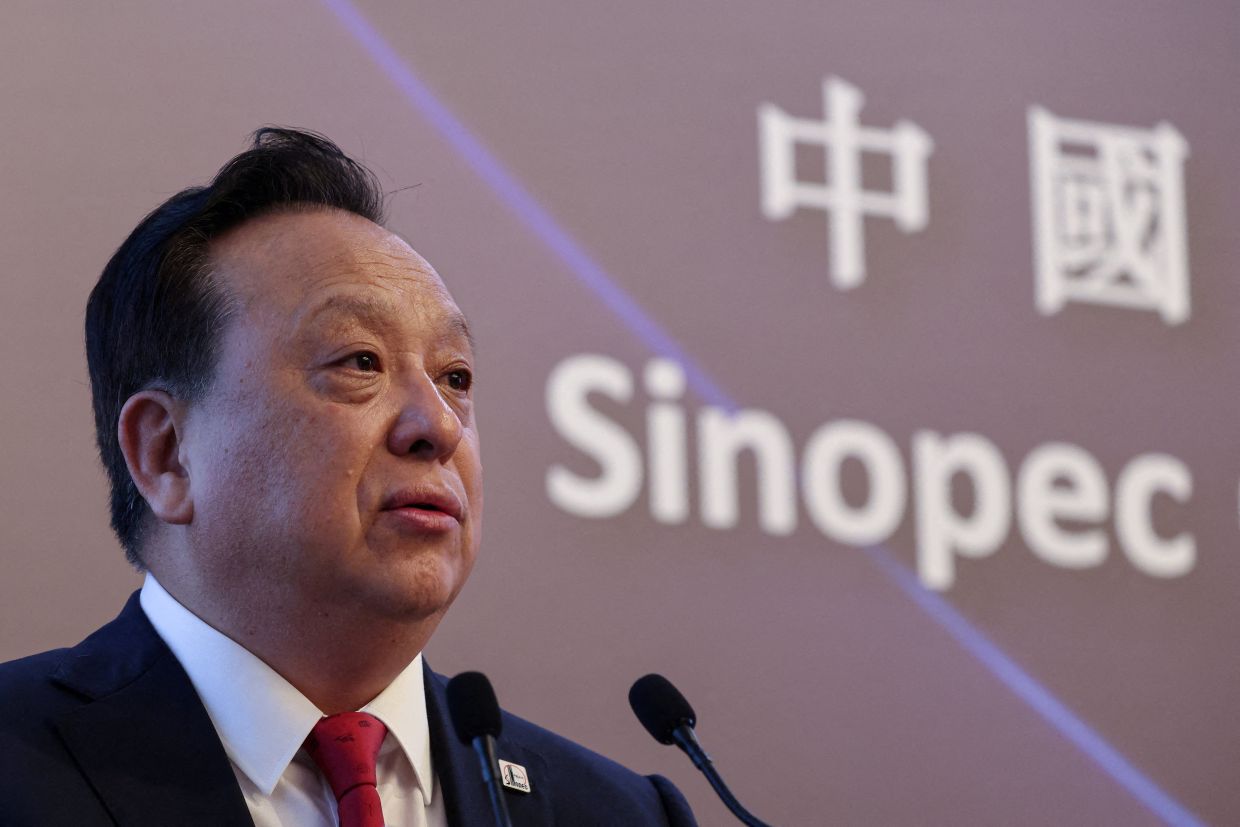
Hou Qijun, who assumed leadership of Sinopec just over a year ago, is steering the world's largest refiner through one of the energy sector's most consequential transitions. Rather than coast toward retirement like many of his counterparts at other Chinese state enterprises, the 60-year-old executive is pressing ahead with a sweeping overhaul designed to address fundamental structural challenges facing the company. This transformation comes at a critical juncture when Sinopec confronts shrinking fuel markets, swelling petrochemical excess capacity, and global oil price instability that has severely compressed margins.
The architect of this revival strategy has already reorganised Sinopec's sprawling operations into four distinct profit centres focused on specific business pillars: upstream oil, gas and renewable energy; refining and petrochemicals; financial services and strategic new ventures; and a combined unit handling international trade alongside domestic marketing of fuel products, natural gas and chemical outputs. This structural reconfiguration represents far more than corporate shuffling—it reflects a deliberate effort to instil entrepreneurial accountability and accelerate decision-making within an organisation that, by Hou's own assessment, has become sluggish and disconnected from market realities.
In unusually candid remarks published in July through China's State-owned Assets Supervision and Administration Commission magazine, Hou diagnosed the core ailment afflicting Sinopec with refreshing directness. He identified systemic and organisational stagnation as the principal obstacles to transformation, rather than technical capability or resource constraints. The impediments, he explained, are cultural and institutional—the manifestation of what he termed the "big company syndrome," wherein expanded scale paradoxically diminishes an organisation's capacity to sense and respond swiftly to market shifts. This frankness from a state enterprise executive signals both the severity of Sinopec's predicament and Hou's willingness to challenge conventional thinking within China's state-owned sector.
The urgency driving Hou's agenda becomes apparent when examining Sinopec's operational trajectory. Fuel sales have deteriorated to 2017 levels despite nearly a decade of intervening economic activity, and the company faces formidable headwinds in defending its domestic market share. Last year, Sinopec moved approximately 3.6 million barrels daily of gasoline and diesel, predominantly serving the Chinese domestic market. However, this production capacity has transformed from an asset into a vulnerability as vehicle electrification accelerates throughout China's automotive industry, fundamentally undermining demand for transport fuels. The mathematics are stark: if half of newly registered automobiles no longer require fuel, then expanded gasoline and diesel production cannot sustainably generate revenue growth regardless of manufacturing efficiency.
Hou articulated this structural dilemma with striking clarity during Sinopec's recent Hong Kong earnings presentation, posing a rhetorical challenge to the traditional refining model: how can an enterprise justify expanding fuel output when its principal end-users are abandoning combustion engines? His response involves a deliberate strategic pivot toward petrochemical specialisation, which he describes as a more defensible long-term position. Beyond chemicals, Hou envisions a phased energy transition in which upstream petroleum operations eventually yield to renewable sources, progressing through intermediate stages of reduced-carbon intensity before ultimately reaching zero-carbon production.
Concretely, Sinopec has committed approximately 20 percent of its total capital expenditure—exceeding 30 billion yuan or USD 4.46 billion annually—to new energy and advanced materials throughout the 2026 to 2030 five-year planning cycle. This allocation represents a significant reorientation of investment priorities and signals executive conviction that traditional hydrocarbons cannot sustain the company's long-term viability. Hou has established an ambitious portfolio of over thirty development initiatives scheduled for completion by the decade's end, encompassing reserve augmentation, shale oil commercialisation, sustainable aviation fuel production and refining cost reduction through technological advancement.
The petrochemical diversification strategy, however, confronts formidable competitive obstacles that may constrain Sinopec's capacity to capture value in this shifting landscape. Regional competitors including Wanhua Chemical, which operates with government backing, and privately capitalised Satellite Chemical have already established substantial positions in high-margin petrochemical segments. The global ethylene market, a foundational building block for plastics and synthetic fibres, currently suffers from severe overcapacity, compressing margins across the entire value chain. Sinopec's challenge lies not merely in redirecting production capacity but in establishing competitive differentiation within crowded, mature chemical markets.
Shale development represents another critical pillar of Hou's revitalisation strategy, particularly at the Jiyang trough situated within Sinopec's venerable Shengli oilfield complex. As conventional reserves within this prolific asset decline toward depletion, commercial shale development becomes essential for maintaining upstream production volumes. Hou has personally assumed responsibility as project commander, underscoring the initiative's strategic importance and his personal commitment to execution. His background as a geologist who rose through ranks at China's flagship Daqing oilfield and served as general manager of the Asia-Pacific region's largest upstream producer, China National Petroleum Corp, provides substantial technical credibility and operational experience relevant to navigating shale development's substantial technical and commercial challenges.
Hou's appointment to Sinopec in June 2025 followed his tenure restructuring China's oil and pipeline infrastructure through his leadership of PipeChina from 2019 to 2021, when he consolidated pipeline assets from China's three petroleum majors into a unified state entity. That experience demonstrated his capacity to execute complex organisational transformations within the state-owned energy sector and his ability to navigate Beijing's strategic priorities. Colleagues describe Hou as a decisive, action-oriented executive willing to operate beyond prepared remarks, capable of sustained discourse combining conviction with analytical rigour. His demonstrated familiarity with China's entire energy value chain—from upstream exploration through midstream infrastructure to downstream refining and distribution—positions him to identify synergies and optimisation opportunities unavailable to specialists focused on discrete business segments.
Hou's restructuring efforts, while ambitious, operate within parameters defined by China's state ownership structure and government energy policy. The company maintains substantial institutional advantages including preferential access to capital through state banking channels, protection of domestic market share through government influence, and alignment with Beijing's strategic objectives regarding energy security and industrial policy. Yet these structural advantages also constrain flexibility and impose obligations to prioritise national energy objectives over commercial returns. His capacity to successfully balance these competing imperatives—advancing shareholder value whilst serving state priorities—will ultimately determine whether his transformation initiative succeeds or whether Sinopec remains trapped within the operational constraints afflicting many state-owned enterprises.
The broader energy transition context shaping Sinopec's strategic calculus extends beyond China's borders and carries implications throughout Southeast Asia and the Asian-Pacific region. As China's energy consumption patterns shift definitively toward electrification and renewable sources, regional oil demand will adjust accordingly, potentially creating supply imbalances and price volatility affecting economies throughout the ASEAN community. Sinopec's diversification into petrochemicals and new energy simultaneously reflects and accelerates these regional transition dynamics, potentially creating new competitive pressures for regional chemical producers whilst opening opportunities for companies positioned within emerging sustainable energy sectors.
The fundamental question animating Hou's transformation agenda concerns whether state-owned enterprises can successfully compete within dynamic, innovation-intensive new energy markets against increasingly formidable private competitors. Sinopec possesses substantial capital resources, established distribution networks, and strategic government backing that private enterprises cannot replicate. Conversely, private competitors typically demonstrate greater agility, faster decision-making cycles, and incentive structures that reward innovation and commercial execution. Whether Hou's restructuring initiative can overcome these institutional disadvantages whilst preserving the advantages of state ownership remains uncertain, but his willingness to candidly diagnose problems and pursue solutions suggests a leadership approach distinct from many state enterprise executives across the region.

