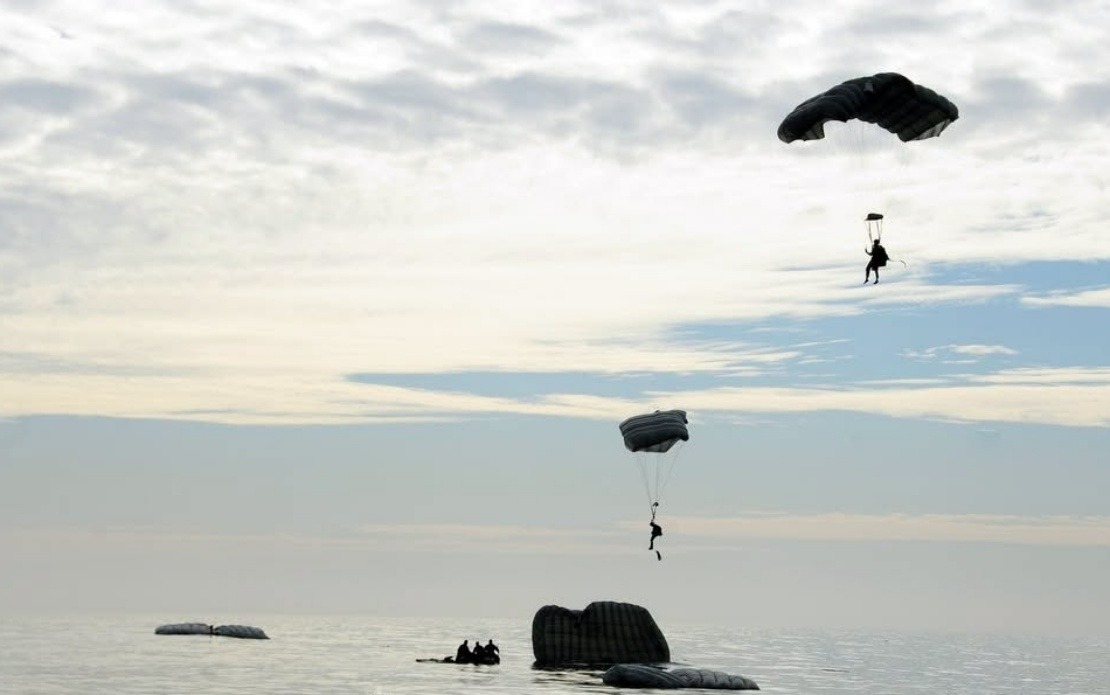
Six personnel from Malaysia's elite Naval Special Warfare Forces, commonly known as PASKAL, have been safely recovered after an incident during a parachute training operation in the South China Sea. The servicemen drifted at sea after failing to reach their intended landing zone during a free-fall exercise, but were located and brought to safety by a Royal Malaysian Navy vessel, according to a statement issued by the RMN on August 13.
The recovery operation demonstrated the effectiveness of Malaysia's maritime search and rescue capabilities in the region. An RMN vessel that was operating in the vicinity quickly responded to the situation and retrieved all six personnel who were found floating in the waters. The rapid deployment of assets underscores the Navy's commitment to monitoring operations and maintaining readiness in Malaysian waters, particularly in the strategically important South China Sea where naval activities are consistently monitored.
Investigation into the incident revealed that sudden and unpredictable weather changes played a significant role in the exercise going awry. The deteriorating visibility conditions created by these weather shifts made it extremely difficult for the parachutists to navigate accurately toward their pre-planned landing area. Such environmental challenges are not uncommon in the South China Sea, where meteorological conditions can shift rapidly and dramatically affect visibility and sea state, creating hazardous situations for maritime operations and military exercises.
Rather than viewing the incident as a training failure, the Royal Malaysian Navy characterised it as validation of PASKAL's comprehensive preparation methodology. The RMN's statement emphasized that the personnel's ability to remain composed and survive an unplanned immersion in the sea reflected the intensive nature of their training regimen. PASKAL, as a special operations unit, maintains some of the highest standards of physical conditioning and psychological resilience among Malaysian military personnel, requirements that proved invaluable when the exercise encountered unexpected complications.
The incident provides insight into how elite military units transform challenging scenarios into learning opportunities. The RMN noted that beyond conventional combat capabilities, PASKAL's rigorous training program specifically develops survival instincts, mental fortitude, and discipline necessary for personnel to manage extreme situations effectively. These attributes extend well beyond traditional tactical proficiency and represent the holistic approach modern special forces units employ when preparing operatives for real-world deployments where conditions rarely align with optimal planning assumptions.
The unit's organizational motto, "Sentiasa yang Terbaik" or "Always the Best," encapsulates the philosophy underpinning PASKAL's training methodology and operational ethos. This commitment to excellence translates into demanding physical preparation, scenario-based exercises that stress personnel beyond their comfort zones, and continuous evaluation of decision-making capabilities under pressure. The August 13 recovery operation effectively demonstrated how this cultural emphasis on excellence manifests when personnel face genuine adversity in the field.
The Royal Malaysian Navy has emphasized its dual commitment to maintaining combat effectiveness while safeguarding the welfare of service personnel. This balance represents a critical consideration for any military organization operating in challenging environments, particularly in Southeast Asian waters where operations frequently occur in remote areas far from immediate support infrastructure. The careful calibration between pushing personnel to achieve peak performance and ensuring reasonable safety protocols reflects mature military planning that recognizes operational readiness and personnel welfare as complementary rather than competing objectives.
From a broader perspective, the incident highlights the importance of maintaining robust training standards even as the region faces mounting security challenges. The South China Sea continues to warrant careful naval attention and presence, particularly for Malaysia given the country's extensive maritime territorial interests. Regular exercises involving special forces units like PASKAL serve multiple strategic functions: they validate equipment and procedures, maintain personnel proficiency, and signal maritime presence in contested waters.
The successful recovery also underscores Malaysia's capability to respond effectively to maritime emergencies within its waters. The RMN's rapid response to the situation and successful retrieval of all personnel demonstrates operational preparedness and the effectiveness of communication protocols established for military exercises. These capabilities become increasingly valuable given the region's strategic complexity and the need for Malaysian forces to maintain credible presence and operational tempo across extensive maritime zones.
Looking forward, the incident will likely inform refinements to PASKAL's training protocols, particularly regarding weather contingency planning for airborne operations over water. Military organizations globally continuously incorporate lessons from exercises, planned or otherwise, to enhance procedures and equipment. The RMN statement's measured and positive framing suggests that internal reviews will focus on incremental improvements rather than fundamental changes to training approaches that clearly prepare personnel for genuine adversity.
The episode reinforces that even carefully planned military operations can encounter unforeseen complications, but that proper preparation, robust institutional support systems, and well-trained personnel can effectively manage such situations. For Malaysia's defense establishment, maintaining PASKAL as an effective special operations capability remains strategically important, requiring continued investment in training, equipment, and personnel development to ensure the unit can respond to evolving security requirements in Southeast Asian waters.

