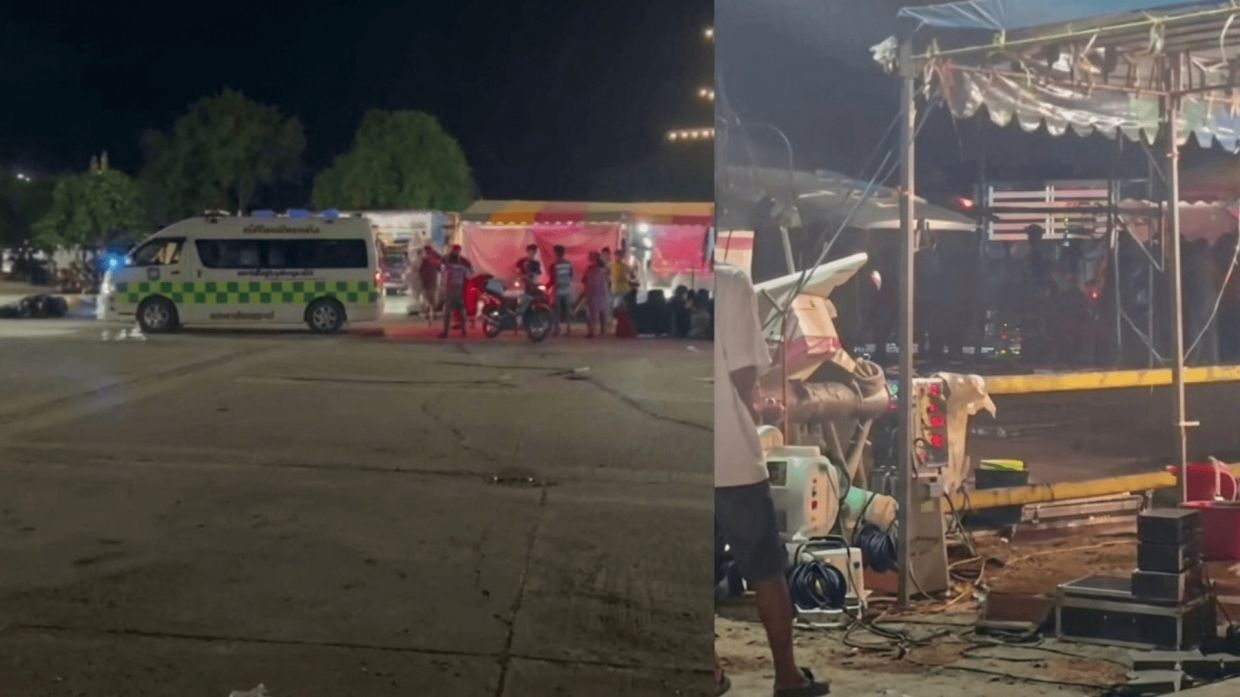
A brazen daylight attack on a shopping fair in northeastern Thailand has left six people injured, marking the third shooting incident within a week in a country grappling with escalating gun violence. The incident unfolded at the "Chim Shop Chai" fair in Dan Khun Thot district, Nakhon Ratchasima province, when assailants wielding both bladed weapons and a homemade firearm descended upon the event around 10:30pm on Wednesday night, targeting vendors and shoppers as the gathering wound down for the evening.
According to event organiser Prakob Patin, the assault occurred during the critical closing period when merchants were dismantling their stalls and preparing to leave. The chaotic circumstances of the attack, coupled with the weapons used, transformed what should have been a routine evening marketplace into a scene of violence. All six wounded were initially rushed to Luang Pho Koon Parisuttho Dan Khun Thot Hospital, though two victims with critical injuries required further stabilisation and were subsequently transferred to the larger Maharat Nakhon Ratchasima Hospital. One of these severely wounded patients remains in a comatose state, presenting a grave prognosis.
The sequence of events leading to the shooting revealed a troubling escalation from what appeared to be a petty theft to organised armed violence. Police investigation established that the principal suspect, a 32-year-old man now in custody, initially attempted to steal a motorcycle parked at the fair. When confronted by the motorcycle's owner, the suspect apparently recognised the futility of his theft attempt and made a tactical withdrawal from the scene. Rather than abandoning his criminal intentions, however, the man returned with additional accomplices armed with knives and firearms, transforming a minor dispute into a coordinated assault.
Law enforcement authorities moved swiftly to respond to the violence. A police team directed by Dan Khun Thot Police Station Deputy Investigation Inspector Pol Lt Col Akom Chutkhunthot apprehended the primary suspect and recovered the improvised firearm used in the assault. The capture of the homemade weapon underscores a persistent problem in Thailand's security landscape: the proliferation of crude but functional firearms manufactured outside official channels, which often elude standard law enforcement detection methods and regulatory frameworks.
The investigation has progressed rapidly, with authorities already preparing formal charges against the arrested suspect for jointly attempting to commit murder through the use of a firearm. However, police have acknowledged that the case remains incomplete, with unknown associates who accompanied the primary suspect still at large. The ongoing manhunt for these remaining individuals represents a critical phase of the investigation, as locating and interrogating them could provide insight into whether this was an isolated criminal incident or part of a larger pattern of organised violence.
The timing and nature of this attack carry particular significance within Thailand's recent security context. This incident represents the third shooting occurrence in merely seven days, suggesting a disturbing trend that extends beyond isolated criminal acts. On August 7, a mass shooting at Debsirin Nonthaburi School claimed nine lives in a tragedy that shocked the nation and sparked renewed debates about firearm control and security measures. Additionally, on Monday, a former Thai legislator was accused of shooting the president of the Nonthaburi Provincial Administrative Organisation, indicating that even political figures have become targets in this wave of violence.
For Malaysian observers and Southeast Asian security analysts, the incident illustrates vulnerabilities that transcend national borders. The use of homemade firearms in this attack mirrors challenges faced throughout the region, where manufacturing capacity for crude weapons remains difficult to suppress entirely. The progression from a minor theft to an armed assault also reflects broader social dynamics in which disputes can rapidly escalate into lethal confrontations when weapons access is inadequately regulated or when criminal networks operate with relative impunity.
The psychological impact on public confidence in Thailand's security infrastructure cannot be understated. Shopping fairs and public marketplaces represent ordinary spaces where civilians expect safety and normalcy. The intrusion of gun violence into these communal spaces generates anxiety that extends beyond the immediate victims and their families, potentially affecting commercial activity and public attendance at such events. In a country heavily dependent on domestic commerce and tourism, such incidents create cascading economic consequences alongside the immediate human toll.
Thailand's law enforcement agencies now face mounting pressure to address not only this specific case but the broader epidemic of firearm violence that appears to be accelerating. The arrest of the primary suspect represents a tactical victory, but the incomplete nature of the investigation underscores the complexity of combating organised armed crime. The involvement of multiple perpetrators suggests either gang-related activity or a coordinated criminal enterprise rather than a spontaneous outburst of violence from a single disturbed individual.
The regional implications warrant attention from Malaysian authorities and their counterparts throughout Southeast Asia. Gun violence that extends to public spaces and involves improvised weapons represents a shared challenge for regional stability and public safety. The concentration of three major shooting incidents within a single week in Thailand suggests either a temporary spike in criminal activity or an emerging trend that could gain traction if not decisively addressed through enhanced law enforcement cooperation, firearm regulation, and community engagement initiatives.

