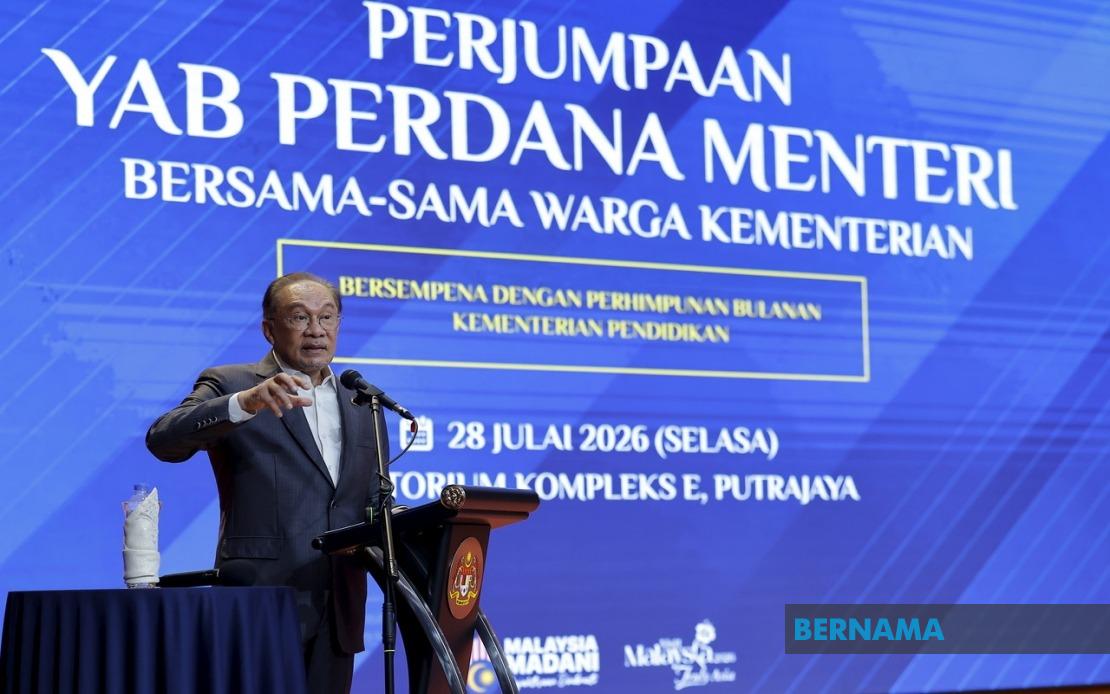
Prime Minister Datuk Seri Anwar Ibrahim has announced that Malaysia's Form Six pre-university management structure will continue operating under the Ministry of Education rather than being transferred to the Ministry of Higher Education, a decision that represents a significant reversal of previously communicated intentions. The decision, disclosed during a meeting with MOE staff in Putrajaya on July 28, follows careful consideration of multiple operational and administrative factors that affect the current educational ecosystem. This development marks an important juncture in the government's approach to pre-university education policy, coming after months of discussion about consolidating higher education oversight.
The Prime Minister's decision takes into account several critical variables that administrators had flagged as potential complications should the transfer proceed. Student management protocols, which have evolved under MOE's existing framework over many years, represent one significant consideration. The intricate web of teacher service arrangements, employment classifications, and professional development pathways built within the current system emerged as another key factor. These operational elements are deeply embedded in the MOE's existing administrative machinery, and disrupting them could create complications for both educators and learners during a sensitive transition period.
Anwar's announcement at the MOE gathering, attended by Education Minister Fadhlina Sidek, Chief Secretary to the Government Tan Sri Shamsul Azri Abu Bakar, and Public Service director-general Tan Sri Wan Ahmad Dahlan Abdul Aziz, brings clarity to a period of uncertainty that had characterised the sector since earlier communications about the proposed restructuring. The gathering itself signalled the gravity with which the government views the matter, bringing together key stakeholders whose cooperation would have been essential for any transition. The decision reflects pragmatic recognition that maintaining institutional continuity often trumps structural reorganisation when operational risks are substantial.
This development contradicts an earlier statement, widely reported in the media, in which Anwar had reportedly indicated that the Ministry of Higher Education would assume full responsibility for the pre-university system beginning in the subsequent year. That announcement had encompassed both Form Six and Matriculation programmes, suggesting a comprehensive consolidation of pre-university education under a single ministry. The shift from that position to the present announcement suggests that detailed consultation with relevant stakeholders and deeper analysis of implementation challenges prompted a reconsideration of the original approach.
The Form Six system in Malaysia serves as a traditional pathway for secondary school leavers seeking entry to local universities. Operating as a two-year programme following the completion of lower secondary education, Form Six provides academic preparation across diverse disciplinary streams. The system's continued placement within the MOE's domain ensures that pre-university education maintains its integration with the broader secondary education structure, preserving continuities in curriculum design, teacher recruitment, and student progression frameworks.
For Malaysian parents and students, the decision provides stability and reduces the prospect of administrative disruptions that sometimes accompany organisational restructuring. Educational transitions can create uncertainty regarding assessment standards, progression pathways, and resource allocation, and Anwar's decision effectively postpones these potential complications. The assurance that the existing framework will persist provides a degree of predictability for those currently navigating Form Five and considering their post-secondary options.
The consideration of teacher service schemes in Anwar's decision-making reflects the government's recognition that educational quality ultimately depends on educator satisfaction and retention. The MOE has established career progression models, remuneration structures, and professional support systems specific to Form Six educators. Transferring the programme to another ministry might have necessitated reclassifying these professionals or modifying their employment conditions, creating potential friction and possible departures from the field.
From a Southeast Asian perspective, Malaysia's approach to pre-university governance warrants observation. Neighbouring countries operate diverse models, with some centralising higher education oversight and others maintaining connections between secondary and tertiary education systems. The Malaysian government's pragmatic decision to preserve the status quo rather than pursue structural reorganisation suggests confidence in the MOE's existing capacity to manage this segment effectively, despite the broader global trend toward consolidation in education administration.
The decision also reflects broader challenges facing Malaysian policymakers who must balance aspirations for systemic improvement with the practical constraints of implementing substantial change. While structural reorganisation sometimes creates opportunities for innovation and efficiency, it also generates transition costs and disruption. By retaining Form Six within the MOE framework, the government has implicitly prioritised continuity and risk mitigation over the potential benefits of consolidation, a choice that many stakeholders likely welcome.
Looking forward, the decision does not preclude future reconsideration should circumstances change. The government has effectively kept organisational options open by describing the arrangement as temporary, using the phrase "for now" in Anwar's statement. This framing suggests that the decision represents the optimal choice given current conditions, but acknowledges that educational administration is subject to evolving priorities and improved operational understanding. Whether the Form Six system eventually transfers to the Ministry of Higher Education may depend on how successfully the MOE manages the programme in coming years and whether strategic objectives change.

