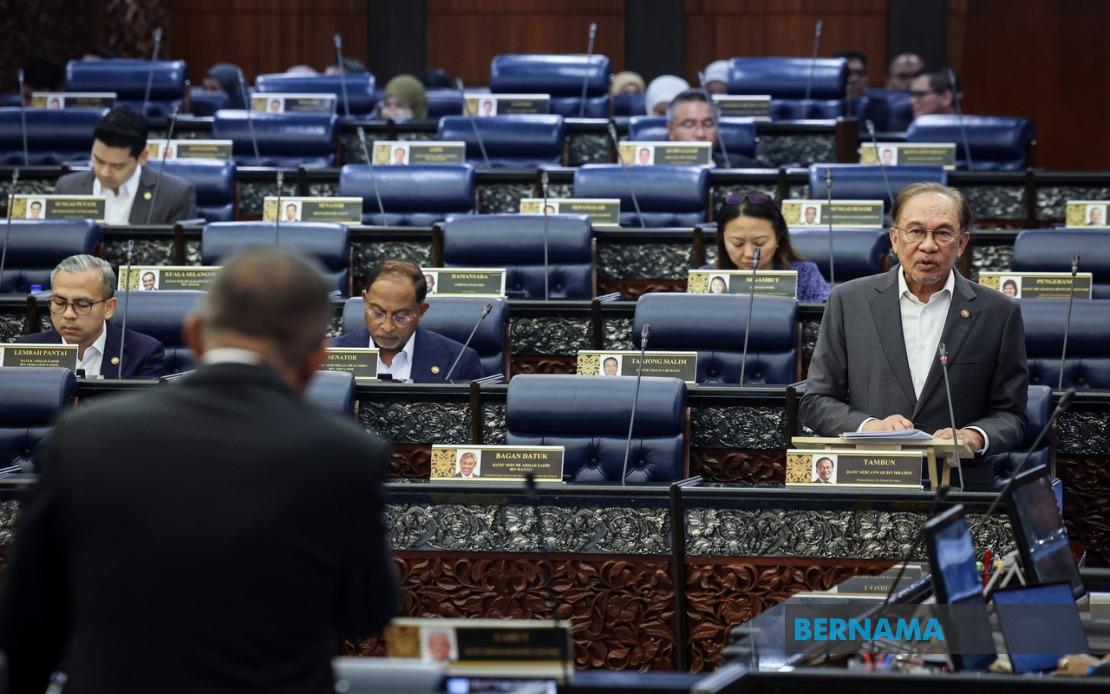
Prime Minister Datuk Seri Anwar Ibrahim announced that the Syarikat Jaminan Pembiayaan Perniagaan (SJPP), a wholly owned subsidiary of the Ministry of Finance, has successfully approved RM4.9 billion in financing facilities benefiting more than 6,000 micro, small and medium enterprises during the first half of 2026. The announcement underscores the government's ongoing push to bolster small business access to capital at a time when entrepreneurs face mounting pressures from an unpredictable global economic landscape.
The RM4.9 billion disbursement represents a crucial pillar in the MADANI government's broader financing architecture for the MSME segment. During a Ministers' Question Time session in the Dewan Rakyat, Anwar responded to queries from Lee Chuan How, Member of Parliament for Ipoh Timor, regarding whether the administration recognises the acute financial challenges confronting business operators, particularly those in the MSME space grappling with volatile international conditions. The question reflected growing concern among lawmakers that small enterprises, which form the backbone of Malaysia's economy, require sustained government intervention to remain competitive.
Beyond the headline RM4.9 billion figure for the first half of 2026, Anwar highlighted that the government has mobilised financing and guarantee schemes totalling more than RM15 billion to address working capital demands across the MSME ecosystem. This broader commitment signals that the current initiative is part of a comprehensive, multi-faceted strategy rather than a one-off measure. The scale of the intervention demonstrates the government's recognition that capital constraints remain one of the most pressing barriers preventing Malaysian small businesses from scaling operations, investing in technology, or weathering economic downturns.
A particularly significant component of this financing landscape involves RM5 billion specifically reserved for Bumiputera enterprises. This allocation reflects the government's commitment to ensuring that businesses owned by Bumiputera communities benefit proportionately from state-backed financing schemes. The ringfencing of such a substantial sum for this demographic addresses historical concerns that Bumiputera MSMEs face disproportionate barriers in accessing credit compared to their non-Bumiputera counterparts, and it represents a targeted effort to narrow entrepreneurial wealth gaps along communal lines.
The SJPP, as the implementing vehicle, plays a critical structural role in Malaysia's MSME financing architecture. Operating as a finance ministry subsidiary, the organisation bridges the gap between banks and small borrowers by providing credit guarantees that reduce lender risk. This de-risking mechanism effectively encourages commercial banks to extend credit to MSMEs that might otherwise be deemed too risky under standard lending criteria. The approval of RM4.9 billion in the first half of 2026 alone suggests robust pipeline activity and sustained demand from small businesses seeking to access guaranteed financing facilities.
For Malaysian entrepreneurs and business associations, the SJPP financing news carries significant implications. Accessing guaranteed financing typically allows MSMEs to obtain loans at more competitive rates than they would negotiate independently, while also reducing collateral requirements that often prove prohibitive for asset-light small businesses. The scale of approvals signals that the government expects steady demand throughout 2026, which may prompt business owners to bring forward expansion or investment plans that had been shelved due to financing uncertainty.
The timing of the announcement also warrants examination within the broader context of Southeast Asian economic dynamics. The region faces persistent inflation pressures, volatile currency movements, and slowdowns in key export markets. Malaysia's MSME sector has proven resilient in past cycles, but sustained access to affordable capital remains essential for weathering sectoral headwinds. By maintaining robust financing schemes, the government seeks to prevent a wave of business failures that could otherwise undermine employment, tax revenues, and economic momentum heading into the latter half of 2026.
The government's framing of these financing approvals explicitly links capital access to business sustainability, a concept that extends beyond mere survival to encompass growth and adaptation. This framing suggests that policymakers view MSME financing not merely as a welfare mechanism but as an economic productivity driver. Enterprises with reliable access to working capital can invest in workforce training, adopt new technologies, comply with regulatory requirements more readily, and pursue market expansion—all activities that generate broader spillover benefits throughout the economy.
Anwar's statement also implicitly addresses competitive pressures that Malaysian MSMEs face from regional counterparts in Southeast Asia. Countries including Indonesia, Thailand, and Vietnam have launched their own MSME financing initiatives, and Malaysia's sustained commitment signals that local policymakers are attentive to maintaining the country's appeal as a destination for small business. The RM4.9 billion approval in the first half of 2026 represents continuity of government support that helps level the playing field for Malaysian entrepreneurs relative to those benefiting from comparable initiatives elsewhere in the region.
The SJPP financing ecosystem also intersects with broader financial inclusion objectives. Many Malaysian MSMEs remain underserved by conventional banking channels due to limited credit history, insufficient collateral, or geographic remoteness from urban financial centres. Guaranteed financing schemes lower transaction costs and expand the practical banking frontier, gradually integrating previously excluded entrepreneurs into the formal financial system. This integration generates data and relationships that can eventually lead to improved access to unsecured or less-guarantor-dependent credit products as business track records mature.
Looking ahead, the sustainability of SJPP financing at these levels will depend on continued government budget allocation and the health of the broader economy. Should Malaysia experience severe external shocks or recession, demand for small business credit might initially spike as enterprises draw down savings and seek working capital to navigate downturns. Conversely, a strong growth environment should see SJPP utilisation rates supporting business expansion rather than distress management. The government's signalling of RM4.9 billion in approvals for 1H 2026 suggests confidence in near-term economic stability, though the longer-term outlook remains subject to global uncertainties beyond Malaysian policymakers' direct control.

