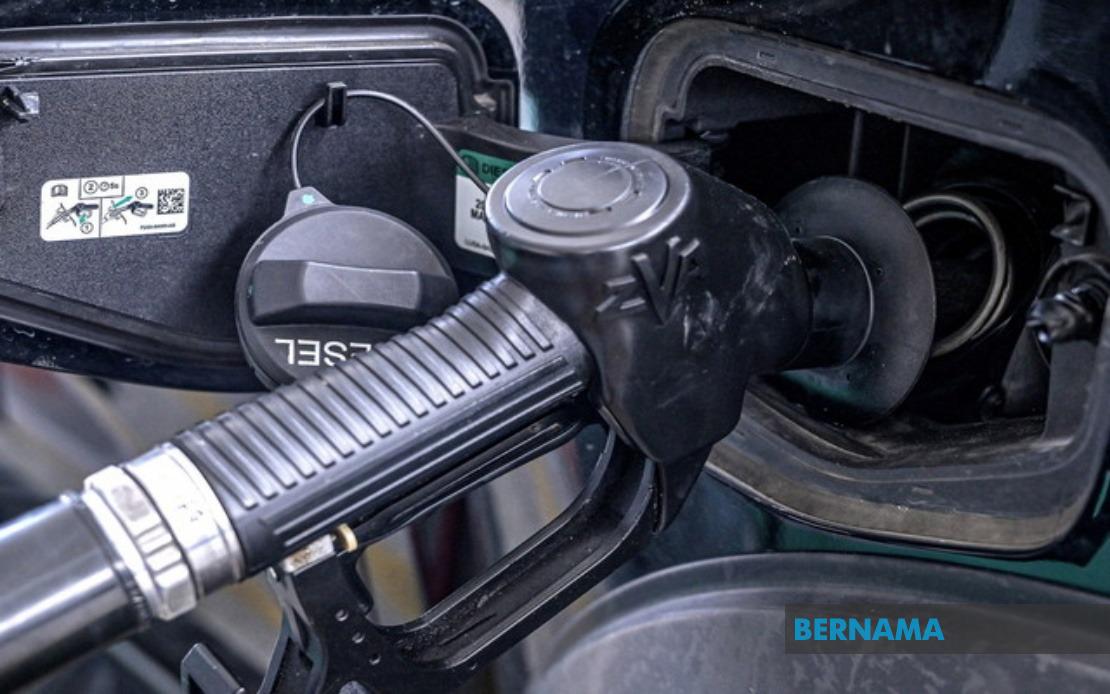
The Malaysian government has launched a new phase of its Subsidised Diesel Control System (SKDS), extending fuel cost relief to business owners operating private vehicles for commercial purposes. Domestic Trade and Cost of Living Minister Datuk Armizan Mohd Ali announced that applications are now open for the land transport sector, specifically targeting companies that own and operate jeeps and pickup trucks as part of their business operations. This marks a significant broadening of the subsidy scheme, which had previously concentrated support on public transport operators and goods distribution companies.
Businesses seeking to benefit from the scheme must meet specific registration and classification requirements. Vehicles must be formally registered as business vehicles under the Company Private Use (AE) class or code within the Road Transport Department's (JPJ) MySikap system, a digital registration platform designed to categorise commercial vehicle use. Beyond vehicle registration, the owning business itself must maintain formal legal status, either as a sole proprietorship or partnership registered with the Companies Commission of Malaysia (SSM), or for companies operating in the East Malaysian states of Sabah and Sarawak, through the relevant local authority structures.
Once applications are approved and applicants receive their fleet cards, diesel subsidies become accessible from July 15 onwards. This staggered implementation approach allows the government time to process applications and issue necessary credentials while establishing an orderly system for subsidy distribution. The fleet card mechanism represents a controlled method of delivering targeted support, enabling authorities to track subsidy usage and prevent misuse across the business sector.
The programme is deliberately structured to support Malaysia's micro and small business segment, recognising that fuel costs represent a substantial operational expense for enterprises dependent on vehicle transport. Sole proprietors and partnership-based businesses—the backbone of Malaysia's informal and formalised small business sectors—can now access relief that may improve their margins and competitive positioning. This inclusive approach addresses concerns from business associations that rising diesel prices disproportionately affect smaller operators lacking economies of scale available to larger corporations.
The expansion reflects the government's broader strategy to manage cost-of-living pressures across multiple economic sectors. By extending SKDS coverage beyond public transport and commercial goods distribution, policymakers acknowledge that many business categories—from service providers to light industrial operators—depend on vehicle fleets for revenue generation. The phased approach, which previously saw two sector categories added before this latest extension, suggests a methodical rollout designed to manage fiscal impact while building programme infrastructure.
Applications are being processed through the MySubsidi portal, a centralised online platform that simplifies access for business owners across Malaysia. This digital mechanism reduces administrative friction, allowing applicants to submit documentation and track processing status from any location with internet access. The government has encouraged early applications, indicating potential constraints on processing capacity or subsidy funding allocations that may favour swift applicants.
The initiative carries implications for Malaysia's broader fiscal and economic management. Diesel subsidies represent a direct government expenditure that must be balanced against other budgetary priorities and fiscal sustainability objectives. However, policymakers appear to have determined that supporting business sector fuel costs delivers measurable economic benefits through maintained employment levels, preserved business viability, and reduced pressure on consumer prices for goods and services. This represents an indirect consumer subsidy transmitted through reduced operating costs for service providers.
For Southeast Asian observers, Malaysia's targeted subsidy approach differs from some neighbouring nations' universal fuel price controls. By focusing support on business users rather than individual consumers, Malaysia attempts to achieve cost-of-living objectives while maintaining market mechanisms and reducing long-term fiscal distortions. This selective subsidy model may influence regional policy discussions about balancing inflationary pressures with economic efficiency.
Sectors likely to benefit substantially include small transport operators, maintenance and service businesses, agricultural suppliers, and regional distribution companies. Pickup truck operators—fundamental to Malaysia's rural and semi-urban economies—represent a particularly significant beneficiary group, as their operations often occur in price-sensitive markets where fuel costs directly determine business viability. The inclusion of these vehicle categories acknowledges the essential role small transport operators play in connecting rural producers with urban markets and supply chains.
Eligibility verification will be critical to programme integrity. The requirement for SSM or local authority registration ensures that applicants maintain formal business status, reducing fraud risk while supporting the government's broader formalisation objectives. The integration with JPJ's MySikap system enables cross-referencing of vehicle registration data, creating multiple verification layers to confirm that vehicles are genuinely employed for business purposes.
Business owners should note that application success requires demonstrating legitimate business operations and proper vehicle registration compliance. The approval process, while unspecified in timeframes, suggests that standard documentation such as business registration certificates, vehicle registration details, and operational evidence may be required. Early applicants may benefit from shorter processing queues, making immediate submission strategically advisable for qualifying businesses.
The programme's long-term trajectory remains subject to government fiscal capacity and subsidy budget allocations. Policymakers may monitor participation levels and subsidy costs to determine whether further sector expansions occur or whether current coverage represents the final phase. For eligible businesses, securing fleet cards during this opening window ensures participation in a potentially time-limited support mechanism that could meaningfully improve operational economics during a period of elevated fuel costs.

