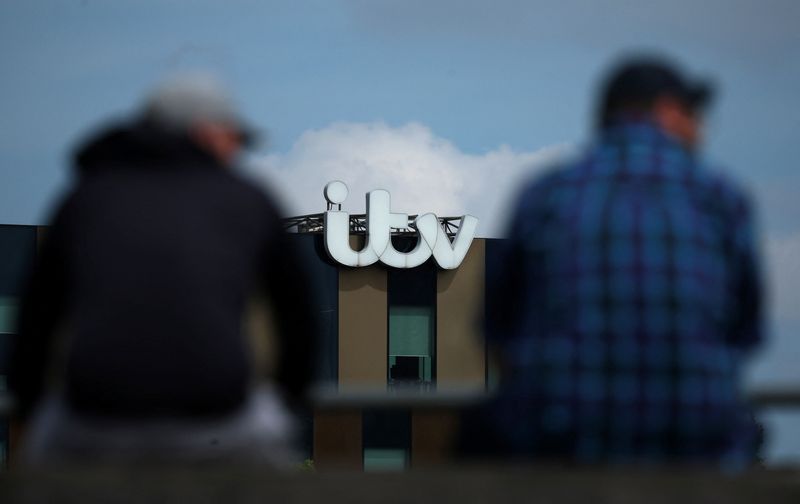
Comcast's pay-television operator Sky has agreed to purchase the broadcast channels and streaming platform of Britain's leading independent commercial broadcaster ITV in a landmark £1.6 billion transaction announced Monday, reshaping the country's media landscape by forging a domestic powerhouse intended to withstand competition from international streaming behemoths Netflix, Amazon and Disney. Sky Chief Executive Dana Strong characterised the transaction as a historic turning point for British broadcasting, underscoring its significance within the sector and acknowledging the regulatory scrutiny that will inevitably follow as authorities assess the deal's implications for competition and media plurality.
The convergence of ITV's free-to-air terrestrial channels with Sky's subscription television business would once have appeared commercially improbable and politically unpalatable, yet the acceleration of digital content consumption and the explosive growth of streaming platforms have fundamentally reordered the competitive dynamics of traditional broadcasting. Where once ITV and Sky operated in largely separate domains, technological disruption and audience migration have eroded their traditional market positions sufficiently to make consolidation strategically imperative. The combined entity will serve more than twenty million households across the United Kingdom, positioning it as a consolidated force capable of competing with international platforms that have accumulated enormous resources through global subscriber bases.
The merger would consolidate over seventy percent of the British television advertising market, a concentration figure that encompasses not only ITV and Sky's own advertising operations but also third-party sales arrangements such as those serving Paramount-owned Channel 5. This market dominance presents a formidable regulatory hurdle, with observers anticipating that Sky may be required to divest certain advertising contracts to alleviate competition concerns. Nevertheless, dealmakers across Britain are scrutinising this transaction carefully, recognising that its success or failure will signal government appetite for permitting media consolidation at a time when policymakers have begun emphasising conditions for growth and investment across the economy.
Culture Minister Lisa Nandy has demonstrated readiness to engage with significant media transactions, recently signalling potential intervention in the proposed Paramount-Warner merger, suggesting that regulatory flexibility may extend to domestic broadcasting combinations provided public interest safeguards are maintained. The political calculus has shifted perceptibly, with ministers willing to countenance scale-building among British media enterprises to preserve domestic capacity in competition with American technology and entertainment corporations. ITV's trajectory underscores the economic pressures driving consolidation: the company's share price has contracted thirty-six percent over five years as advertisers have redistributed spending toward digital platforms and as audiences, particularly younger demographics aged sixteen to twenty-four, have abandoned traditional television for streaming and social media content.
Under the transaction structure, ITV will continue as an independent production business, maintaining its celebrated portfolio of programmes including Love Island and the long-running drama Coronation Street whilst simultaneously supplying content to the combined ITV-Sky entity and competing for commissions from international streamers such as Disney and Apple Television. The arrangement preserves ITV's creative independence whilst tapping efficiency gains from alignment with Sky's distribution infrastructure. ITV shareholders will receive £1.2 billion in immediate cash alongside an earn-out mechanism potentially yielding an additional £200 million contingent upon the company's advertising performance during the 2027 financial year, reflecting confidence that the production business will sustain healthy revenues within the consolidated structure.
The transaction incorporates acquisition of Love Productions, the production company responsible for creating and distributing The Great British Bake Off, which will be consolidated into the remaining ITV Studios division. This vertical integration enables the combined group to control both production capabilities and distribution platforms, a strategic architecture increasingly vital as traditional television becomes merely one component within broader entertainment ecosystems. The merged company has committed to investing a minimum of £2.1 billion across the 2028-2032 period, a capital commitment signalling determination to sustain substantial British content production alongside technological infrastructure development.
Sky's corporate lineage reflects British broadcasting's transformation over three decades. Founded by Rupert Murdoch in 1989 as a satellite television venture, Sky evolved into Britain's dominant subscription television operator before being acquired by American cable giant Comcast in 2018. Murdoch's son James held senior management positions during the company's formative decades, embedding the Murdoch family's influence within British broadcasting architecture. Comcast's recent announcement of plans to separate its media assets, including NBCUniversal and Sky, from its cable operations reflects intensifying pressure from streaming competition, forcing legacy media conglomerates to reorganise themselves for a fundamentally altered media environment.
The consolidation represents a rational strategic response to structural transformations in media consumption that have created existential pressures for traditional broadcasters. Streaming platforms operating without geographical constraints have captured disproportionate shares of advertising revenue and audience attention, whilst YouTube and social media services have fragmented the attention of younger demographics historically central to terrestrial broadcaster revenues. By combining complementary assets, ITV and Sky aspire to achieve scale economies in content production, technology infrastructure and advertising sales capabilities that individual companies cannot sustain independently. The deal effectively concedes that competition with Netflix, Disney and Amazon requires financial and operational resources exceeding what either company could marshal alone.
Regulatory approval represents the transaction's principal uncertainty, with competition authorities required to weigh consolidation benefits against media plurality concerns within a democracy increasingly dependent upon diverse information sources. The seventy percent advertising market share will attract particular scrutiny, prompting potential requirements for structural remedies including advertising contract disposals. Culture Minister Nandy's recent interventions and the government's 2025 strategic prioritisation of growth and investment suggest political openness to permitting the merger subject to satisfactory safeguards, yet the outcome remains contingent upon regulators' assessment of whether domestic consolidation adequately serves public interest considerations.
For Malaysian and Southeast Asian observers, the ITV-Sky transaction illustrates broader forces reshaping media industries globally as streaming platforms and technology companies progressively disintermediate traditional broadcasters and publishers. The merger demonstrates that even large, historically entrenched media businesses operating in wealthy developed markets face existential pressures requiring radical restructuring to maintain relevance. Regional media companies operating in smaller, more fragmented markets face analogous competitive challenges, suggesting that consolidation may become increasingly prevalent across Asia-Pacific broadcasting sectors as traditional television economics deteriorate. The transaction signals that regulatory frameworks are gradually accommodating media combinations previously deemed unacceptable, a trend with implications for media ownership concentration across multiple jurisdictions.
The combined ITV-Sky company's strategy of sustaining British public service broadcasting traditions whilst competing on international streaming platforms reflects an attempt to preserve legacy media institutions by embedding them within larger, more diversified entertainment ecosystems. Whether this approach succeeds depends partly on regulators' willingness to permit consolidation and partly on audiences' willingness to maintain engagement with traditional broadcasters operating alongside direct-to-consumer streaming platforms. The transaction represents a pivotal moment for British broadcasting, establishing whether traditional media can evolve sufficiently to compete with technology-native streaming competitors or whether consolidation merely delays inevitable audience and revenue decline.

