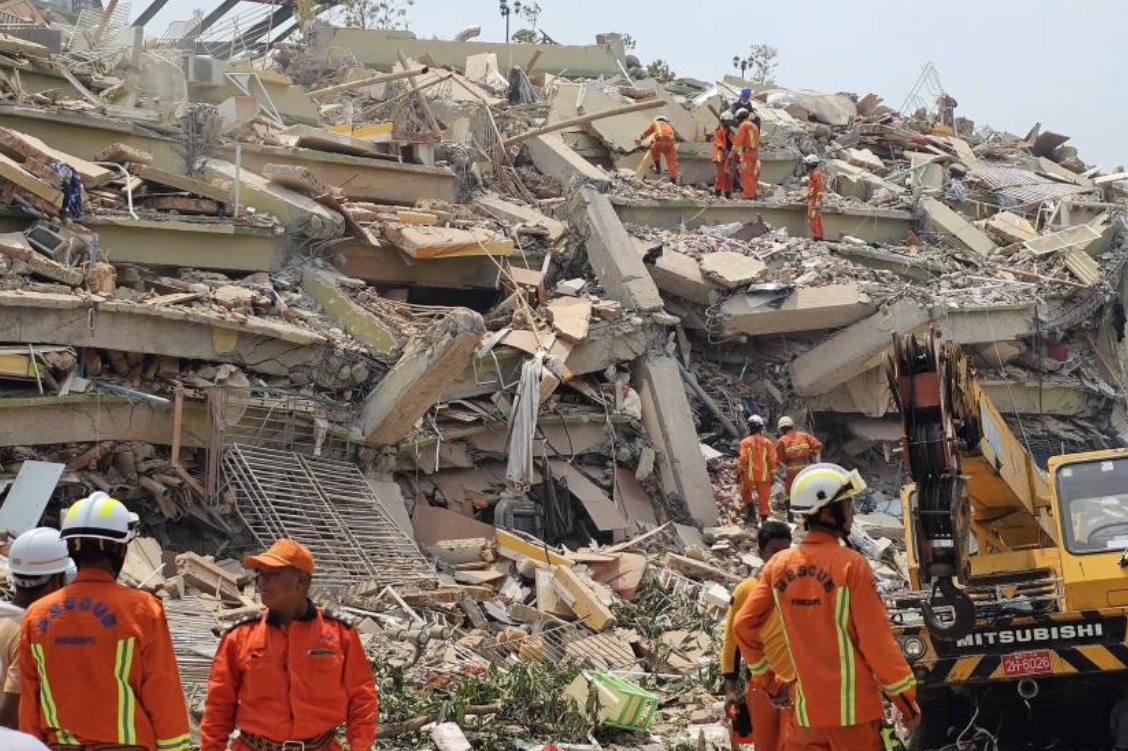
U Naing Htun Lin, proprietor of Sky Villa Condominium in Myanmar's Mandalay region, has received a five-year prison sentence with hard labour from the Aungmyaythazan Township Court following the catastrophic collapse of his 11-storey residential building during an earthquake that claimed the lives of more than 200 people. The verdict, delivered on June 23, represents a significant legal conclusion to one of the deadliest structural failures from the natural disaster, though the case continues to generate considerable legal activity as both sides pursue further remedies through the appellate process.
The proceedings against U Naing Htun Lin commenced on February 10 when formal charges were filed at the Aungmyaythazan Township Court. Initially, he secured bail and was permitted to remain free while the trial proceeded, a common arrangement in Myanmar's legal system for defendants awaiting trial on non-violent offences. This arrangement changed substantially in mid-March when the court determined that detention was necessary, revoking his bail on March 17 and moving him into custody to await the completion of judicial proceedings.
The charges emerged under Section 304-A of Myanmar's Penal Code, which addresses death caused by negligence or recklessness. The initial investigation was conducted by the No. 1 Area Police Station in Aungmyaythazan Township before the case was elevated to township court level. This legal framework reflects Myanmar's approach to holding builders and developers accountable when structural failures result in mass casualties, establishing a threshold of culpability that extends beyond mere accident to encompass inadequate professional standards or negligent execution.
The prosecution was undertaken by U Zaw Moe Aung, a staff officer from the Special Investigation Department, who presented the state's case against the defendant. The involvement of the Special Investigation Department indicates the severity with which authorities treated the matter, suggesting systematic examination of construction practices and safety compliance at the Sky Villa project prior to its collapse.
Located between 21st and 22nd Streets on 60th Street in Aungmyaythazan Township, the Sky Villa condominium stood as a prominent residential development in Mandalay's urban landscape. The building's failure to withstand the seismic forces released during the earthquake exposed fundamental structural vulnerabilities that, under Myanmar's legal interpretation, constituted actionable negligence on the part of the developer. The recovery of over 200 bodies from the site underscored the catastrophic nature of the collapse and the scale of loss that shaped subsequent legal accountability efforts.
U Naing Htun Lin's wife, Daw Thet Thet Khine, served as managing director of NTL Construction Company, the firm that undertook the Sky Villa project's construction. Following the collapse, the family demonstrated public acknowledgment of responsibility through a series of commemorative ceremonies held at a monastery pavilion on 19th Street. These religious observances represented an important cultural dimension to the family's response, combining traditional Buddhist practices with formal expressions of remorse to the bereaved families of the deceased. During these ceremonies, the family provided compensation of 10 million kyats to relatives of each victim, a substantial financial gesture that, while not erasing legal liability, illustrated some recognition of the scale of harm caused.
The legal machinery surrounding this case has proven more complex than the initial judgment might suggest. The Aungmyaythazan District Court has requested the complete case file for review under Criminal Revision Case No. 39Ka/2026, indicating that higher judicial authorities are examining whether proper procedures were followed and whether the original verdict aligns with established legal precedent. This appellate review represents a standard mechanism in Myanmar's judicial system whereby senior courts can examine lower court decisions for procedural or substantive errors.
Both the prosecution and defence teams have initiated their own appeal and revision proceedings, signalling deep disagreement over the appropriateness of the sentence. The prosecution may argue that five years insufficient for the magnitude of negligence involved in a construction failure that resulted in such mass loss of life. The defence, conversely, likely contends that either the conviction itself was unjustified or that the sentence exceeds what culpability in the case warrants. This ongoing legal contestation reflects the genuine complexity in assigning responsibility for earthquake-related structural failures in a region where building code compliance and enforcement capacity remain inconsistent across Myanmar.
The Sky Villa case carries significant implications for Myanmar's construction industry and developer accountability frameworks. As the country has experienced rapid urbanisation and residential development expansion, questions about building standards, inspection regimes, and professional responsibility have become increasingly urgent. This prosecution signals official commitment to holding developers answerable when negligence contributes to loss of life, though questions persist regarding whether enforcement is sufficiently rigorous across the sector generally or whether high-profile cases receive disproportionate attention compared to routine violations.
For Southeast Asian observers, the case illustrates challenges confronting rapidly developing nations as they balance construction industry growth with safety regulation. Myanmar's experience with the Sky Villa collapse and subsequent legal proceedings offers instructive lessons about structural vulnerability, enforcement mechanisms, and the tension between economic development and public safety in seismic zones. The ongoing appeals process will likely establish important precedent regarding developer liability in Myanmar, potentially influencing how similar cases are prosecuted and what standards of accountability become normalised in the industry.

