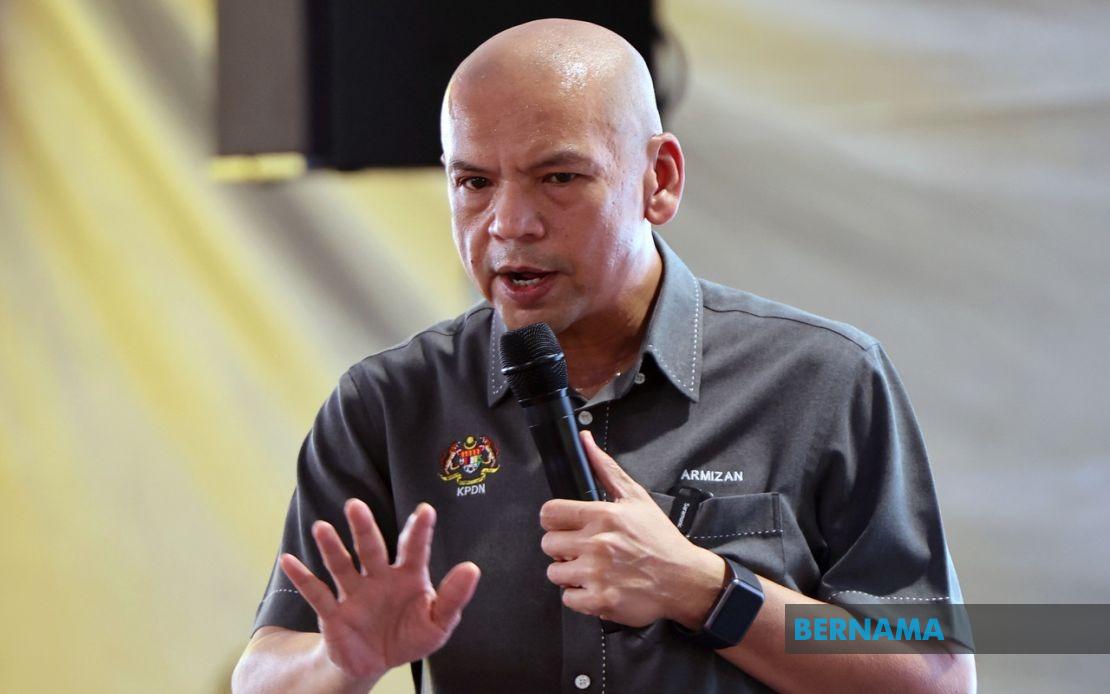
Small enterprises and local contractors across Malaysia will now access a monthly quota of 300 litres of subsidised diesel via dedicated fleet cards, marking a significant expansion of the government's targeted fuel subsidy initiative. Domestic Trade and Cost of Living Minister Datuk Armizan Mohd Ali unveiled the measure in Kota Kinabalu on July 18, describing it as a corrective mechanism designed to address operational cost pressures affecting businesses unable to qualify under existing subsidy frameworks since the programme's commencement on July 1 in Sabah, Sarawak, and Labuan.
The allocation represents a deliberate policy pivot aimed at micro-entrepreneurs previously hindered by bureaucratic constraints. Companies registered as partnerships or sole proprietorships engaging in legitimate commercial operations will be eligible to claim the fuel entitlement, with the ministry having secured cabinet approval for the intervention. Armizan framed the decision as responsive governance, acknowledging that formalised small businesses warranted inclusion in the subsidy architecture despite falling outside the two primary beneficiary sectors: public transport operators and goods or consumer necessities transport providers.
The exclusion of small enterprises from the original two-sector classification created an unintended equity gap. Many micro-entrepreneurs operating legitimate commercial ventures—ranging from construction contractors to small trading companies—required diesel fuel for their operations but lacked the scale or organisational structure to fit neatly into the public or essential goods transport categories. By permitting fleet card access delivering 300 litres monthly, the government has effectively created a third eligibility stream that acknowledges the operational reality of Malaysia's vast small business ecosystem.
Armizan signalled the administration's willingness to refine the subsidy mechanism further as implementation progresses. He articulated three foundational pillars guiding any future adjustments: the cost-of-living dimension affecting ordinary Malaysians, the critical need to prevent subsidy leakage through fraud or misuse, and the government's constrained fiscal capacity. These competing considerations underscore the inherent complexity of universal fuel subsidies—initiatives that consume substantial public resources while remaining vulnerable to administrative abuse and dependency risks.
The targeted subsidy programme itself represented a substantial policy departure from Malaysia's historical blanket fuel subsidies. Rather than subsidising all domestic diesel consumption uniformly—a system that benefited wealthier vehicle owners disproportionately—the new architecture channels assistance toward essential transport functions and, now, qualifying small businesses. This means-tested approach aims to maintain affordability for critical economic functions whilst reducing fiscal haemorrhage and improving programme efficiency.
Delivery challenges in remote areas of Sabah and Sarawak have prompted the ministry to mobilise state-level agencies for registration and verification operations. The interior regions of both East Malaysian states present particular logistical difficulties, requiring distributed verification processes to ensure eligible groups can access entitlements without exclusion due to geographical isolation. This collaborative federalism approach recognises that Kuala Lumpur-based administration cannot effectively determine eligibility across dispersed inland communities without localised institutional support and community knowledge.
The broader policy context reveals how energy subsidies have become entwined with social safety nets and electoral calculations across Southeast Asia. Malaysia, like many regional economies, has struggled to calibrate fuel assistance—targeting genuine need without creating unsustainable fiscal obligations or perverse incentives. The shift toward targeting reflects international best practice guidance, yet remains politically sensitive because any perception of reduced subsidy coverage triggers resistance from affected communities regardless of income distribution outcomes.
Armizan simultaneously announced implementation of the MADANI Foster Village initiative at Kampung Sekalong, Menumbok, allocating RM500,000 for five infrastructure projects including a multipurpose hall, road upgrades, culvert repairs, solar lighting, and a village landmark. These projects exemplify the government's rural development strategy, addressing basic amenity deficits that perpetuate urban-rural disparities. The ministry targets completion within two to three months, positioning these investments as complementary to subsidy interventions in enhancing economic opportunity in underdeveloped settlements.
The MADANI Foster Village Programme itself represents a structural approach to rural inequality, moving beyond transfer payments toward infrastructure that underpins long-term productivity and quality of life. By systematising development assistance across multiple villages—this being the ministry's third such initiative following projects in Papar last year and Kedah previously—the government aims to embed rural development within permanent institutional practice rather than ad-hoc spending.
For Malaysian small businesses, the 300-litre monthly diesel quota provides immediate operational relief whilst the subsidy architecture stabilises. Construction firms, logistics operators, and trading companies requiring regular fuel access now benefit from explicit programme inclusion. However, the quota's adequacy remains context-dependent—transport-intensive operations may exhaust allocations rapidly, requiring supplementary fuel purchases at unsubsidised rates, whilst less fuel-dependent enterprises may find the entitlement generous. The fleet card mechanism itself introduces administrative overhead for businesses previously unconstrained by subsidy registration requirements.
Regionally, Malaysia's targeted subsidy approach offers lessons for neighbouring economies grappling with fuel support obligations. Thailand, Indonesia, and the Philippines have similarly struggled to balance affordability with fiscal sustainability, often defaulting to poorly-targeted universal schemes. Malaysia's progressive narrowing of subsidy beneficiaries, whilst politically contentious, demonstrates commitment to fiscal discipline and equity-conscious resource allocation.
Longer-term implications hinge on programme sustainability and refinement. Should diesel prices surge internationally, the fiscal cost of subsidising even targeted consumption could escalate sharply, forcing difficult budget trade-offs. Conversely, if global energy prices stabilise or decline, subsidy burdens may ease, permitting programme expansion. The ministry's explicitly provisional stance—welcoming further adjustments guided by the three pillars—suggests recognition that the current design remains experimental, requiring data-driven evolution as implementation generates evidence about leakage, coverage, and cost impacts.

