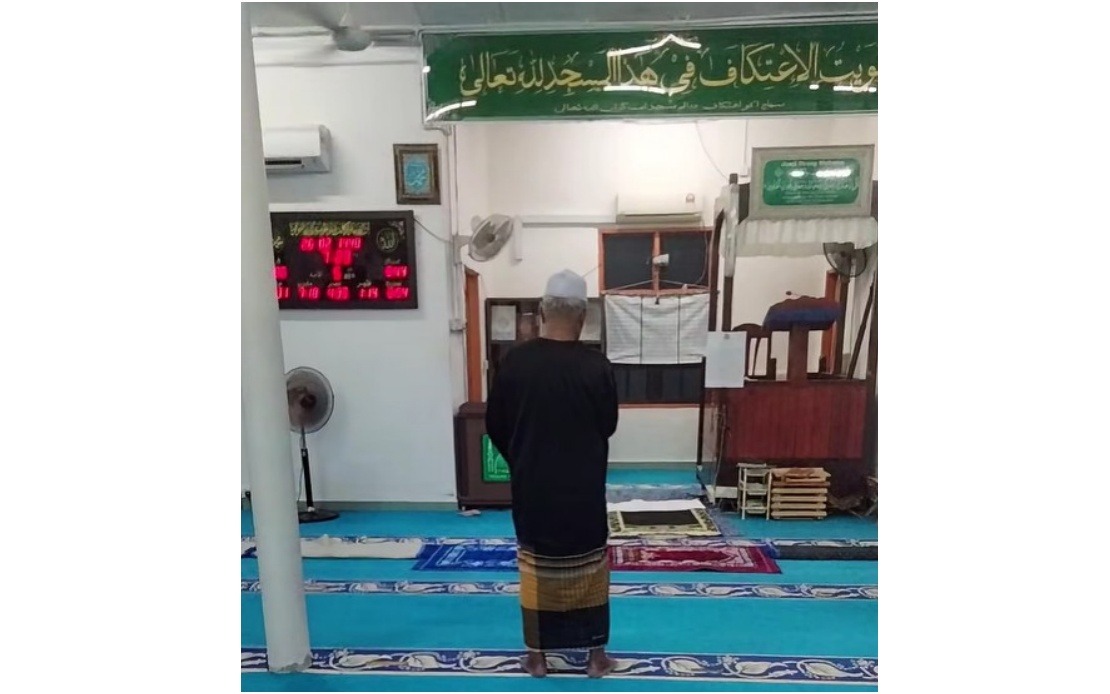
A 15-second video that surfaced on social media this month has thrust Masjid Tanjung Resang in Mersing into the spotlight, sparking public discussion about religious observance in rural Malaysia. The footage depicted a solitary worshipper leading prayers at the mosque, with speculation that the individual was simultaneously serving as both imam and bilal—roles typically requiring dedicated religious leaders. The clip spread rapidly across Facebook and WhatsApp, prompting questions about the facility's operational capacity and the commitment of its congregation.
Mersing Member of Parliament Muhammad Islahuddin Abas, himself a longtime village resident, addressed the controversy at the mosque today, offering perspective on the underlying demographic realities shaping religious participation in the area. Rather than dismissing the concerns outright, he acknowledged that the mosque's management does indeed face genuine structural challenges rooted in broader economic and social patterns affecting rural Johor. The narrative surrounding the viral video, he suggested, reflects a more complex story about how Malaysia's internal migration patterns are reshaping community institutions in smaller settlements.
The crux of the issue, according to the MP, centres on population depletion rather than a collapse in religious commitment. Although the village contains numerous residential structures, many remain occupied only intermittently or have been abandoned entirely as families pursue economic opportunities in urban centres. Workers seeking employment in larger towns and cities have gradually relocated, leaving behind a skeleton population insufficient to sustain robust congregational gatherings. This pattern mirrors broader demographic challenges affecting rural areas across the country, where younger generations migrate permanently to economic hubs, leaving ageing populations behind.
Despite these headwinds, Muhammad Islahuddin emphasised that the mosque's religious programme remains intact and functionally active. Weekly activities continue uninterrupted, encompassing religious lectures, Quranic recitations known as Yasin gatherings, and theological discussion sessions. The mosque management has demonstrated sustained commitment to maintaining these offerings even as attendance fluctuates according to seasonal migration patterns and temporary absences of residents. This persistence underscores the distinction between visibility and actual institutional activity—a gap that the viral video failed to capture.
The MP himself was initially taken aback upon learning about the video's circulation. A friend in Kuala Lumpur forwarded him a screenshot via WhatsApp, prompting his first awareness of the issue gaining traction beyond the immediate locality. The fact that content depicting a small village mosque could rapidly reach metropolitan audiences illustrates how social media amplifies rural stories, sometimes without adequate context or nuance about local conditions. His surprise at the video's reach across such geographical distance highlighted how disconnected urban and rural communities have become in their understanding of each other's realities.
Yet Muhammad Islahuddin identified an unexpected benefit emerging from the controversy. Rather than viewing the viral moment purely negatively, he recognised that it inadvertently elevated awareness of Masjid Tanjung Resang among people who previously had no knowledge of its existence. The mosque's deliberately peripheral location, situated away from main thoroughfares, meant that even many district residents remained unaware of the facility. The controversy thus functioned as unintended marketing, introducing the mosque to audiences far beyond Mersing's boundaries.
The facility itself serves multiple community functions beyond traditional prayer gathering. Muhammad Islahuddin described it as welcoming to visitors of all faiths, reflecting an inclusive approach to religious space. The mosque has also positioned itself as a convenient waypoint for hikers ascending Gunung Arong, providing rest facilities and amenities for recreational users. This multifaceted role demonstrates how rural mosques in Malaysia often function as broader community anchors rather than exclusively as prayer halls, adapting to serve diverse local needs.
Abdul Syamil Abdul Fadzil, the mosque's chairman, corroborated this assessment when contacted by officials from the Johor Islamic Religious Affairs Department (JAINJ) following the video's emergence. The department, he indicated, demonstrated familiarity with the mosque's actual operational context and understood the challenges facing rural congregations. Crucially, Abdul Syamil clarified that the individual captured in the viral footage was not conducting obligatory congregational prayer but rather performing voluntary personal devotions. This distinction fundamentally reframes the video's implications, transforming it from an indictment of religious laxity into simply documentation of an individual worshipper's personal practice.
The chairman stressed that the mosque's actual condition and activity level bear little resemblance to the impression created by the brief video clip. Religious programmes continue regularly, incorporating diverse forms of Islamic practice and education. The institutional rhythm persists despite the demographic pressures that have reshaped the village. Abdul Syamil's assertion that the viral content misrepresents the mosque's true situation highlights the perils of decontextualised social media content, where brief glimpses can create misleading impressions about complex local realities.
This incident raises broader questions about how rural Malaysian communities maintain religious and social institutions amid demographic transition. The exodus of working-age residents creates genuine operational challenges for mosques and other community organisations dependent on local engagement. Yet the persistence of activities despite reduced populations suggests that commitment to institutional maintenance continues even when circumstances become challenging. Masjid Tanjung Resang exemplifies this resilience, maintaining its programme calendar even as the village's permanent population base has contracted substantially.
The controversy also reflects evolving communication dynamics in Malaysia, where rural issues can suddenly capture urban attention through social media mechanisms that previous generations would never have experienced. The rapid dissemination of the Mersing mosque video across WhatsApp networks demonstrates how information—and misinformation—travels instantly between geographical and demographic contexts. Rural communities increasingly find their situations subject to commentary and speculation from audiences lacking on-ground familiarity, creating both challenges and opportunities for local stakeholders seeking to narrate their own circumstances.
As Mersing and other rural areas continue experiencing demographic shifts driven by economic opportunity concentration in urban zones, institutions like mosques will likely face ongoing questions about sustainability and relevance. The solutions, as Muhammad Islahuddin and Abdul Syamil suggest, involve both accepting demographic realities and creatively repositioning these spaces to serve broader community purposes. The inadvertent international profile gained by Masjid Tanjung Resang through the viral video incident, while initially unwelcome, may ultimately contribute to longer-term awareness and support for rural religious institutions navigating Malaysia's ongoing internal migration landscape.

