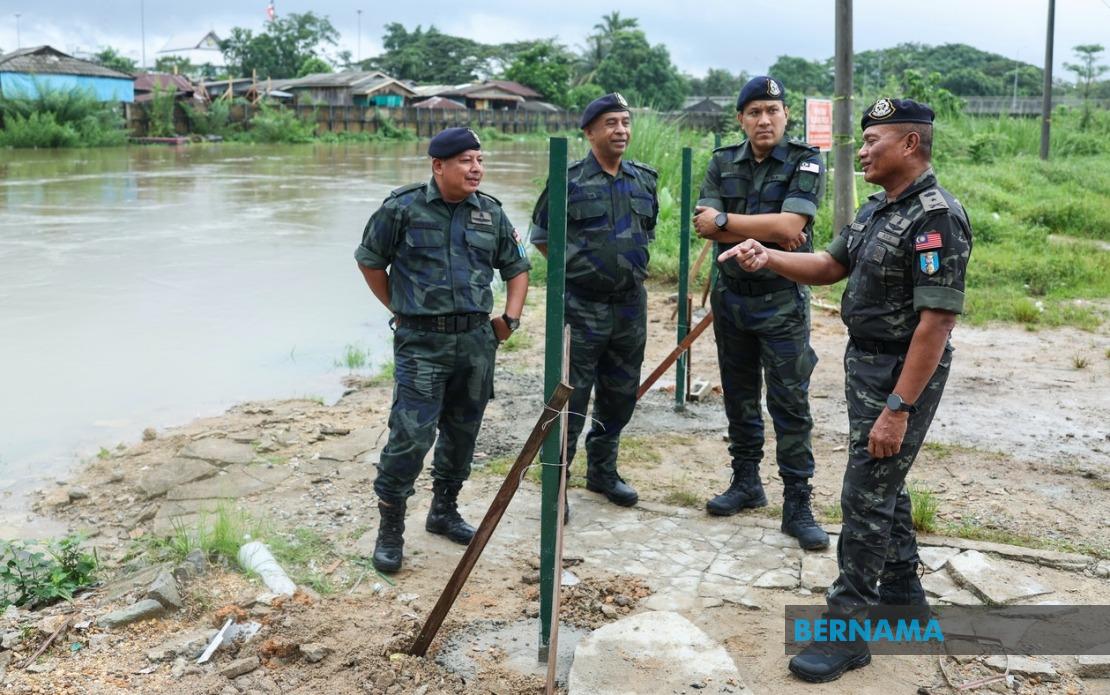
Security forces in Kelantan have dismantled a significant smuggling operation, revealing how criminal syndicates are deliberately fragmenting their migrant transportation methods to slip past law enforcement. The General Operations Force's Southeast Brigade conducted a successful raid in Pasir Mas district on June 28, uncovering evidence that human trafficking networks have fundamentally altered their operational approach to minimise exposure to detection by security patrols.
The breakthrough came during Operasi Taring Wawasan Kelantan, a coordinated effort between GOF's 8th Battalion and the Criminal Investigation Division of Pasir Mas district police. Security personnel apprehended thirteen Myanmar nationals across multiple locations near Kampung Banggol Kemian, with the initial arrests stemming from the interception of a Proton Exora vehicle at approximately 3.30 am. According to Southeast Brigade commander SAC Ahmad Radzi Hussain, GOF personnel identified the vehicle as suspicious and moved to conduct a routine inspection, prompting the driver to abandon the car and flee into nearby forest terrain.
The vehicle's interior yielded the first set of detainees—four Myanmar males occupying the rear seats who possessed no credible travel documentation. However, the operation extended considerably beyond this initial discovery. A subsequent search of the surrounding woodland within roughly an hour identified an additional nine Myanmar nationals who intelligence suggested had recently crossed into Malaysia through unauthorised routes. The total group comprised individuals aged between 20 and 37 years, with the arrested contingent including five women among the thirteen apprehended persons.
When interrogated, detainees disclosed critical operational details about smuggling methodology. All thirteen migrants reported that two unidentified Thai operatives had orchestrated their transportation across the Golok River from Thailand into Malaysian territory. Rather than consolidating the entire group into a single vehicle or convoy, the smuggling network deliberately dispersed arrivals across multiple drop-off points within the forested region. This fragmented approach represented a calculated strategic shift designed to reduce the visible profile of any single transport operation, thereby diminishing the probability of triggering suspicion among mobile security patrols that monitor major routes.
This tactical evolution underscores a significant adaptation by transnational smuggling organisations to counter increasingly vigilant enforcement activity. By partitioning migrants into smaller contingents and staggering their physical movements, syndicates effectively reduce the likelihood of a single interception triggering identification of the entire network. Each smaller group appears less conspicuous than traditional large-scale convoy operations that previously characterised migrant trafficking into Malaysia. For enforcement agencies accustomed to identifying large concentrations of undocumented persons, this dispersal strategy complicates detection and resource allocation during patrols.
The arrested migrants themselves provided investigators with employment-related motivations for undertaking the hazardous journey. Detainees indicated they were destined for the Kuala Lumpur metropolitan area, where labour opportunities—particularly in low-skilled sectors—reportedly awaited them. This pattern mirrors broader regional migration flows wherein individuals from Myanmar and other Southeast Asian nations seek economic advancement through irregular channels, despite substantial associated risks. The individuals involved typically become embedded within informal employment networks once established within Malaysia, facilitating subsequent waves of recruitment.
Beyond personnel arrests, authorities also secured material evidence of smuggling infrastructure. The seized Proton Exora, valued at approximately RM30,000, was identified as an active transport asset regularly deployed for migrant conveyance operations. Such vehicles represent critical logistical components enabling smugglers to move passengers across extended distances relatively quickly, though recent operational patterns suggest even these assets are being deployed more cautiously in smaller capacity configurations.
Investigative protocols moved swiftly following detention. All thirteen apprehended individuals were transferred to CID custody at Pasir Mas district police headquarters for comprehensive interrogation and formal prosecution procedures. The cases fall under Section 6(1)(c) of the Immigration Act 1959/63, which criminalises the harbouring or transportation of undocumented foreign nationals. This legal framework carries substantial penalties, though successful prosecution typically requires establishing direct complicity in smuggling activities.
The Kelantan operation carries broader implications for border security management across Malaysia's northern frontier. The Golok River boundary with Thailand constitutes a particularly vulnerable crossing point given the watercourse's relatively modest physical barriers and scattered population density facilitating clandestine operations. Smuggling networks maintain extensive knowledge of optimal transit locations and seasonal variations affecting river navigability, allowing operational flexibility that stretches thin enforcement resources.
Government authorities increasingly recognise that migrant smuggling organisations operate as dynamic enterprises continuously adapting methodologies to circumvent enforcement mechanisms. The shift toward fragmented group transport exemplifies this strategic responsiveness. As law enforcement enhances detection capabilities and roadside interdiction protocols, smuggling networks compensate through operational redesign rather than cessation. This perpetual tactical adjustment cycle perpetuates irregular migration challenges affecting Malaysia's border management and labour market oversight.
The incident highlights persistent vulnerabilities within Malaysia's broader immigration enforcement architecture. Despite enhanced surveillance, intelligence gathering, and interagency cooperation, determined smuggling syndicates continue identifying operational gaps. Future enforcement strategies may require more dynamic resource deployment responsive to emerging tactical adaptations, particularly along vulnerable frontier segments where migrant vulnerability intersects with smuggler ingenuity.

