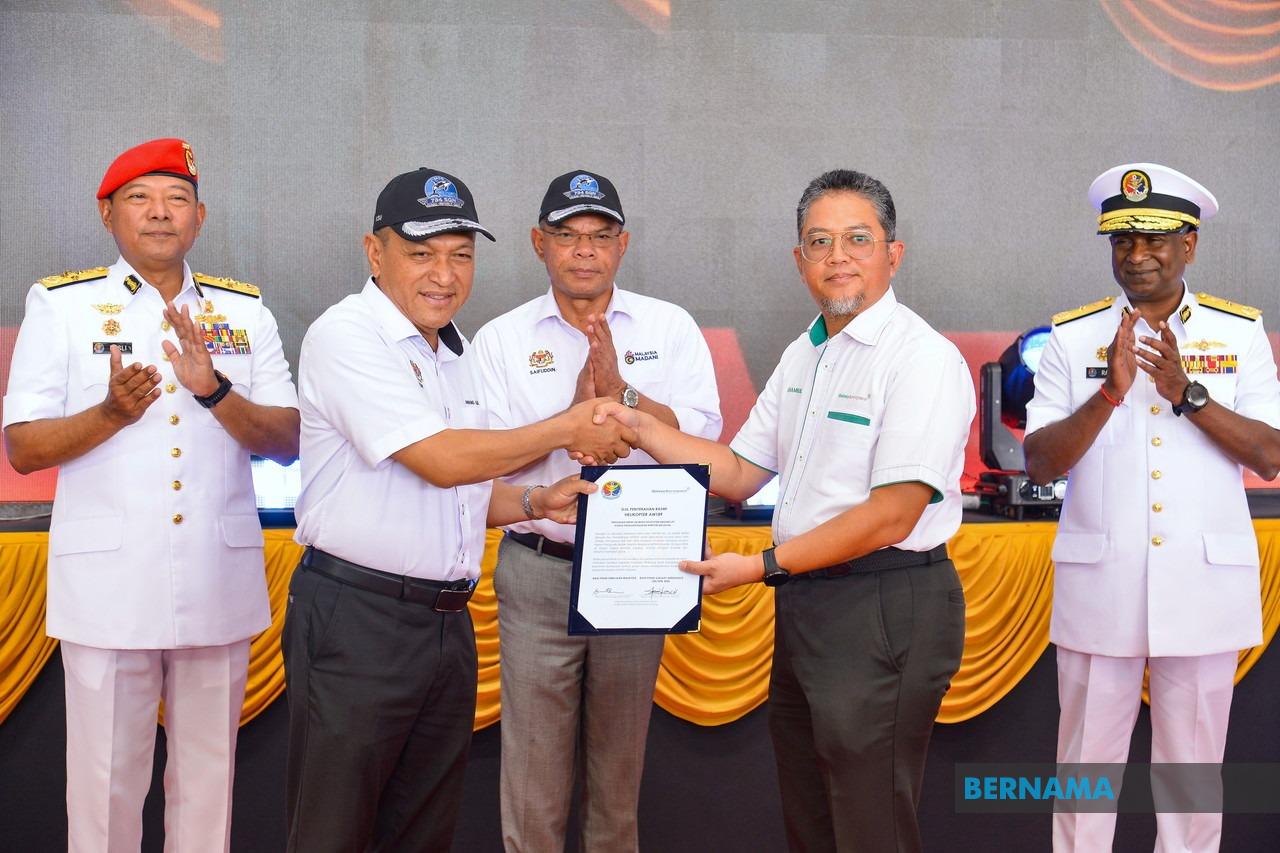
Home Minister Datuk Seri Saifuddin Nasution Ismail has called for thorough and multifaceted examination of the Security Offences (Special Measures) Act 2012 (SOSMA) and refugee policy frameworks, stressing that both areas demand sustained attention to keep Malaysia's security posture aligned with contemporary realities. Speaking after chairing discussions on these pressing issues, Saifuddin emphasized that policymakers cannot afford to view either matter through a narrow lens, insisting instead that any approach must integrate insights from recent developments, grassroots challenges, and forward-looking strategies.
The Home Minister's intervention reflects mounting pressure on the government to recalibrate its approach to security legislation and humanitarian obligations simultaneously. SOSMA, introduced over a decade ago as a successor to the repealed Internal Security Act 1960, has become progressively controversial among civil society organizations, legal scholars, and international human rights bodies. The act grants authorities broad powers to detain and investigate individuals suspected of security threats, yet critics contend that its scope remains inadequately defined and its implementation inconsistent with constitutional protections. The legislation remains a lightning rod for debate over the balance between state security imperatives and individual freedoms, a tension that resonates throughout Southeast Asia.
Saifuddin's call for substantive discussion platforms indicates acknowledgment that SOSMA's architecture may require modernization to address contemporary security challenges more precisely. When SOSMA replaced the ISA, lawmakers positioned it as a calibrated instrument designed to tackle emerging threats with greater specificity than its predecessor. However, over twelve years of application have exposed gaps between legislative intention and operational reality. Security analysts observe that the act's provisions are sometimes invoked for purposes that extend beyond its original security-focused mandate, raising questions about mission creep and the adequacy of oversight mechanisms. The Home Minister's openness to scrutiny suggests the government recognizes that sustainable security policy must command broad legitimacy rather than rest primarily on legal authority.
The refugee crisis represents an equally complex policy challenge demanding fresh thinking. Malaysia hosts one of Southeast Asia's largest refugee populations, with significant communities fleeing Myanmar's political upheaval and civil conflict. The influx has strained municipal infrastructure, public health systems, and social cohesion in urban centers like Kuala Lumpur and Selangor, even as humanitarian groups document the vulnerabilities facing displaced populations. This dual pressure—protecting national interests while upholding humanitarian commitments—has created a policy paralysis that serves neither Malaysia's security nor the refugees' welfare. Saifuddin's emphasis on ground-level realities suggests the ministry recognizes that sustainable solutions must grapple with both the genuine security concerns that official assessments have identified and the legitimate humanitarian needs that refugee advocates articulate.
The Myanmar dimension adds particular urgency to Malaysia's refugee deliberations. Since the February 2021 military coup in Myanmar, the country has descended into protracted conflict involving multiple armed factions, ethnic militias, and pro-democracy forces. Hundreds of thousands have been displaced internally, while tens of thousands have sought sanctuary across borders in Thailand, Bangladesh, and Malaysia. For Malaysian policymakers, this represents not merely a humanitarian emergency but a regional security question with implications for stability throughout the Mekong and maritime regions. Refugees and asylum seekers fleeing Myanmar arrive with diverse backgrounds and intentions, complicating risk assessments and management protocols. The government must distinguish between genuine refugees fleeing persecution and individuals potentially engaged in cross-border smuggling, trafficking, or other criminal activities.
Saifuddin's insistence that policy responses must be "practical, well-founded and suited to current circumstances" signals frustration with approaches that either ignore real constraints or disregard legitimate concerns. Purely security-focused refugee policy risks criminalizing vulnerability and creating conditions that push displaced populations toward informal economies and underground networks. Conversely, humanitarian approaches that downplay security dimensions can leave government vulnerable to criticism if incidents occur. The Home Minister appears to be seeking a framework that acknowledges both dimensions rather than privileging one at the expense of the other, a sophisticated position that demands institutional capacity and political will to implement.
The call for discussion platforms also reflects broader anxieties about Malaysia's security architecture in an era of evolving threats. Transnational terrorism, cyber-enabled extremism, and regional instability represent challenges that predate SOSMA's creation and continue to evolve. Policymakers must ensure that security legislation remains precise enough to target genuine threats while avoiding the overreach that corrodes public confidence in institutions. Similarly, refugee policy must account for Malaysia's positioning within regional migration networks and its relationships with ASEAN partners, many of whom face analogous pressures. Saifuddin's framing suggests the Home Ministry recognizes that effective governance demands ongoing calibration rather than static reliance on existing frameworks.
The timing of these discussions matters considerably for Malaysian political economy. Public opinion on refugee and security issues remains volatile, with competing constituencies advocating for stricter enforcement versus greater humanitarian accommodation. Political parties across the spectrum have sought to capitalize on anxieties around both issues. Saifuddin's emphasis on deliberative processes and evidence-based policymaking attempts to elevate discussion beyond partisan positioning, though success remains uncertain given polarization on these themes. The Home Ministry's commitment to scrutiny and revision signals that the government acknowledges that neither current SOSMA provisions nor refugee management protocols command universal confidence or demonstrable effectiveness.
Looking forward, comprehensive review of SOSMA should examine whether the act's security objectives require legislative amendment, regulatory revision, or enhanced oversight mechanisms. International comparative experience suggests that sunset clauses requiring periodic parliamentary reauthorization, independent review boards, and transparent statistics on usage can strengthen both security outcomes and democratic legitimacy. For refugee policy, Malaysia would benefit from developing a coherent national framework that specifies pathways for asylum adjudication, integration support, and dignified management of mixed migration flows. Coordination with UNHCR, neighboring states, and civil society organizations could improve both security vetting and humanitarian outcomes. The Home Minister's call for in-depth scrutiny suggests openness to these constructive approaches, though translating dialogue into concrete reform remains the substantial challenge ahead for Malaysian policymakers.

