South Africa has escalated its legal challenge against Israel by lodging a formal filing with the International Court of Justice, asserting that the Israeli government has systematically disregarded provisional measures ordered by the court in the genocide case initiated by Pretoria. The submission, filed under Article 11 of the ICJ's Resolution concerning internal judicial practice, represents a significant step in South Africa's ongoing effort to hold Israel accountable through international law mechanisms.
The Department of International Relations and Cooperation in South Africa emphasised that the provisional measures issued by the ICJ carry full legal force and constitute binding obligations on all parties. The department's statement underscores a fundamental principle of international law: that interim rulings designed to prevent irreversible harm must be respected even as proceedings continue toward a final judgment. This distinction between provisional measures and ultimate determinations has become central to the dispute, with South Africa arguing that non-compliance demonstrates contempt for the international legal system itself.
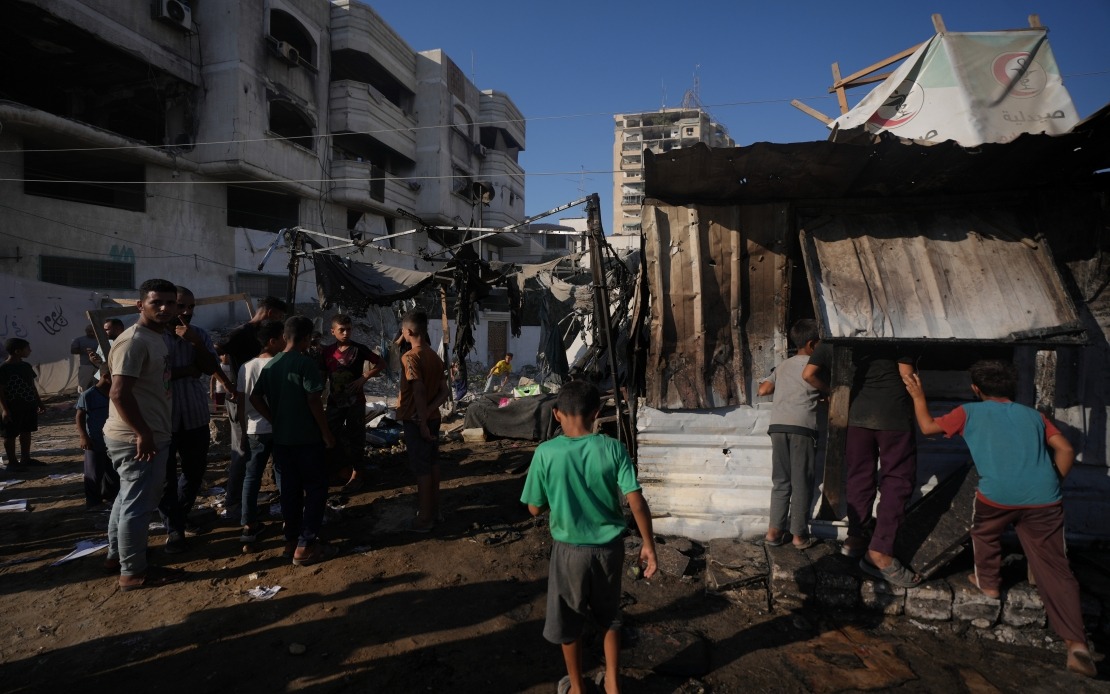
According to South Africa's account, the humanitarian situation in Gaza has deteriorated markedly since the ceasefire took effect on October 10, 2025. The filing documents that Israeli military operations have resulted in more than 1,300 Palestinian deaths and over 4,330 injuries during the ceasefire period alone, a figure that South Africa contends represents continued violations of measures intended to protect civilian populations. Additionally, rescue operations have recovered hundreds of bodies from beneath collapsed structures, further substantiating claims of ongoing destruction despite the purported cessation of hostilities.
The case itself originates from December 29, 2023, when South Africa initiated proceedings against Israel, invoking the 1948 United Nations Convention on the Prevention and Punishment of the Crime of Genocide. This legal framework, established in the aftermath of World War II, represents the international community's most serious formal mechanism for addressing systematic mass atrocities. By framing the conflict through this lens, South Africa challenges the categorisation of military operations as routine warfare, instead positioning them within a framework that carries profound moral and legal implications.
The ICJ has issued three separate orders requiring provisional measures at different stages of the proceedings: in January, March, and May of 2024. Each directive ordered Israel to implement all feasible measures to prevent actions prohibited under the Genocide Convention, effectively requiring the state to demonstrate concrete steps toward civilian protection. South Africa's new filing contends that these three separate orders, issued over several months, indicate the court's sustained concern about the situation and Israel's persistent failure to implement adequate safeguards.
For Malaysia and Southeast Asian observers, this case carries broader significance regarding the relationship between military power and international legal accountability. The proceedings test whether the ICJ possesses meaningful enforcement mechanisms when powerful states resist compliance with provisional measures. A successful outcome for South Africa could establish important precedent regarding the enforceability of international court orders, while failure might signal limitations in global judicial authority when confronting militarily powerful nations.
The filing also addresses the broader humanitarian dimensions of the conflict. South Africa emphasises that Palestinian survivors in Gaza continue to experience compounding trauma while inhabiting progressively constricted territory characterised by severe deprivation. This framing connects the legal case to concrete human suffering, suggesting that non-compliance with provisional measures has direct consequences for vulnerable populations unable to escape the affected region. The shrinking geographical space available to civilians compounds their vulnerability and complicates humanitarian access.
Beyond the specific allegations of ceasefire violations, South Africa's filing represents a sustained commitment to utilising all available international legal mechanisms. The department pledged to continue pursuing enforcement through every available avenue, suggesting that additional filings or requests for enforcement actions remain likely if compliance does not improve. This sustained legal pressure reflects a strategic calculation that international courts, despite acknowledged limitations, remain among the few forums where smaller or non-aligned states can challenge actions of militarily superior powers.
The broader context includes staggering casualty figures compiled by the Palestinian Health Ministry, which documents 73,438 Palestinian deaths and 174,447 injuries since October 7, 2023. These aggregate statistics frame the specific violations alleged in the ICJ filing within the context of an extended conflict characterised by massive loss of life. South Africa's invocation of Genocide Convention protections reflects an argument that the scale and character of casualties warrant consideration under law's most stringent categories.
For regional observers in Southeast Asia, this case illuminates tensions between state sovereignty and international humanitarian accountability. Malaysia, given its historical advocacy for Palestinian rights and investment in multilateral legal frameworks, has reason to monitor how the ICJ addresses non-compliance. The outcome may influence broader discussions about mechanisms for enforcing international court decisions and the practical limits of global judicial authority when confronting determined state actors.
The provisional measures themselves serve a specific function within international law: they aim to prevent irreversible harm to rights that will ultimately be adjudicated through final judgment. By filing this complaint about non-compliance, South Africa argues that Israel's actions during the interim period undermine the entire purpose of having provisional measures, since they ostensibly protect the very populations whose safety might be irreversibly compromised before the full case concludes. This temporal dimension—the race between destructive action and judicial determination—constitutes a persistent challenge in humanitarian law enforcement.
As the case progresses, South Africa's willingness to pursue supplementary filings demonstrates that the genocide case will not simply advance toward final judgment through standard procedural channels. Instead, both the compliance question and underlying merits continue to generate additional legal proceedings and international attention. This expansion of the case's scope reflects the profound disagreements about both factual circumstances and their legal characterisation that separate the parties and dominate international discussion of the conflict.

