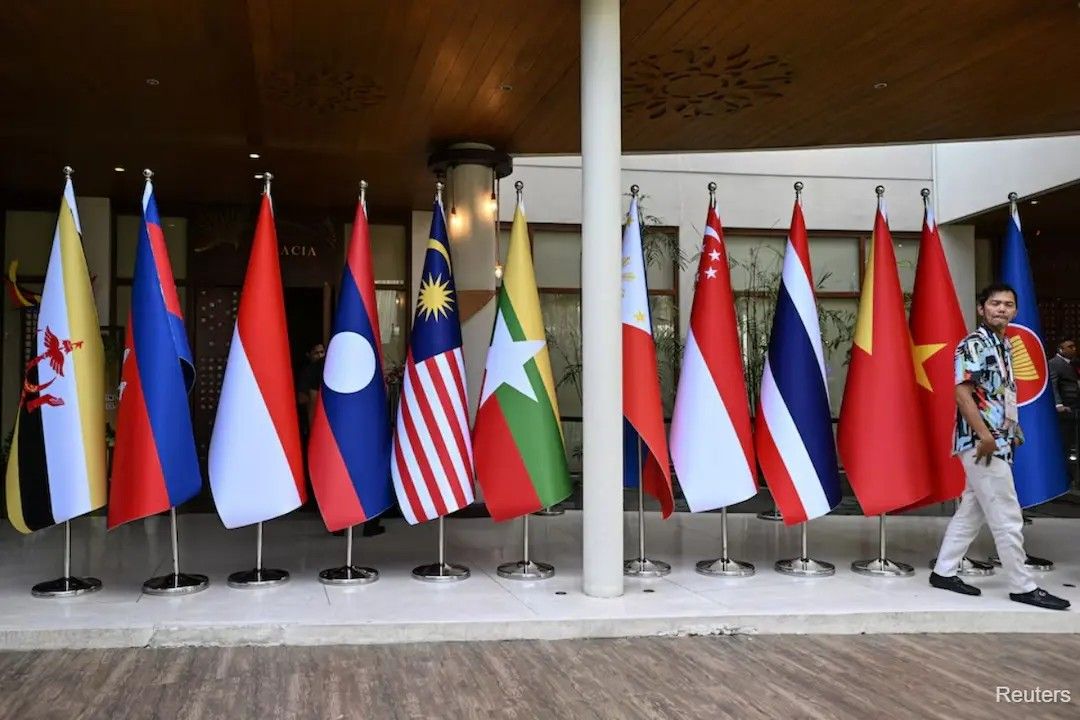
The gathering of Southeast Asian foreign ministers in Manila this week faces a critical test of regional unity as tensions in the South China Sea threaten to fracture consensus at the Association of Southeast Asian Nations (ASEAN). Within hours of arriving in the Philippines on Tuesday, US Secretary of State Marco Rubio publicly condemned what he characterised as "dangerous" Chinese military conduct in the strategically vital waterway, setting a confrontational tone just as the 11-member bloc prepared to address its most divisive internal challenge: Myanmar's ongoing exclusion from summit activities.
The timing of Rubio's criticism reflects Washington's determination to keep maritime security at the centre of regional discourse, particularly as Beijing's expansionist claims continue to destabilise the waters through which trillions of dollars in global commerce flow annually. In an opinion piece distributed to Manila media on Tuesday morning, Rubio articulated the American position with stark clarity, warning that if the South China Sea fell under the influence of a power willing to weaponise trade relationships, both the United States and ASEAN member states would confront unprecedented threats to their sovereignty, economic resilience, and national defence capabilities. The allusion to China was unmistakable, though couched in diplomatic language that reflected Washington's desire to avoid direct confrontation while marshalling regional support for its Indo-Pacific strategy.
The rhetorical escalation follows a potentially serious maritime incident on Monday involving Philippine and Chinese personnel at the Second Thomas Shoal, a disputed feature in the South China Sea that Manila uses as a military garrison. According to Philippine accounts, China Coast Guard operatives physically assaulted Filipino sailors who were approaching the beached vessel in small boats, while Beijing presented a contradictory narrative claiming that Manila had initiated the confrontation through its deliberate approach to Chinese waters. The clash represents the first significant seaborne encounter between the two nations in recent months, suggesting a deterioration in the tacit understanding that has prevented escalation into armed conflict despite ongoing territorial disputes.
China maintains sovereignty claims over nearly the entire South China Sea, a position rendered legally indefensible by an international arbitration tribunal ruling in 2016 that dismissed Beijing's assertions as lacking any legitimate foundation under international law. Nevertheless, China has systematically expanded its military presence across the region through artificial island construction and the deployment of increasingly sophisticated naval and air assets. This persistent challenge to the existing international order has forced ASEAN members, particularly the Philippines, Vietnam, and Indonesia, to walk an extremely fine line between defending their maritime rights and avoiding direct confrontation with a far more militarily powerful neighbour upon which many remain economically dependent.
The incident casts serious doubt over longstanding efforts to negotiate a binding Code of Conduct between ASEAN and China that would establish clear protocols for resolving disputes and preventing accidental escalation. Regional analysts have consistently warned that negotiations have produced only symbolic commitments stripped of enforcement mechanisms, suggesting that any agreement emerging from current discussions will lack the substance necessary to genuinely manage tensions. For Manila, which has pursued the most assertive maritime policy among ASEAN members under President Ferdinand Marcos, the failed promise of a Code of Conduct has left the Philippines increasingly isolated in its struggle to defend its territorial claims against an adversary with vastly superior military capabilities.
Beyond the immediate South China Sea dispute, the Manila gathering arrives at a moment when global energy insecurity is reshaping regional calculations in ways that complicate Western attempts to maintain a united anti-China stance. The Philippines declared a national energy emergency in March and has been forced to diversify its fuel sources beyond traditional suppliers, including recent purchases from Russia, whose Foreign Minister Sergei Lavrov will arrive in Manila on Tuesday to explore deeper bilateral engagement. This energy vulnerability illustrates how regional states, faced with simultaneous pressures from great power competition and domestic economic hardship, find themselves compelled to maintain pragmatic relationships with multiple powers rather than align exclusively with Washington's strategic vision.
Energy security has emerged as a secondary agenda item for the week, with renewed emphasis on the bloc's Framework Agreement on Petroleum Security fuel-sharing mechanism, though ratification remains incomplete as member states struggle with competing priorities and domestic political constraints. The convergence of maritime security challenges with energy insecurity has created a complex negotiating environment where traditional security concerns compete with survival-level economic imperatives for ministerial attention and political capital. For a resource-dependent region like Southeast Asia, the ability to guarantee stable energy supplies often trumps ideological alignment with democratic powers, particularly when authoritarian suppliers demonstrate willingness to provide alternative access to essential commodities without imposing governance conditions.
While the South China Sea dominates headlines, the broader strategic question of Myanmar's role within ASEAN threatens to prove even more consequential for regional cohesion over the medium term. Since Myanmar's military junta seized power in February 2021, the country has been formally barred from ASEAN summits, yet member states remain deeply divided over how to address this crisis. Thailand, which shares an extensive border with Myanmar and currently hosts millions of Burmese refugees, has emerged as the leading advocate for reintegrating the military regime through high-level dialogue, with Thai Foreign Minister Sihasak Phuangketkeow indicating that Myanmar's leader Min Aung Hlaing would visit Bangkok in August as part of a normalisation process.
Thailand's position reflects genuine humanitarian concerns about the ongoing civil war inside Myanmar and the destabilising impact of millions of refugees on Thai border communities, but also reveals a pragmatic assessment that continued isolation proves counterproductive. The Thai argument that regional dialogue, rather than further sanctions, offers the only realistic pathway toward eventual democratic transition resonates with certain ASEAN members but confronts vocal opposition from others. Malaysian Foreign Minister Mohamad Hasan has articulated the contrasting perspective, maintaining that Malaysia cannot countenance high-level engagement while the military junta continues perpetrating what international observers document as systematic oppression of civilians, including extrajudicial killings and arbitrary detention.
This fundamental disagreement over Myanmar policy illuminates a deeper challenge confronting ASEAN as a collective entity: the bloc's consensus decision-making process, which grants every member an effective veto, becomes nearly paralysing when confronted with questions involving fundamental principles of human rights and regime legitimacy. Philippine President Ferdinand Marcos, serving as recent ASEAN chair, attempted to navigate this impasse through what he termed "fine-tuning" the bloc's five-point peace plan during an emotionally charged meeting in Cebu in May, but this diplomatic euphemism masked the continued absence of any concrete progress toward resolving Myanmar's civil war or establishing conditions for the regime's reinstatement. Regional analysts increasingly question whether the five-point framework retains any realistic relevance given Myanmar's political trajectory toward further hardening of military control rather than movement toward democratic governance.
The convergence of these multiple crises—maritime security, energy vulnerability, and internal ASEAN cohesion over Myanmar—presents a formidable challenge to the bloc's ability to function as a unified actor in regional geopolitics. Washington's push for greater strategic alignment against Chinese assertiveness collides with the demonstrated reality that several ASEAN members prioritise economic engagement with Beijing over security alignment with Washington. The prospect of a sideline meeting between Rubio and Chinese Foreign Minister Wang Yi, whom the Secretary of State indicated openness toward before departing Washington, suggests that even as the US condemns Chinese conduct, space remains for bilateral dialogue that might undercut the unified regional stance Washington seeks to construct.
For Malaysian readers and observers throughout Southeast Asia, this week's ASEAN gathering will demonstrate whether the bloc can transcend its internal divisions to project meaningful influence over the strategic environment, or whether member states will continue pursuing individual accommodations with great powers at the expense of collective leverage. The outcome will likely determine not merely the specific outcomes on Myanmar and maritime security, but rather the broader question of whether ASEAN retains sufficient cohesion to serve as anything more than a convenient forum for bilateral great power negotiations conducted on the bloc's periphery.

