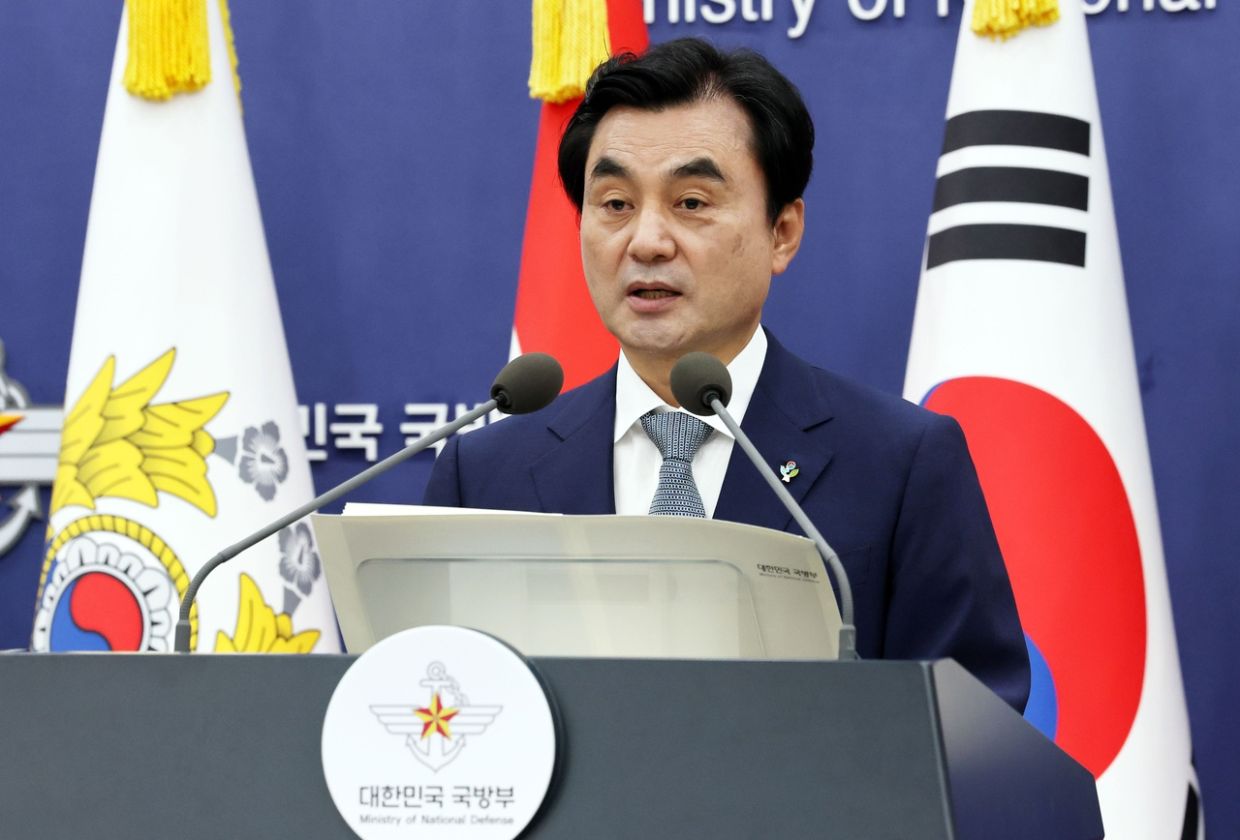
South Korea is undertaking a comprehensive restructuring of its unmanned warfare capabilities, committing to the acquisition of more than 20,000 low-cost drones while accelerating deployment of its homegrown K-Lucas long-range loitering munitions. Defence Minister Ahn Gyu-back announced the ambitious initiative on Friday, signalling a fundamental shift in how Seoul plans to meet evolving security challenges on the Korean Peninsula. The strategy reflects growing international recognition that inexpensive, mass-produced drone systems are now central to modern military operations, a lesson underscored by experiences in Ukraine and recent conflicts involving regional powers.
The pace of technological change in unmanned systems has forced militaries worldwide to recalibrate their approach to procurement and deployment. South Korea's Defence Ministry has explicitly acknowledged that traditional acquisition timelines and certification processes cannot adequately keep pace with the rapid evolution of drone technology and counter-drone capabilities. Rather than maintaining rigid procurement frameworks designed for conventional platforms, Seoul is now pursuing legislative reforms that would permit commercial drone systems to undergo military evaluation and enter service through expedited pathways. Deputy Minister Kim Hong-cheol emphasised that this regulatory overhaul is essential to maintaining South Korea's technological edge against both state and non-state actors operating increasingly sophisticated unmanned systems.
North Korea's expanding inventory of unmanned aerial vehicles presents a direct catalyst for this strategic pivot. The regime has progressively developed diverse drone capabilities that threaten not only military installations but also critical civilian infrastructure across the peninsula. This multifaceted threat has prompted Seoul to prioritise both offensive and defensive unmanned capabilities simultaneously. The planned deployment of counter-drone systems and air defence mechanisms along the inter-Korean border next year represents the implementation phase of this defensive dimension, while the K-Lucas programme addresses the offensive requirement for long-range strike capabilities.
The 20,000-unit procurement target by 2030 encompasses a tiered hierarchy of unmanned platforms. Short-range reconnaissance drones will provide tactical intelligence, while small loitering munitions offer forward-deployed strike options. This layered approach allows South Korea to maintain persistent intelligence, surveillance and reconnaissance coverage while preserving the option for rapid response to emerging threats. The emphasis on "low-cost" and "expendable" systems reflects a deliberate economic calculation: rather than protecting expensive, sophisticated platforms, South Korea can afford to lose these drone systems in combat while maintaining overall operational effectiveness through numerical superiority.
A particularly ambitious component involves training 500,000 "drone warriors" across all military branches, essentially normalising drone operation as a standard capability akin to small arms proficiency. This manpower strategy indicates South Korea's intent to distribute unmanned systems throughout its force structure rather than concentrating them within specialist units. Such democratisation of drone employment could fundamentally alter squad and platoon-level tactics, enabling much smaller unit formations to deliver substantial firepower. For Malaysia and other Southeast Asian nations observing South Korean military development, this approach offers insights into how advanced militaries are restructuring around unmanned platforms.
The technological roadmap extends beyond current platforms toward artificial intelligence-powered drone swarms and directed-energy weapons. These next-generation systems promise to overcome saturation attacks and traditional air defence mechanisms. Laser and high-power microwave systems, scheduled for mid- to long-term deployment, represent a significant shift toward non-kinetic counter-air capabilities. The inclusion of AI-enabled swarm technology suggests South Korea is preparing for conflict scenarios where single platforms operate with limited human intervention, coordinating attacks or defence across multiple nodes simultaneously. These developments carry implications for regional air defence architectures throughout Southeast Asia.
The reorganisation of South Korea's Drone Operations Command reflects both operational necessity and institutional turbulence. Rather than dissolving the command entirely, the Defence Ministry is transitioning it from an operational entity to a policy-focused National Defence Drone Headquarters responsible for capability development, procurement oversight and military-industrial coordination. Operational planning and execution will transfer to the Army, Navy, Air Force and Marine Corps, enabling each service branch to develop doctrine tailored to its specific mission requirements. This decentralisation contrasts with the previous centralised model and promises greater tactical flexibility across the armed forces.
The command's previous controversies, including the 2024 investigation into alleged unauthorised drone incursions into North Korean airspace and subsequent destruction of evidence, clearly influenced this restructuring decision. However, the Defence Ministry's retention of a centralised drone headquarters rather than complete dissolution indicates leadership recognition that unmanned systems require coordinated technological oversight even when operational control disperses across service branches. This compromise approach attempts to preserve institutional coherence while eliminating the direct chain of command that enabled controversial autonomous decision-making.
For regional security observers, South Korea's drone strategy demonstrates how technologically advanced nations are responding to the democratisation of military unmanned systems. The investment in both offensive and defensive capabilities, coupled with ambitious personnel training targets and expedited procurement mechanisms, establishes a template that militaries across the Asia-Pacific region are likely to consider. The emphasis on low-cost, expendable platforms particularly reflects changing assumptions about acceptable losses in military operations and the economic feasibility of mass drone deployments.
The broader context includes President Lee Jae Myung's concurrent initiative to foster defence and space innovation companies, signalling that South Korea views drone technology not merely as military hardware but as a foundation for industrial modernisation. This dual-use approach, wherein military demand drives commercial drone development while commercial innovations inform military applications, could position South Korean companies as major suppliers within Asia. The legislation to streamline defence technology acquisition may also create opportunities for partnerships between government procurement agencies and private sector innovators, a model increasingly adopted by advanced militaries seeking to accelerate capability development cycles.
South Korea's strategic focus on unmanned systems reflects confidence in its technological capabilities relative to North Korea while acknowledging that traditional force structures may prove inadequate against future threats. The comprehensive nature of the initiative—spanning procurement, training, doctrine development, industrial policy and legislative reform—suggests that Seoul views the shift toward unmanned warfare as a generational transformation rather than incremental modernisation. For Malaysia and other regional nations managing complex security environments, South Korea's multifaceted approach offers both strategic lessons and practical benchmarks for evaluating their own defence modernisation requirements and resource allocation priorities.

