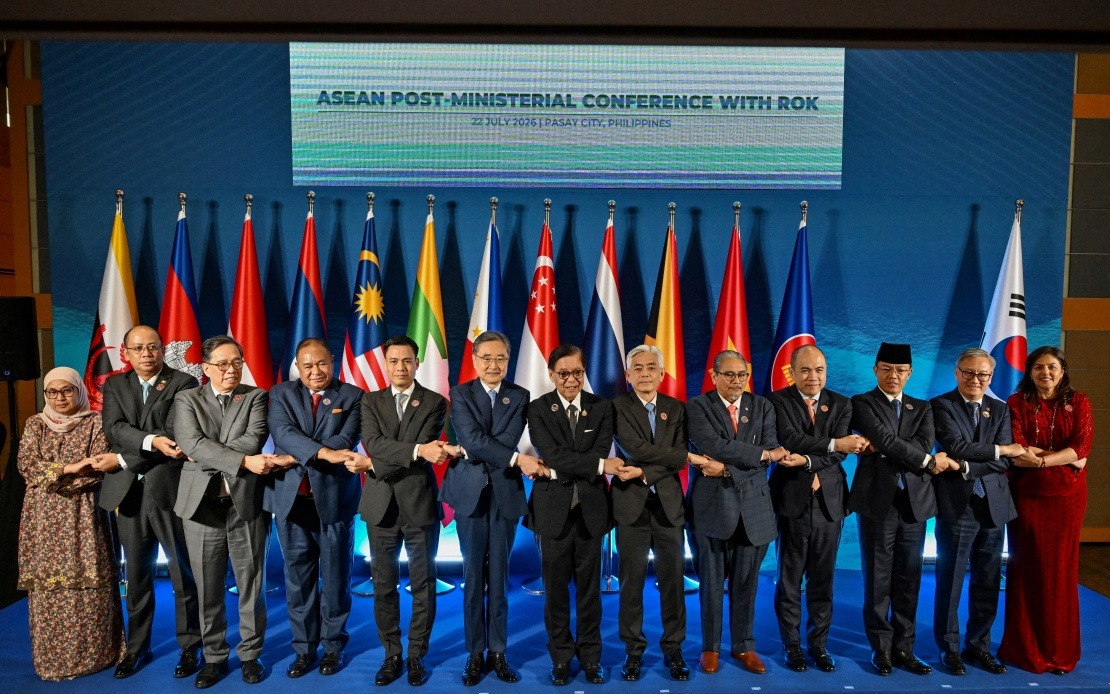
South Korea and ASEAN have marked a significant milestone in their evolving partnership, introducing a slate of fresh cooperation initiatives that reflect both organisations' growing focus on emerging technologies and creative sectors. The announcements came during high-level foreign ministers' talks held in Manila this week, where Seoul and the 10-member Southeast Asian bloc reaffirmed their commitment to a Comprehensive Strategic Partnership framework that has become increasingly central to both parties' regional strategies. Foreign Minister Cho Hyun and his Thai counterpart jointly chaired the meeting, which served as a platform for both sides to showcase tangible progress on joint initiatives while mapping out ambitious plans for future collaboration.
The centrepiece of Seoul's presentation was the Korea-ASEAN AI Partnership Initiative, a comprehensive framework designed to position the region as a hub for artificial intelligence development and responsible innovation. The programme targets multiple facets of the AI ecosystem, from building foundational infrastructure to nurturing research capabilities and cultivating homegrown talent across ASEAN member states. South Korea's pitch emphasises its full-stack AI capabilities—encompassing chip design, software development, and deployment strategies—as assets it can share with ASEAN partners. This initiative holds particular relevance for Southeast Asia, where countries are simultaneously racing to compete in the global AI race while grappling with regulatory challenges and ensuring equitable access to technological benefits across diverse economic contexts.
Beyond technology, the partnership framework encompasses cultural and creative industries, sectors that have assumed growing economic and soft-power importance across Asia. By formalising cooperation in these domains, both Seoul and ASEAN seek to nurture creative economies that can compete globally while preserving and promoting regional cultural identity. South Korea's own experience in exporting cultural products—from entertainment and design to fashion and gaming—offers valuable lessons for ASEAN nations seeking to monetise their own rich creative traditions. The emphasis on this dimension also reflects how regional partnerships are increasingly measured not merely in trade flows or security arrangements but in their capacity to generate shared prosperity across diverse economic sectors.
The strategic partnership vision itself, formally introduced by South Korean President Lee Jae Myung at the preceding Korea-ASEAN summit, rests on three foundational pillars: people-centred cooperation that strengthens educational and cultural ties; growth and innovation through technological transfer and economic collaboration; and peace and stability across the region. This tripartite framework represents an evolution beyond traditional bilateral relations, positioning the partnership as a comprehensive mechanism for addressing contemporary challenges spanning technological disruption, demographic change, and security concerns. For ASEAN members, the appeal lies in diversifying their partnerships and accessing South Korean expertise in areas where Seoul has demonstrated clear competitive advantages.
Another critical dimension of the partnership concerns maritime security and safety, with plans announced to establish a joint maritime academy. This initiative directly addresses pressing concerns across Southeast Asia, where competing claims in the South China Sea, increased shipping traffic, and climate-driven maritime challenges demand enhanced coordination and professional capacity-building. The establishment of a shared training facility signals both organisations' commitment to professionalising maritime operations and fostering norms-based behaviour in waters critical to regional stability and global commerce. For Malaysia and other coastal Southeast Asian states, such capability-building represents a pragmatic investment in managing complex maritime spaces.
South Korea also flagged cooperation to combat online scam crimes, a growing transnational challenge that has devastated individuals and families across Asia. The inclusion of this issue within the strategic partnership framework underscores how contemporary security threats transcend traditional military domains. Online fraud syndicates operating across borders have inflicted particular damage across Southeast Asia, and collaborative frameworks that pool investigative resources, share intelligence, and harmonise legal approaches offer tangible benefits to citizens and law enforcement agencies alike. This dimension of the partnership demonstrates how strategic cooperation increasingly encompasses law enforcement and criminal justice dimensions alongside traditional diplomatic and economic spheres.
The economic architecture supporting this partnership is also undergoing significant renovation. Last month, Seoul and ASEAN commenced official negotiations to upgrade their existing free trade agreement, a pact initially concluded in 2006 for goods trade and subsequently expanded through separate agreements covering services and investment. The modernisation effort aims to capture emerging trade opportunities in digital commerce, critical mineral supply chains, and advanced manufacturing—sectors that barely existed or held minimal relevance when the original agreement was finalised nearly two decades ago. These negotiations reflect recognition from both parties that static trade frameworks become increasingly obsolete as global commerce and technology evolve. For Malaysia, which occupies an important position within ASEAN's economic architecture, upgraded trade terms could facilitate deeper integration with South Korean supply chains, particularly in semiconductors, renewable energy, and electronics manufacturing.
South Korea's trade relationship with ASEAN has become genuinely consequential for both parties, with Seoul exporting approximately US$122.5 billion worth of goods to the bloc in 2025. This substantial figure underscores how the partnership rests on genuine economic interdependence rather than merely aspirational rhetoric. South Korea ranks among ASEAN's top trading partners, while ASEAN has become Seoul's third-largest trading partner globally. This mutual importance creates powerful incentives for both sides to resolve disagreements and deepen collaboration, since disruptions in bilateral relations would impose real costs on multiple constituencies within each economy. The trade upgrade negotiations therefore carry material weight that should ensure serious engagement from negotiating teams.
Foreign Minister Cho also raised Seoul's approach to the Korean Peninsula, seeking continued ASEAN endorsement of South Korea's policies toward North Korea and reiterating Seoul's commitment to peaceful coexistence and shared growth on the peninsula. ASEAN member states reciprocated by reaffirming their support for South Korean Peninsula policy and emphasising that stability on the peninsula carries direct implications for broader regional peace. This exchange reflects ASEAN's longstanding commitment to non-interference in bilateral disputes while simultaneously acknowledging that major power competition and flashpoints adjacent to Southeast Asia inevitably influence regional stability. For ASEAN members like Malaysia, balancing pragmatic engagement with Korean Peninsula issues while maintaining broader principles of non-interference and equidistance among major powers remains a delicate diplomatic exercise.
Beyond the full Korea-ASEAN ministerial meeting, Cho conducted bilateral consultations with counterparts from Philippines and Thailand, illustrating how multilateral frameworks often run parallel to bilateral diplomacy. These conversations likely addressed country-specific concerns, bilateral trade issues, and opportunities for enhanced cooperation across defence, technology, and development assistance domains. The willingness of ASEAN foreign ministers to engage in substantive bilateral discussions alongside the broader multilateral framework suggests healthy appetite for deepening ties with South Korea across multiple channels and institutional contexts.
The comprehensiveness of the announced initiatives—spanning artificial intelligence, cultural industries, maritime safety, cybercrime, and trade—suggests both organisations view their partnership as a multi-domain relationship capable of addressing contemporary challenges. Rather than focusing narrowly on traditional alliance-building or security cooperation, the framework explicitly embraces economic, technological, cultural, and people-to-people dimensions. This holistic approach reflects evolving understandings of what regional partnerships should accomplish in an era where technological disruption, demographic change, and transnational challenges pose challenges that no single country can address independently. For Southeast Asian nations considering their own international partnerships, the Korea-ASEAN model offers valuable lessons about constructing durable relationships grounded in complementary capabilities and genuine mutual benefit.

