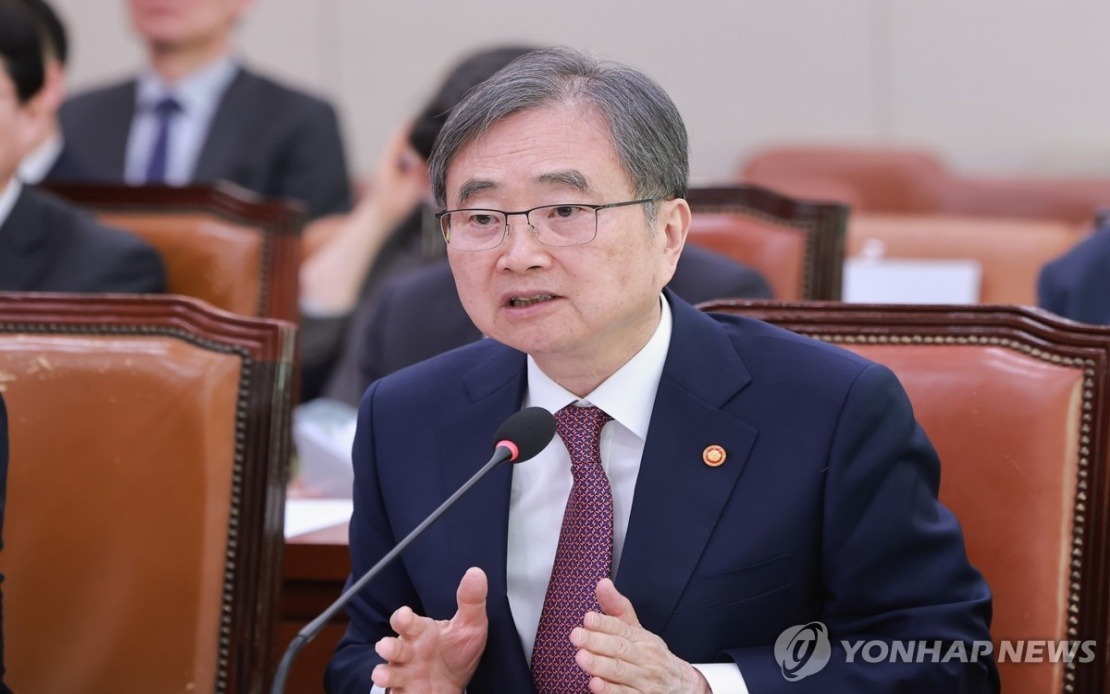
South Korean Foreign Minister Cho Hyun-learned of significant reductions to joint military exercises with the United States through President Donald Trump's social media announcement, a disclosure that underscores the unpredictability of contemporary diplomatic communication and the challenges facing traditional channels of government-to-government coordination. Neither Seoul nor Washington had received advance notification before Trump's post appeared on August 16, according to testimony Cho delivered to parliament's committee on foreign affairs and unification this week, highlighting an unusual departure from established protocols governing defence cooperation between allied nations.
The revelation carries particular significance for South Korea, which depends heavily on the US military alliance as a cornerstone of its security architecture facing North Korea's weapons development and regional tensions. The Ulchi Freedom Shield exercise, a major annual joint operation combining field manoeuvres, computer-simulated command post drills, and civil defence activities, was dramatically scaled back from a ten-day duration ending August 27 to just five days concluding August 21. This compression represents a material change to one of the peninsula's most important security demonstrations, yet Seoul learned of it not through diplomatic channels but through the US president's social media platform.
Cho emphasised during parliamentary questioning that this was not a unilateral action by the United States, but rather that South Korea's Defence Minister Ahn Gyu-back had begun intensive consultations with American counterparts immediately following Trump's announcement. This clarification appears aimed at reassuring lawmakers concerned about Seoul's influence over defence decisions affecting Korean territory and security posture. The rapid engagement between defence establishments suggests both governments recognised the need to manage potential damage to alliance cohesion from the unconventional announcement method.
Commander of the US Forces Korea Xavier Brunson visited South Korea's defence ministry building on Tuesday, shortly after the social media announcement, indicating the seriousness with which both militaries treated the need for immediate dialogue. Such high-level visits typically precede or follow major policy shifts, underscoring the gravity of the decision and the requirement for detailed coordination on implementation. The visit demonstrated that despite the unorthodox communication, both governments were committed to managing the transition and ensuring operational continuity.
The decision to curtail the exercise reflects broader strategic considerations under the Trump administration regarding military spending and alliance commitments. Previous statements from Trump have criticised the cost of maintaining US military presence in South Korea and questioned burden-sharing arrangements, concerns that have periodically surfaced throughout his political career. The exercise reduction could signal a willingness to scale back certain defence demonstrations, though it remains unclear whether this represents a permanent policy shift or a temporary adjustment.
For Southeast Asian observers, this episode carries implications beyond the Korea peninsula. The reliance on social media for announcing defence policy changes raises questions about how Beijing, other regional powers, and potentially adversaries receive and interpret security decisions. The reduced predictability in US policy communication creates uncertainty for security planners across the region who depend on reading American commitments and capabilities. Nations like Japan, the Philippines, and others aligned with the United States must now account for the possibility that major military decisions affecting their own security could be announced through informal channels rather than through traditional diplomatic means.
South Korea's situation also reflects broader tensions within the US-ROK alliance regarding contributions and commitment levels. Washington has long pushed Seoul to increase defence spending and assume greater responsibility for deterrence on the peninsula, particularly as China's military capabilities expand. By announcing exercise reductions through social media rather than bilateral negotiation, Trump may have intended to signal cost-consciousness or to create leverage for renegotiating defence-burden arrangements. However, the approach risks undermining the very predictability and institutional cohesion that alliances require to function effectively.
The Ulchi Freedom Shield exercises serve multiple purposes beyond military readiness. They demonstrate combined capabilities to potential adversaries, test civil-military coordination in crisis scenarios, and reinforce public confidence in defence preparedness. Reducing their scope and duration could send mixed signals about US commitment levels precisely when North Korea continues advancing its nuclear arsenal and ballistic missile capabilities. Seoul must balance managing alliance relationships with assuring its own population and deterring potential threats through credible military demonstrations.
For Malaysia and other Southeast Asian states maintaining careful equilibrium between major powers, the South Korean experience illustrates the volatility that can accompany defence relationships with great powers. While Malaysia's strategic partnerships differ significantly from the US-ROK alliance, the principle remains relevant: governments benefit from predictable, institutionalised communication channels rather than unilateral announcements through public platforms. The incident also demonstrates how diplomatic norms continue evolving in an age of social media, where leaders can bypass traditional channels entirely, creating challenges for foreign ministries attempting to maintain protocol and coordination.
Looking ahead, Seoul faces the task of normalising alliance operations despite the unconventional announcement method. Defence Minister Ahn's ongoing consultations aim to establish clear implementation parameters and prevent further surprises. The incident serves as a reminder that even deeply institutionalised alliances cannot remain insulated from shifts in leadership style and communication preferences. For the broader region, particularly nations concerned with maintaining stable security environments, the South Korean case underscores the importance of diversified security partnerships and institutional arrangements that can withstand disruption from unexpected policy announcements or leadership changes.

