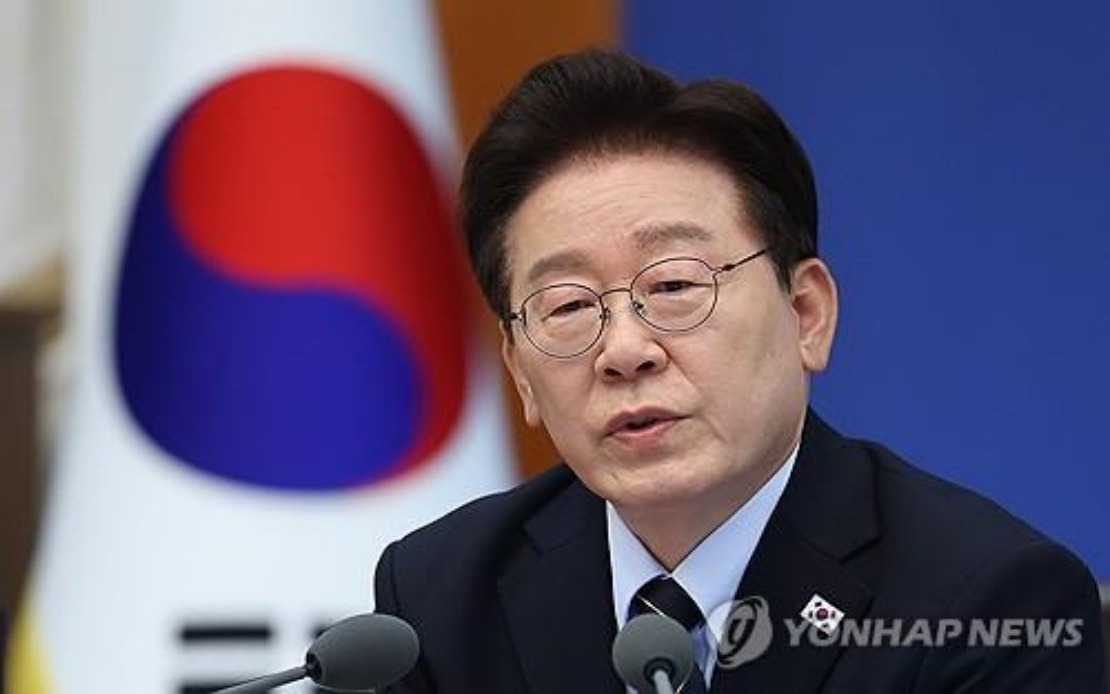
South Korea is embarking on a significant restructuring of its defence apparatus, with President Lee Jae Myung ordering accelerated military reforms that prioritise advanced technology and selective conscription over traditional mass recruitment. The directive, issued during a high-level meeting with senior officials at the presidential office, signals a fundamental rethinking of how Asia's fourth-largest economy approaches national security in the face of a shrinking population.
The policy shift addresses a demographic reality that has become impossible to ignore. South Korea's persistently depressed birth rate has created unsustainable pressures on the current conscription model, which demands that all eligible men serve a minimum of 18 months. The existing system, built on assumptions of abundant manpower, increasingly conflicts with the nation's economic and demographic trajectory. Rather than cling to an outdated model of large standing forces reliant on infantry strength, Seoul now recognises that future security must derive from technological sophistication and professional capability rather than sheer numbers.
At the heart of Lee's vision is what officials describe as a "smart military"—one built around cutting-edge equipment, advanced defence technologies, and a more streamlined force structure. This represents a departure from the Cold War-era approach that has characterised Korean defence policy for decades. The emphasis on selective conscription suggests the government will establish criteria to identify which citizens are most suited for military service, potentially based on aptitude, education, or specialisation requirements, rather than imposing universal conscription on all able-bodied males.
The president articulated a critical but often overlooked dimension of this reform: making military service compatible with individual life planning and career development. Rather than perceiving conscription as a lost chapter in personal development, Seoul wants young men to view military service as an investment in their future. Lee stressed that the government bears responsibility for ensuring service members gain valuable skills, access to quality education, and opportunities for wealth accumulation that will benefit them throughout their working lives.
This reframing of military service carries significant implications across East Asia. Other nations facing similar demographic challenges—including Japan and potentially China in the long term—may watch closely as South Korea experiments with alternative conscription models. The approach suggests that advanced economies can maintain robust defence capabilities without relying on mass conscription, a finding that could influence regional security calculations and military planning across the continent.
The reforms must also be understood within the context of South Korea's broader economic challenges. Lee devoted considerable attention during the same policy meeting to housing shortages and real estate policies, signalling that defence modernisation is linked to wider efforts to improve living standards and economic opportunity. The government has committed to supplying more than 230,000 additional homes in the Seoul metropolitan area through accelerated development, greenelt modifications, and private-sector support.
This integration of military and housing policy reflects an understanding that national security and social stability are interconnected. Youth in major Korean cities face acute affordability challenges, with housing prices consuming disproportionate shares of income. By improving the economic prospects of military service, and simultaneously addressing housing supply, the administration seeks to create conditions where conscription is perceived not as a burden but as a legitimate pathway to adulthood and financial security.
Implementing selective conscription will require substantial legislative and administrative changes. The government has indicated willingness to revise laws and related systems to facilitate this transition, suggesting that resistance from conservative quarters concerned about military readiness may be substantial. However, defence officials appear convinced that quality and technological sophistication can compensate for smaller force sizes, particularly given South Korea's advanced industrial base and technological capabilities.
The timing of these reforms also reflects evolving threat perceptions. While North Korea remains a significant security concern, the nature of potential conflicts has shifted. Modern warfare increasingly depends on sophisticated command systems, precision weapons, cyber capabilities, and intelligence rather than mass infantry formations. A smaller, more technologically advanced military may prove more effective against contemporary security challenges than the current conscription-heavy model.
For neighbouring Japan, which has long maintained a professional Self-Defence Force without conscription, the Korean reforms represent vindication of a different security model. However, Japan currently faces its own intense demographic pressures and must reconcile these with constitutional constraints on military expansion. South Korea's willingness to reimagine conscription rather than abandon it suggests a middle path that other democracies facing population decline might eventually consider.
The effectiveness of these reforms will depend substantially on political will and sustained investment. Transitioning from a conscription-based military to a professional, technology-centric force requires not merely policy changes but fundamental cultural shifts in how Koreans understand national service. The government's commitment to ensuring that military service opens doors rather than closes them will be crucial to maintaining public support for selective conscription systems that may exclude many citizens from this traditional experience.
Asean nations observing these developments from a more distant vantage point may draw lessons relevant to their own defence modernisation efforts. While Southeast Asian countries face different security contexts and demographic profiles, the principle that smaller, better-trained, technology-enabled forces can match larger traditional armies has broad applicability. South Korea's experiment with defence reform offers a case study in how advanced economies are adapting security institutions to twenty-first-century realities.

