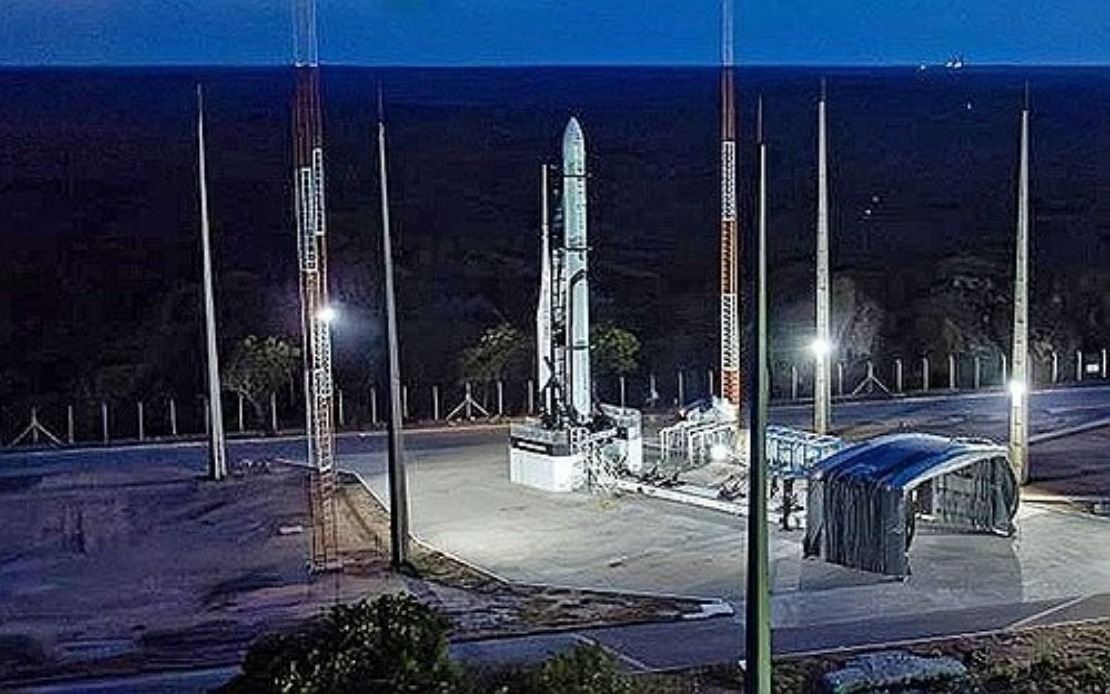
South Korea's defence ministry announced Tuesday that it has postponed the planned launch of the Mir solid-fuel space rocket, marking a setback for the nation's efforts to develop independent reconnaissance satellite capabilities. The rocket was scheduled to lift off at 2 pm from a sea-based platform positioned off Jeju Island's southern coast, but officials detected critical safety issues during final launch preparations that necessitated the delay. The ministry stated that a rescheduled launch date would be communicated at a later point, without providing specifics on the nature of the technical problems that triggered the postponement.
This launch represented a significant milestone in South Korea's space programme, as it would have been the first test of the Mir vehicle as a fully integrated four-stage system. Previous trials conducted in 2022 and 2023 had examined only partial three-stage configurations, making the complete assembly a crucial next step in validating the rocket's design and operational readiness. The decision to halt the launch demonstrates the South Korean defence ministry's commitment to rigorous safety protocols, even when facing pressure to advance strategic national capabilities.
South Korea initiated the Mir programme in 2021 with the explicit goal of developing indigenous solid-propellant launch capabilities to deploy small observation and surveillance satellites into low-Earth orbit at altitudes below 500 kilometres. The strategic imperative driving this initiative is unmistakable: to establish genuine independence from reliance on foreign launch providers and intelligence-gathering systems, particularly amid persistent tensions with North Korea. By creating a homegrown capacity to monitor regional security threats in real time, Seoul aims to reduce its vulnerability to geopolitical complications that could restrict access to American satellite intelligence during critical moments.
Solid-fuel rocket technology offers distinct operational advantages compared to its liquid-fuel alternatives. The simpler engineering architecture of solid-propellant systems enables extended storage without degradation, a quality that permits rapid deployment when launch windows open unexpectedly. This responsiveness and reliability made solid-fuel rockets an attractive choice for South Korea's military ambitions, allowing the nation to maintain constant surveillance readiness without dependence on complex infrastructure or foreign partnerships.
The Mir programme operates as a complementary initiative alongside South Korea's parallel military spy satellite project, which has already achieved measurable success. As of November of the previous year, South Korean officials had successfully deployed five reconnaissance satellites into operational orbits using SpaceX's Falcon 9 rockets. These five larger military-grade satellites form the foundation of South Korea's current surveillance architecture, providing critical intelligence on North Korean military activities and regional security developments.
Looking toward the 2030 horizon, South Korea's strategic vision encompasses a substantially expanded satellite constellation. Officials plan to domestically deploy as many as 60 small spy satellites into space within the decade, creating a dense network of observation platforms that would dramatically enhance persistent surveillance coverage. This dramatic increase in satellite numbers would transform the character of South Korean intelligence gathering, shifting from dependence on a small number of large, costly satellites to a distributed system of numerous smaller, more resilient platforms.
The projected constellation of up to 60 satellites would serve multiple strategic functions. The density and distribution of such a network would enable more frequent revisiting of target areas, reducing the gap between observation opportunities and dramatically improving the timeliness of intelligence. Complementing the five larger military satellites already in orbit, this smaller satellite layer would create a multi-tiered reconnaissance system with both strategic depth and tactical flexibility, allowing military commanders and intelligence analysts unprecedented insight into adversary movements and intentions.
For Malaysian and broader Southeast Asian observers, South Korea's satellite independence initiative carries important implications. The region faces its own security imperatives related to maritime domain awareness, territorial monitoring, and disaster response—challenges that could be addressed through indigenous or regionally cooperative space capabilities. South Korea's experience developing solid-fuel launch systems and small satellite clusters offers a potential model for other nations seeking to reduce external dependency in the space domain.
The postponement also underscores the technical complexity inherent in space launch programmes, even for technologically advanced nations with substantial military-industrial capacity. Safety protocols in rocket launches are non-negotiable, as failures can result in loss of life, destruction of critical infrastructure, and erosion of public confidence in space programmes. South Korea's willingness to delay operations rather than proceed with identified risks reflects the mature approach necessary for sustained long-term success in space activities.
The broader geopolitical context remains crucial to understanding South Korea's space priorities. With North Korea pursuing its own ballistic missile and nuclear weapons programmes, and with regional dynamics involving China's growing military capabilities, Seoul faces genuine security imperatives that drive investment in advanced reconnaissance systems. The transition from reliance on American intelligence to indigenous capability represents not merely a technological upgrade but a strategic repositioning that enhances national autonomy during periods of potential international tension or complication.
As South Korea works to reschedule the Mir launch, officials will undoubtedly conduct thorough investigations into the specific safety concerns that triggered the postponement. The technical lessons learned from this delay will inform subsequent launches and contribute to the programme's overall maturation. The ultimate success of this initiative could influence how other regional nations approach space development, potentially stimulating greater emphasis on indigenous capabilities across Southeast Asia and Northeast Asia.

