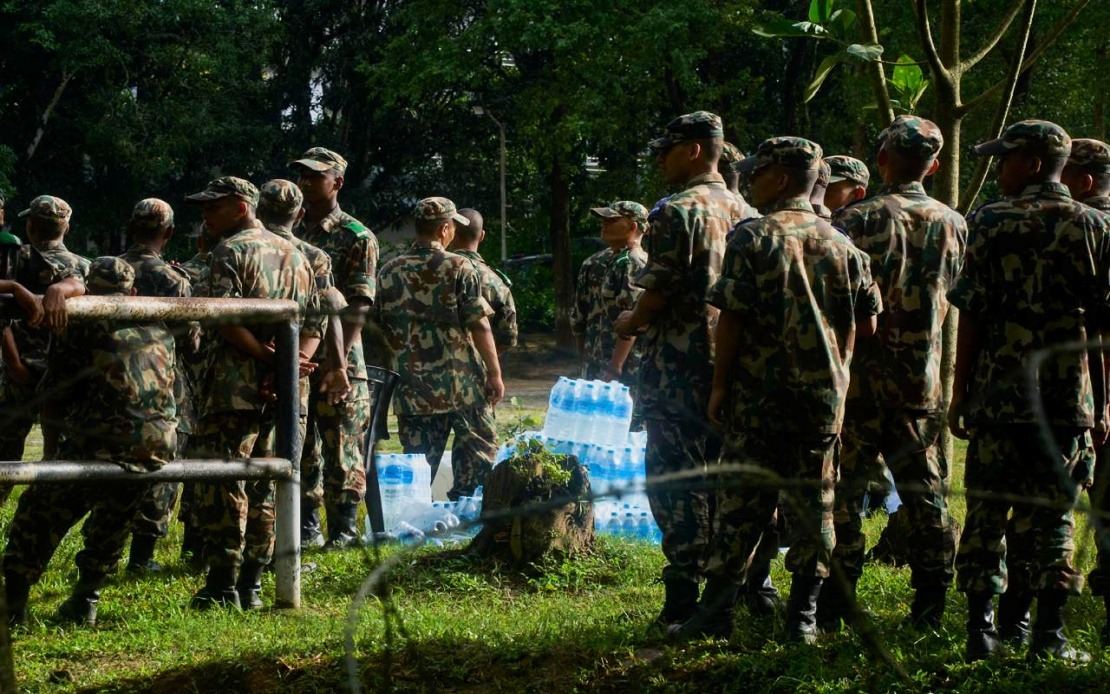
South Korea activated an emergency response protocol on Thursday, dispatching a dedicated team to Nepal to aid in the search for nine missing nationals swept away during catastrophic flooding that struck the country's Himalayan region. The deployment marks Seoul's immediate diplomatic and humanitarian mobilization in response to the disaster, which has become one of Nepal's deadliest natural catastrophes in recent memory and has drawn international attention to the perils facing foreign workers in high-risk construction projects across South Asia.
The nine missing Koreans comprised personnel from two major South Korean enterprises operating at a shared work site. Doosan Enerbility Co., a leading global plant engineering and construction firm, had six employees unaccounted for, whilst Korea South-East Power Co., a state-owned electricity generation company, reported three of its staff among the missing. All nine were employed at a hydropower plant construction project situated in Rasuwa district, located in the mountainous terrain north of Kathmandu, when a massive flash flood combined with mudslides devastated the area on Wednesday. The catastrophic deluge swept through the construction site with little warning, overwhelming the workers and rendering many unable to evacuate safely.
The scale of the humanitarian crisis extended well beyond the nine missing Koreans. An additional ten workers employed by Doosan who had initially become stranded in the affected region were later confirmed safe, though they continued awaiting extraction from the dangerous terrain. The broader construction project itself involved approximately 200 foreign nationals drawn from multiple countries, most of whom managed to flee the area following the initial flooding. This evacuation, though successful in preventing mass casualties among the foreign workforce, underscores the vulnerability of expatriate construction workers operating in geographically unstable regions where natural hazard warning systems and emergency infrastructure may be inadequate.
The Nepal disaster has assumed catastrophic proportions by regional standards. Initial assessments indicate that the flooding and associated mudslides claimed at least 160 lives across the affected region, with an additional 403 persons reported missing. Most disturbingly, 341 of those missing are foreign nationals, suggesting that international workers and expatriates were disproportionately affected by the disaster. This concentration of foreign casualties reflects both the location of major infrastructure projects in vulnerable Himalayan valleys and the frequency with which migrant workers from neighbouring and distant countries are employed in Nepal's construction sector, often with limited safety protocols tailored to extreme weather events.
Seoul's response mechanism activated swiftly following confirmation of the missing workers. An eleven-member emergency response team comprising officials drawn from South Korea's Foreign Ministry, police services, and fire and rescue authorities departed for Nepal on Thursday with instructions to arrive in Kathmandu by that evening. The team's composition reflects a comprehensive approach to the crisis, blending diplomatic coordination, law enforcement liaison, and specialist rescue expertise. Such rapid deployment demonstrates the priority Seoul places on protecting its nationals abroad and maintaining robust crisis response capabilities in regions where Korean commercial interests remain significant.
Beyond governmental action, the two Korean firms directly involved moved to establish their own crisis management structures. Both Doosan Enerbility and Korea South-East Power announced the formation of dedicated emergency response units and committed to deploying field teams directly to the disaster site. This corporate-level mobilization complements official governmental efforts and reflects the responsibility these companies bear toward their employees. In major infrastructure projects operating in hazardous environments, corporate crisis response often proves essential when governmental resources face overwhelming demands across multiple disaster zones simultaneously.
High-level political attention in Seoul underscored the seriousness with which authorities viewed the incident. Foreign Minister Cho Hyun signalled his intention to engage directly with Nepal's diplomatic counterpart to seek enhanced cooperation in locating and rescuing the missing workers. Presidential involvement proved even more pronounced, with President Lee Jae Myung issuing explicit directives to the government apparatus to mobilize all feasible resources toward search and rescue operations. This top-level commitment ensures that the missing workers' case maintains visibility within South Korea's decision-making structures and receives priority resource allocation.
The specific construction project affected by the disaster carries substantial economic and strategic significance for both nations. The Upper Trishuli-1 hydropower plant, situated approximately 70 kilometers northwest of Kathmandu on the Trishuli River, represents a major bilateral infrastructure initiative. The 216-megawatt facility is jointly developed and constructed by the two South Korean firms, with commercial operation originally targeted for year-end following a construction commencement in January 2022. However, industry analysts have begun cautioning that the severe flood damage inflicted upon the site will likely necessitate substantial delays to the project timeline, complicating both companies' production schedules and Nepal's energy development roadmap.
The tragedy carries particular relevance for Malaysia and other Southeast Asian nations with significant overseas workforces and construction industries operating across Asia's more geographically challenging regions. Nepal's Himalayan valleys have witnessed repeated natural disasters that threaten infrastructure projects and expatriate workers, yet the region's hydroelectric potential continues attracting investment from regional and global firms. The incident serves as a stark reminder of the occupational hazards facing migrant workers throughout Asia's construction sector, particularly in areas where geological instability, seasonal monsoons, and limited emergency infrastructure converge. Malaysian construction companies operating in similar high-altitude or flood-prone environments across South Asia and Southeast Asia should reassess their safety protocols, early warning systems, and evacuation procedures in light of the Nepal disaster's lessons.
The broader geopolitical context reflects South Korea's deepening commercial engagement across Nepal and the broader South Asian region. Korean firms have invested heavily in infrastructure projects throughout Nepal as Seoul pursues strategic economic partnerships beyond its traditional Northeast Asian sphere. Such investments generate employment for Korean professionals and repatriate profits, yet they simultaneously expose South Korea's workforce to environmental and geological risks endemic to certain regions. The emergency response now underway demonstrates Seoul's preparedness to project state resources globally to protect its citizens, a capability that Malaysian policymakers monitor as reference points for their own overseas worker protection frameworks.

