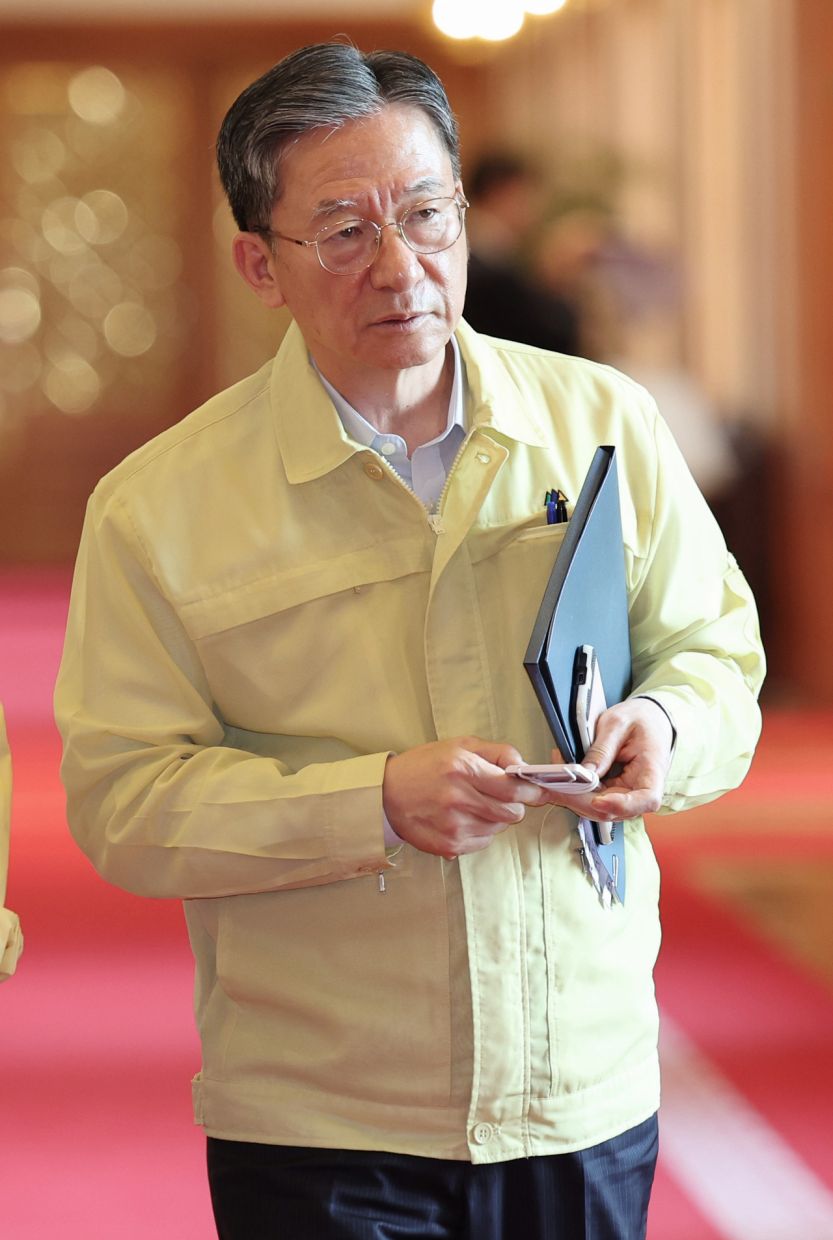
South Korea's Justice Minister Jung Sung-ho announced his resignation on Tuesday, ending a tenure marked by fundamental disagreements with the ruling Democratic Party regarding the scope of prosecutorial authority in the country's evolving criminal justice system. The departure underscores the deep policy divisions within government circles as Seoul navigates a significant restructuring of how investigators and prosecutors interact within the legal framework.
Jung's decision to step down came amid escalating tensions over prosecutors' supplementary investigation powers—a mechanism that allows prosecutors to independently re-examine cases they deem inadequately investigated by police. While Jung expressed concern that removing these powers would undermine prosecutorial effectiveness, the Democratic Party has championed their elimination as a necessary check against the concentration of authority within prosecutorial offices. This philosophical divide reflects broader debates across Southeast Asia and beyond about prosecutorial independence and its potential for misuse.
The resignation carries particular significance given the timing of the Criminal Procedure Act's revised implementation, scheduled for October 2. This legislative overhaul represents one of the most comprehensive reforms of South Korea's criminal justice architecture in decades, fundamentally rebalancing the relationship between investigative and prosecutorial functions. Under the new framework, prosecutors will be substantially constrained in their ability to launch independent investigations, instead pivoting toward a reviewing and charging role while police maintain primary investigative authority.
The institutional shift reflects growing concerns among Democratic Party lawmakers that unchecked prosecutorial power poses risks to due process and individual rights. By separating investigative responsibilities from prosecutorial decisions, policymakers aim to create natural institutional checks that prevent any single authority from wielding excessive control over criminal cases from initial investigation through courtroom proceedings. This separation-of-powers approach mirrors models adopted in various democracies seeking to prevent political prosecution and enhance judicial integrity.
Jung's public reasoning for resigning—citing health concerns while noting the desirability of "new leadership" to shepherd the reforms—appears to mask deeper policy disagreements that rendered his position untenable within a government committed to prosecutorial constraint. His suggestion that fresh leadership would better position the Justice Ministry to implement these changes signals acknowledgment that his philosophical alignment with prosecutors' traditional role had become incompatible with the Democratic Party's reform agenda.
The practical implications of the October 2 reforms will reshape how Korean prosecutors approach routine criminal matters. Rather than investigating cases they perceive as inadequately handled by police, prosecutors will review completed investigations and determine prosecutorial merit independently. This procedural change promises to accelerate case processing while theoretically reducing prosecutorial overreach, though critics worry it may limit investigative flexibility in complex cases requiring specialized prosecutorial expertise.
For Malaysia and other Southeast Asian nations navigating similar questions about prosecutorial accountability and investigative efficiency, South Korea's reform experience offers instructive lessons. Many countries in the region maintain prosecutorial systems that grant significant investigative autonomy, a legacy of colonial legal traditions and evolving standards regarding rule of law and institutional balance. South Korea's willingness to restructure these relationships through comprehensive legislation demonstrates one approach to modernizing criminal justice systems in response to contemporary accountability demands.
Vice Justice Minister Lee Jin-soo will assume interim leadership of the Justice Ministry pending formal acceptance of Jung's resignation. This transition provides opportunity for the ministry's new steward to align messaging and policy direction more closely with Democratic Party objectives regarding the prosecutorial reforms. Lee's appointment signals continuity in implementing the party's justice agenda while simultaneously resetting the Justice Ministry's institutional posture toward prosecutorial constraint.
The broader context of Jung's resignation reflects international trends toward restricting prosecutorial discretion and enhancing investigative independence. Democratic nations increasingly recognize that concentrated prosecutorial power creates vulnerabilities to political manipulation and selective enforcement. South Korea's October 2 reforms join comparable initiatives in other democracies seeking to rebalance investigative and prosecutorial relationships for enhanced accountability and fairness.
This episode also highlights how justice sector reforms, while ostensibly technical legal matters, carry profound political dimensions. The clash between Jung's prosecutorial advocacy and the Democratic Party's reform vision demonstrates that implementing institutional change requires not merely legislative action but aligned leadership committed to the new system's underlying principles and operational requirements.
As South Korea implements these transformative changes, the Justice Ministry's transition under new leadership will prove crucial to ensuring smooth execution. The success of separating investigative and prosecutorial functions depends substantially on institutional buy-in and effective coordination between police, prosecutors, and courts. Jung's departure removes a potential institutional obstacle while signaling government commitment to restructuring prosecutorial relationships as scheduled.

