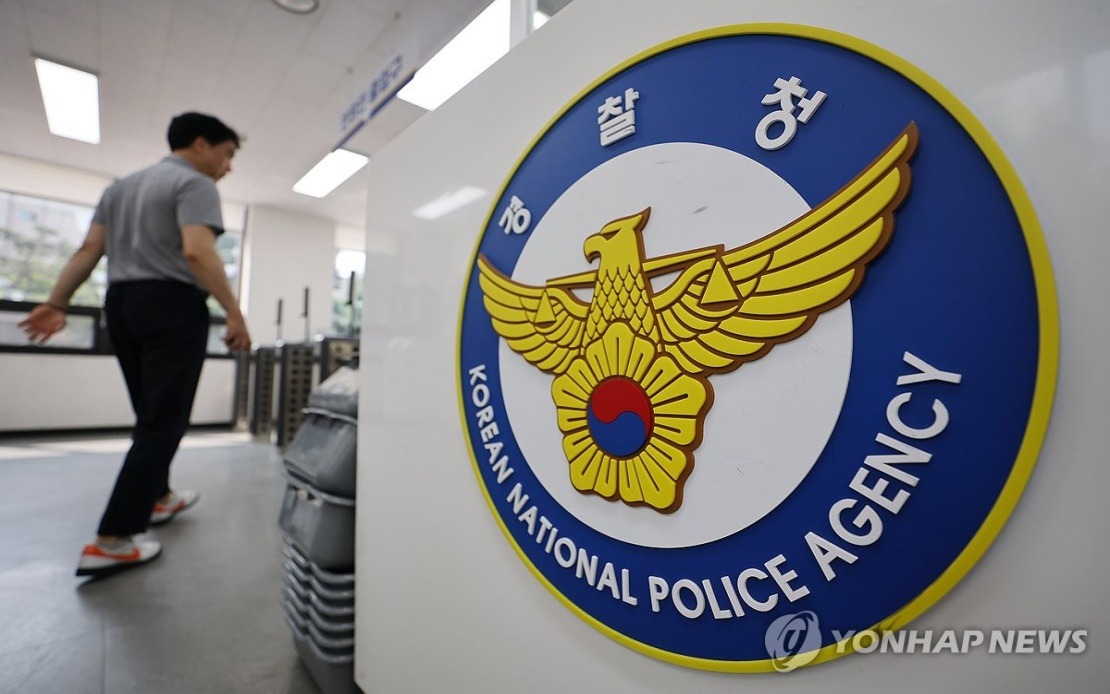
South Korea's national police force has announced a comprehensive enforcement campaign set to begin this week, addressing a significant surge in organised crime activities and transnational criminal operations across the country. The Korean National Police Agency will launch specialised operations running from Monday through the end of October, concentrating resources on dismantling criminal networks involved in high-impact financial offences and international drug smuggling. The timing of this initiative reflects growing concern over recent crime trends, particularly the alarming shift in criminal participation among younger demographics and their adoption of sophisticated fraud tactics.
The crackdown will prioritise several categories of financial crime that have become increasingly prevalent in South Korean society. Organised fraud schemes, unlicensed private lending operations, illegal online gambling platforms, and money laundering activities rank among the primary targets. These crimes have generated substantial illicit proceeds that fuel further criminal enterprise, creating a self-perpetuating cycle of organised crime expansion. The police strategy recognises that disrupting financial flows represents a critical lever for degrading criminal organisations' operational capacity and recruitment ability.
A particularly troubling dimension of this enforcement push concerns the public impact of criminal wealth display. Police will specifically pursue individuals who deliberately showcase illegal earnings through social media and other digital platforms, creating a corrosive effect on public safety perception and potentially glamorising criminal lifestyles for vulnerable youth. Beyond arrest and prosecution, authorities plan to aggressively pursue asset freezing and proceeds recovery, targeting the economic foundations that sustain organised crime groups and limit their capacity to expand operations or finance new ventures.
On the international front, the Korean National Police Agency will intensify efforts against transnational criminal networks. Drug trafficking represents a major concern, with synthetic drugs including ketamine drawing particular attention as these substances have infiltrated markets across East Asia with alarming regularity. Criminal enterprises involving foreign nationals will receive heightened scrutiny, with police expanding intelligence operations within foreign communities, expanding surveillance around employment venues, and increasing presence in entertainment districts that historically serve as recruitment and distribution hubs for international criminal organisations.
The enforcement initiative emerges directly from statistical evidence of deteriorating crime conditions. Between mid-March and June, police apprehended 1,185 gang members and formally arrested 225 individuals, representing increases of 9.7 percent and 48.3 percent respectively compared to equivalent periods in previous years. These figures underscore that organised crime remains not merely a persistent problem but one gaining momentum despite existing enforcement efforts, suggesting that traditional policing approaches may require substantial enhancement.
The demographic profile of arrested suspects reveals perhaps the most concerning trend. Individuals aged 30 or younger constituted nearly two-thirds of all apprehended gang members, indicating that younger generations are increasingly drawn into organised crime networks. Among this youth cohort, fraud offences comprised 42.7 percent of all criminal activity—substantially higher than their proportion in overall organised crime—suggesting that younger criminals display particular aptitude for or preference toward financial schemes rather than traditional gang violence or street crime.
Foreign national involvement in organised crime has also intensified markedly. During the first half of this year, police booked 18,130 foreign nationals on criminal charges, representing a 9.1 percent increase from the corresponding prior-year period. Concurrently, drug-related offences surged by 29 percent, indicating that international drug trafficking operations have expanded their presence and distribution networks within South Korea. This combination suggests that transnational criminal enterprises view South Korea as an increasingly attractive market for narcotics and related criminal activities.
These trends carry significant implications for regional security considerations relevant to Southeast Asian nations. South Korea's experience demonstrates how organised crime networks transcend borders with remarkable efficiency, and how financial crimes facilitate the expansion and consolidation of criminal power. The methods employed by these younger, fraud-focused criminal groups—leveraging digital platforms, cryptocurrency, and international financial systems—mirror patterns observed across Southeast Asia, where similar networks exploit the region's developing financial infrastructure and regulatory gaps.
The police operation's emphasis on intelligence gathering within foreign communities and nightlife districts reflects recognition that transnational criminal organisations establish operational bases by embedding themselves within vulnerable populations and exploiting leisure venues as distribution and recruitment points. This approach mirrors strategies increasingly adopted by Southeast Asian law enforcement agencies confronting comparable challenges. The coordination mechanisms being activated by South Korean authorities offer lessons for regional cooperation frameworks, particularly regarding intelligence sharing and coordinated enforcement across borders.
For Malaysian and Southeast Asian security observers, the South Korean case illustrates how organised crime evolves in response to enforcement pressure and economic opportunity. The shift toward fraud and money laundering rather than traditional gang violence suggests that modern criminal enterprises prioritise financial sophistication and regulatory arbitrage over confrontational tactics. This evolution complicates law enforcement response, requiring expertise in financial crime investigation, digital forensics, and international asset tracing—capabilities that remain under development across much of Southeast Asia.
The three-month enforcement period represents a significant resource commitment by South Korean authorities, indicating that organised crime suppression has achieved high political priority. Success will likely depend not merely on arrest numbers but on dismantling criminal financial infrastructure and disrupting recruitment pipelines that feed younger generations into organised crime. The police agency's stated intention to strengthen international cooperation and intelligence gathering suggests recognition that effective crime suppression in an increasingly globalised criminal landscape requires multilateral coordination and information sharing.
As South Korea implements this enforcement campaign, regional governments will likely monitor outcomes closely. The effectiveness of targeting younger criminals through fraud-focused investigations, combined with results from intensified international cooperation measures, may provide valuable operational insights for Southeast Asian law enforcement agencies confronting parallel challenges. The campaign's success or limitations will inform policy discussions about resource allocation, cross-border cooperation protocols, and the most effective methods for disrupting organised crime networks in an era of digital communications and sophisticated financial crimes.

