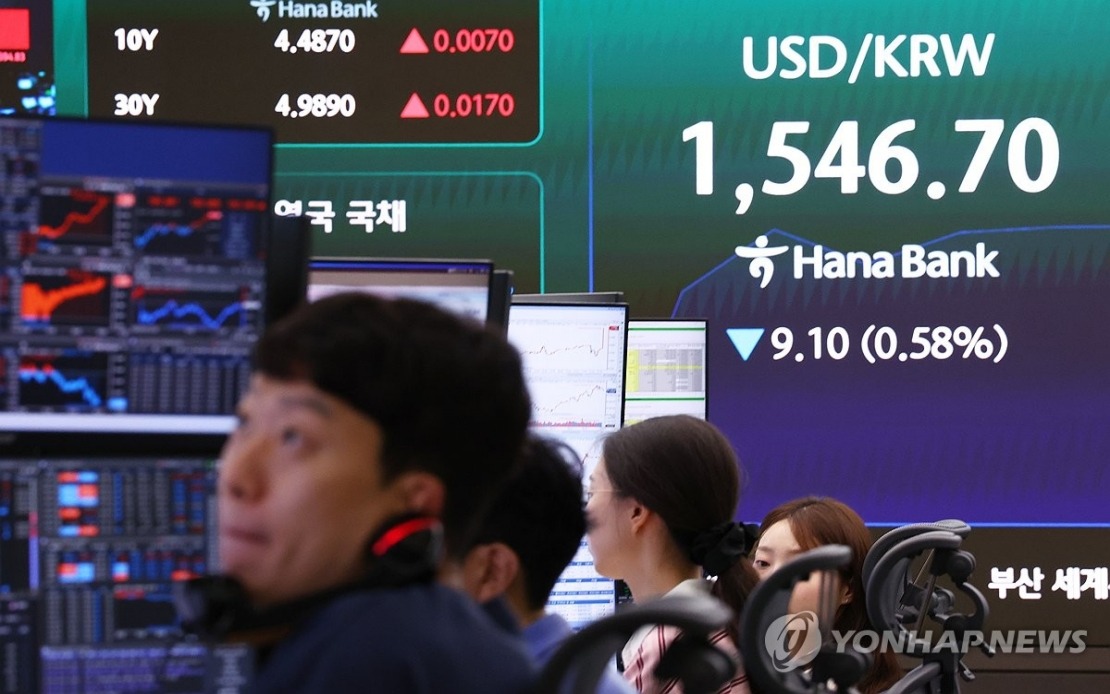
South Korea has launched a round-the-clock foreign exchange trading system for the Korean won, marking another major step in the government's strategy to position itself as a competitive global financial centre. Finance Minister Koo Yun-cheol inaugurated the new system at Hana Bank in central Seoul on Monday, signalling the country's confidence in its macroeconomic position and intent to capture a larger share of international capital flows. The move represents a deliberate effort to address persistent demands from foreign institutional investors seeking greater flexibility in accessing South Korean currency markets.
The new 24-hour system operates continuously from 6 am Monday through 6 am Saturday, with closure only on weekends and the first day of each year. This expanded window represents a significant extension from the previous arrangement established in July 2024, when trading hours were lengthened to span from 9 am to 2 am the following day—itself an improvement over the traditional 9 am to 3:30 pm window. The incremental approach reflects Seoul's cautious but determined modernisation of its financial infrastructure to align with practices in established global markets.
According to Minister Koo, the initiative underscores South Korea's underlying economic strengths, particularly its robust external position and substantial current account surplus. The country has worked deliberately to improve its standing among international investors, culminating recently in its inclusion in the World Government Bond Index—a recognition that opens doors to a broader universe of foreign capital seeking diversified holdings. By extending trading hours to accommodate investors across multiple time zones, Seoul removes a structural disadvantage that has previously limited participation from Western and other non-Asian market participants.
The expansion of trading hours carries particular significance for Malaysia and other Southeast Asian economies monitoring South Korea's financial innovation trajectory. As a fellow middle-income nation aspiring to deepen its capital markets, Malaysia's banking and investment sectors will likely observe whether Seoul's extended trading hours successfully attract the volume and quality of foreign participation authorities anticipate. The success or challenges encountered could inform policy discussions in Kuala Lumpur regarding Bursa Malaysia's competitive positioning relative to regional peers.
From a currency perspective, the move opens possibilities for the Korean won to strengthen its international usage and reserve status. By facilitating seamless trading across global business hours, Seoul reduces friction for multinational corporations and financial institutions that regularly transact in won-denominated assets. This could gradually enhance the currency's liquidity premium and reduce transaction costs for users, creating a positive feedback loop that attracts further participation and deepens market breadth.
Bank of Korea Deputy Governor Min Soo Kwon indicated the central bank's commitment to monitoring the new system's market dynamics closely, emphasising that the transition requires ongoing policy coordination between the monetary authority and the government. This cautious supervisory approach reflects awareness that rapid expansion of trading hours can introduce new volatility patterns or expose vulnerabilities in market infrastructure if not properly managed. The BOK's focus on observing system performance in real time demonstrates institutional prudence amid institutional innovation.
The initiative extends beyond mere technical market mechanics; it reflects a broader South Korean strategy to elevate itself within Asia's financial hierarchy. With its advanced technology infrastructure, large institutional investor base, and sophisticated regulatory framework, South Korea possesses genuine advantages in competing for global capital flows. However, the country faces persistent competition from established centres like Singapore and Hong Kong, which already offer comprehensive around-the-clock or nearly continuous trading across multiple asset classes.
For Malaysian stakeholders, South Korea's expansion carries lessons about the relationship between market operating hours and capital attraction. While Bursa Malaysia and Bank Negara Malaysia maintain their own strategic objectives, understanding how Seoul's experience unfolds—particularly regarding whether 24-hour trading successfully translates into expanded participation, improved liquidity metrics, and deeper market capacity—provides valuable data points for evaluating Malaysia's own market structure.
The timing of South Korea's move also reflects post-pandemic normalisation of global financial flows and renewed focus on market competitiveness. Emerging market authorities increasingly recognise that physical trading floor hours represent an anachronism in an era of electronic markets and global capital mobility. Nations that fail to accommodate continuous or extended trading risk appearing inflexible to institutions making venue selection decisions across multiple jurisdictions.
Minister Koo's framing of the launch as a reflection of investor demand emphasises that Seoul is responding to genuine client needs rather than pursuing institutional vanity. This customer-focused rationale carries greater persuasive power with sceptics concerned about the costs and risks of extended trading windows, particularly regarding market supervision, systemic stability, and operational burden on market participants and regulators alike.
Looking forward, South Korea's commitment to implementing complementary policy measures alongside the expanded trading hours suggests a holistic approach to market development. By positioning itself as increasingly accessible and investor-friendly, Seoul aims to solidify relationships with the global institutional capital that drives international financial flows. For regional observers including Malaysia, tracking whether Seoul's initiative achieves its ambitions remains instructive for understanding how market structure decisions influence competitive outcomes in the increasingly globalised financial ecosystem.

