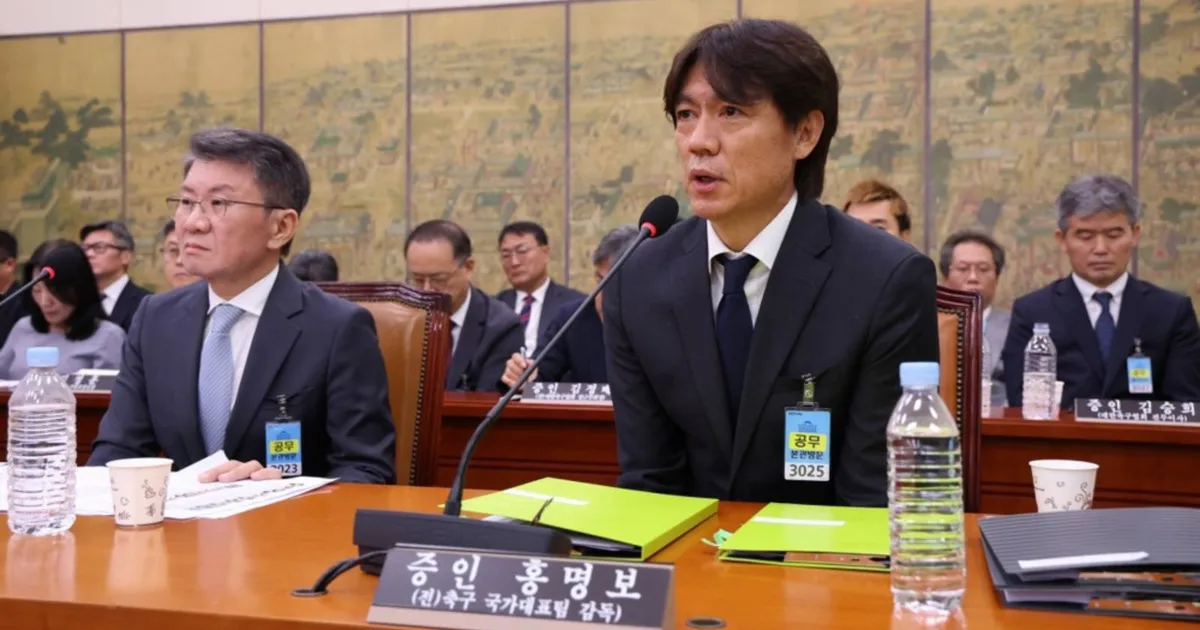
South Korean law enforcement authorities have executed a search and seizure operation at the offices of the Korean Football Association, targeting documents and records related to the controversial appointment of Hong Myung-bo as the national team's head coach. The raid represents an unusual and serious intervention by police into the administration of professional sports in the country, signalling that investigations into the coaching decision have moved beyond routine internal reviews into formal criminal inquiry territory.
The investigation centres on alleged improprieties in the process that led to Hong Myung-bo's selection to lead the national squad. Prosecutors allege that individuals connected with the appointment process may have engaged in obstruction of business, a criminal charge that suggests deliberate interference with proper administrative and governance procedures at the football association. The specifics of what constitutes such obstruction in this context remain under investigation, but typically such allegations involve circumventing established protocols or suppressing evidence related to decision-making processes.
Hong Myung-bo's tenure as national coach has been marked by considerable controversy, particularly following South Korea's performance at the recent World Cup tournament. The team's campaign fell significantly short of expectations, generating widespread criticism from supporters, media commentators, and football officials across the country. In the aftermath of that disappointing showing, questions began emerging about how Hong Myung-bo had been appointed in the first place, with various stakeholders questioning whether proper procedures had been followed during the selection process.
For Malaysian and regional readers, this development underscores the intensity of scrutiny surrounding national sporting institutions in East Asia, particularly when teams underperform on the global stage. South Korea's approach to accountability in sports governance reflects broader cultural expectations of transparency and rigorous oversight in high-profile positions. The police intervention indicates that Korean authorities view potential irregularities in such appointments with considerable seriousness, treating administrative misconduct in sports with the same investigative rigour applied to other sectors.
The Korean Football Association has found itself at the centre of a serious governance crisis. The organisation's leadership and administrative processes now face external legal scrutiny, with police examining how decisions were made and whether established protocols were properly observed. This development carries significant implications for the association's credibility and its ability to function effectively during a period when the national team requires stability and focused preparation for upcoming international competitions.
The World Cup campaign that precipitated this crisis appears to have triggered broader questions about accountability within South Korean football administration. Rather than treating the poor results as purely a matter of coaching tactics or player performance, critics and investigators alike have examined the structural decisions that led to Hong Myung-bo's appointment. This comprehensive approach reflects a view that sporting outcomes are inseparable from governance quality and institutional integrity.
The timing of the police raid suggests that investigators have moved beyond preliminary inquiries and believe they have sufficient grounds to conduct a formal forensic examination of association records. Such operations typically precede the filing of criminal charges and indicate that prosecutors view the allegations as more than procedural irregularities. The involvement of law enforcement rather than reliance on sports governing bodies' internal disciplinary mechanisms elevates the severity of the situation considerably.
For the broader Southeast Asian sports community, this situation illustrates how neighbouring countries approach institutional accountability differently. While Malaysian sports organisations operate under their own governance frameworks, the South Korean model demonstrates the potential for legal intervention when administrative procedures are questioned. This raises interesting questions about whether similar scrutiny would emerge if comparable irregularities occurred in regional sports administration, and whether there are lessons regarding transparent decision-making processes that apply across the region.
The investigation will likely take considerable time to reach conclusions, during which period uncertainty will cloud South Korean football's administrative environment. The association must balance conducting its normal operations with cooperating fully with law enforcement inquiries. This parallel functioning during a crisis period creates particular challenges for strategic planning and personnel decisions, particularly regarding the coaching position itself.
Beyond the immediate controversy, this episode reflects deeply rooted cultural attitudes in South Korea towards institutional accountability and the rule of law. When major public institutions make consequential decisions, particularly those affecting national performance in internationally watched competitions, the expectation exists that such decisions will withstand rigorous scrutiny. The police involvement sends a message that administrative misconduct cannot be shielded by claims of sporting autonomy or deference to specialised institutions.
The resolution of this investigation will carry implications extending far beyond individual personnel or the football association's reputation. It will signal to South Korean sporting bodies and the broader public the seriousness with which authorities treat governance failures in high-profile national institutions. Depending on investigative findings, it could reshape how coaching appointments are conducted across South Korean football, potentially establishing new standards of transparency and procedural rigour that become models for other nations within and beyond the region.
As this situation develops, the football association faces mounting pressure to demonstrate both complete cooperation with authorities and commitment to institutional reform. The national team's coaches and players, meanwhile, must navigate the distraction and uncertainty that inevitably accompany such investigations while maintaining performance levels in competitive matches. The convergence of these pressures creates a particularly challenging environment for South Korean football during what should be a period focused on rebuilding after the World Cup disappointment.

