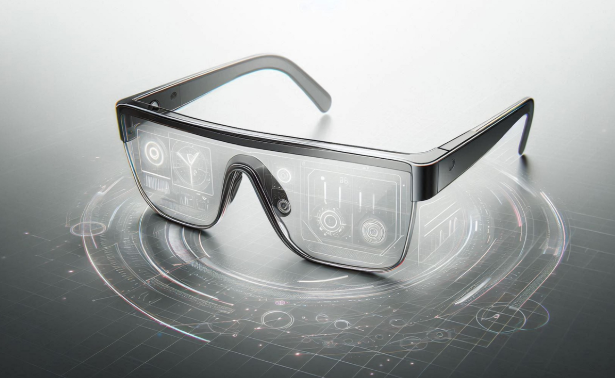
South Korean authorities have taken legal action against a man in his 40s for attempting to use artificial intelligence-equipped glasses during a national qualification examination, representing a watershed moment in the country's battle against technology-enabled academic fraud. The Gwangju District Prosecutors' Office filed summary indictment charges against the suspect last month under provisions of the National Technical Qualification Act, with the case attracting wider attention as media outlets reported the development on July 13. The incident underscores a growing vulnerability in South Korea's rigorous examination system, where high-stakes credential tests have historically been protected by strict proctoring protocols.
The discovery occurred in May when the man attempted to take a fire protection facilities engineer certification examination in Gwangju. Vigilant exam supervisors grew suspicious upon observing an unusual reflection of light across the lenses of his eyewear, prompting them to conduct a closer inspection. This initial observation led to further questioning and eventually a full investigation into his conduct during the test. The suspect's undoing came not from sophisticated detection technology but from the most basic observational skills of exam room monitors—a detail that highlights both the speed at which illicit examination tactics are evolving and the reality that human oversight remains critical even as testing infrastructure modernizes.
During police questioning, the accused individual provided insight into his motivations and methodology. He acknowledged the cheating attempt and revealed that he had personally developed an artificial intelligence application designed to work in tandem with the glasses hardware. His stated intention was to conduct a proof-of-concept test, claiming he wanted to verify whether the system could correctly identify and display answers within the examination context. Whether this explanation represents genuine technological curiosity or a pretext to minimize culpability remains unclear, but the disclosure is significant because it suggests these devices represent customized solutions rather than off-the-shelf commercial products being repurposed for examination fraud.
The May incidents in Gwangju were not isolated. Two additional men in their 20s were apprehended that same month after attempting to employ identical cheating methods at examination centres in Seoul and Mokpo, indicating that knowledge of these tactics was spreading among test-takers. The geographic spread across South Korea's major cities—from the capital region to provincial centres—suggests an emerging pattern rather than isolated incidents. This clustering of cases within a single month points to either rapid dissemination of information through examination communities or the possibility that multiple individuals arrived at similar technological solutions independently, both scenarios carrying troubling implications for examination security.
The problem extends beyond conventional qualification tests. Separate instances of artificial intelligence glasses being deployed for cheating purposes emerged in TOEIC English proficiency examinations, which are among the most widely taken standardized tests in South Korea and throughout Asia. Authorities identified two individuals using this method in May and another person in June during TOEIC administrations. The TOEIC cases are particularly significant because these examinations carry substantial weight in university admissions and professional hiring decisions across South Korea and the broader region, making them frequent targets for cheating attempts. The overlapping timeline of TOEIC and technical qualification exam incidents suggests that test-takers may have been sharing information about these technological vulnerabilities across different examination categories.
The emerging pattern prompted urgent action from government bodies responsible for maintaining examination integrity. On July 10, officials representing the various agencies that oversee major national qualification examinations convened for an emergency meeting dedicated to formulating immediate countermeasures. The convening of such a high-level response underscores the seriousness with which authorities regard this development and their recognition that conventional security measures may be inadequate to address artificial intelligence-enabled threats. The fact that multiple agencies felt compelled to coordinate suggests that fragmented responses across different examination administrations would likely prove ineffective.
Among the measures under active consideration is the explicit addition of artificial intelligence glasses and related smart eyewear devices to official lists of prohibited items in examination rooms. While some jurisdictions may have already discouraged such devices through general prohibitions on electronic equipment, making AI glasses specifically and unambiguously forbidden would eliminate interpretive ambiguity during screening processes. This approach follows standard practice when new cheating methods emerge—authorities simply add the problematic items or technologies to established contraband lists. However, the rapid pace of technological innovation raises a question about whether static prohibition lists can adequately address devices that may evolve or take new forms.
Beyond item prohibitions, officials are contemplating substantially enhanced penalties for individuals apprehended cheating using these sophisticated methods. The rationale appears to be that the premeditation, planning, and technical sophistication involved in acquiring or developing AI glasses and associated applications warrant harsher consequences than conventional cheating. Stronger sanctions theoretically serve a deterrent function, dissuading others from attempting similar violations by increasing the potential costs of detection. Whether enhanced punishments will prove effective depends partly on whether potential cheaters engage in rational cost-benefit calculations or whether they simply underestimate detection risks.
For Malaysia and other Southeast Asian nations, the South Korean case carries instructive lessons. Both Malaysia's Sijil Pelajaran Malaysia examinations and various professional certification systems have historically experienced cheating challenges, and the emergence of artificial intelligence-enabled methods represents a novel threat vector. The technological sophistication involved—custom-developed applications linked to AI glasses—suggests that motivated individuals with technical skills can construct examination fraud systems specifically tailored to particular tests. This differs from traditional cheating, which typically relies on memorization aids, communication with external parties, or other methods that security protocols have long addressed.
The South Korean response also illustrates the tension between maintaining examination security and respecting privacy rights, particularly given that detecting AI glasses may require more invasive screening procedures than those currently employed. Some examination centres may resist enhanced physical inspections or require unusual examination of eyewear, citing privacy and dignity concerns. Balancing security imperatives against examination-taker comfort and privacy rights will likely emerge as a contentious issue as nations develop responses to this emerging threat.
Moving forward, the South Korean case suggests that examination authorities across Asia will need to reassess their security frameworks with emerging technology specifically in mind. This may require investment in detection technologies capable of identifying AI-equipped devices, training for proctors regarding new cheating methods, and periodic review of prohibited item lists as technology evolves. The incident demonstrates that even in a country with exceptionally rigorous examination standards and well-trained supervisory personnel, determined individuals can devise sophisticated workarounds—a sobering reminder that examination security remains an ongoing challenge requiring continuous vigilance and adaptation.

