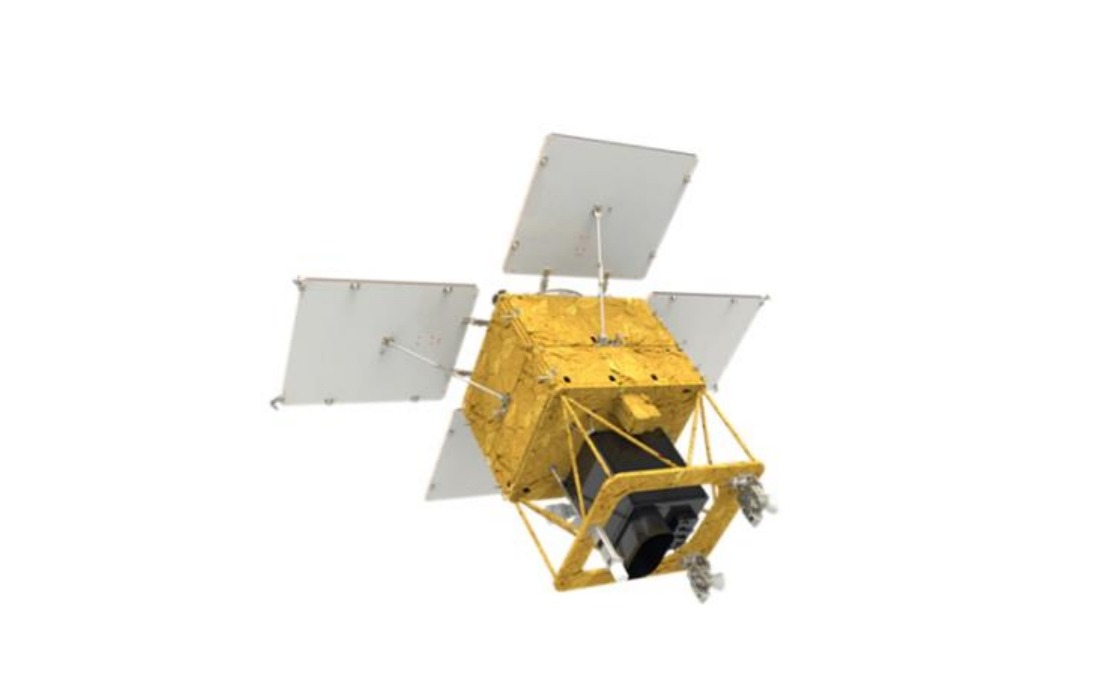
South Korea's space ambitions advance further this week as the Korea AeroSpace Administration prepares to deploy its fourth medium-sized Earth observation satellite into orbit. The 500-kilogramme spacecraft will lift off aboard a SpaceX Falcon 9 rocket from Vandenberg Space Force Base in California, marking another significant milestone in Seoul's drive toward space independence. The launch represents the continuation of a strategic programme that has gradually built South Korea's capacity to monitor its territory and contribute to regional environmental awareness.
The satellite has completed all necessary ground preparations, including comprehensive functional assessments and propellant loading procedures conducted over the previous month. Engineers have ensured the spacecraft meets stringent operational standards before handover to SpaceX for integration with the Falcon 9. The spacecraft is now in final staging, awaiting the designated launch window. According to KASA, the vehicle will separate from its rocket approximately two hours and twenty-two minutes after liftoff, with initial contact expected thirty-one minutes thereafter through a ground receiving station in Svalbard, Norway, which serves as a critical node in South Korea's satellite communication network.
This particular observatory distinguishes itself through homegrown technological systems, particularly an advanced imaging camera designed to capture the entire Korean Peninsula in a three-day cycle. The capability to revisit the same area with such frequency provides substantial advantages for continuous monitoring applications. The payload represents years of domestic research and development investment, reflecting South Korea's determination to reduce reliance on foreign Earth observation data and establish technological self-sufficiency in critical infrastructure monitoring.
For Malaysian and Southeast Asian observers, this launch carries implications beyond South Korea's borders. The satellite will contribute to a growing constellation of Asia-Pacific observation assets that enhance regional disaster response capabilities and environmental monitoring. South Korea's demonstrated ability to develop and deploy indigenous satellite technology serves as a benchmark for other nations in the region considering similar programmes. The technical expertise embodied in this mission reflects the kind of institutional capacity-building that could eventually facilitate regional cooperation on shared environmental challenges.
Once the satellite achieves its target orbital altitude of approximately 888 kilometres, KASA will conduct an extensive four-month commissioning phase. During this period, engineers will validate all systems, calibrate instruments, and optimise operational parameters. This deliberate approach allows for thorough validation before the spacecraft transitions to full operational status scheduled for early 2025. The phased deployment strategy minimises risk and ensures the satellite delivers maximum scientific value when assigned to primary missions.
The government has articulated an expansive vision for this satellite's applications across numerous sectors. Agricultural monitoring represents a major focus, enabling early detection of crop stress, yield forecasting, and precision resource allocation. Forest management authorities will gain tools for tracking vegetation dynamics and detecting illegal logging activities across South Korea's woodland areas. The satellite's rapid-revisit capability proves especially valuable for disaster response scenarios, whether monitoring flood extent, assessing earthquake damage, or tracking forest fire progression in real time.
Climate change analysis constitutes another critical application domain. Continuous observation of land-use change, glacier retreat patterns, and vegetation shifts across Northeast Asia will contribute to understanding regional climate dynamics. Public safety enhancement emerges as a cross-cutting benefit, with potential applications in infrastructure monitoring, urban planning assessment, and emergency management support. The constellation approach, with multiple satellites eventually operating in complementary orbits, will expand coverage and improve temporal resolution across all these domains.
South Korea's systematic development of Earth observation capability reflects broader strategic thinking about technological sovereignty and space sector growth. Rather than procuring foreign satellite data exclusively, the nation has invested substantially in developing indigenous capacity. This approach creates employment in advanced engineering sectors, builds institutional knowledge, and ensures security of critical information flows. The successful deployment of multiple satellites demonstrates that South Korea can sustain this effort over extended periods.
Regional actors observing South Korea's space programme progress should note the emerging pattern of cooperation with international partners alongside independent capability development. The reliance on SpaceX launch services illustrates practical international engagement while the domestically developed satellite bus, payloads, and ground infrastructure demonstrate genuine technological advancement. This hybrid approach may offer lessons for other nations seeking to balance international partnerships with indigenous capability building in the space sector.

