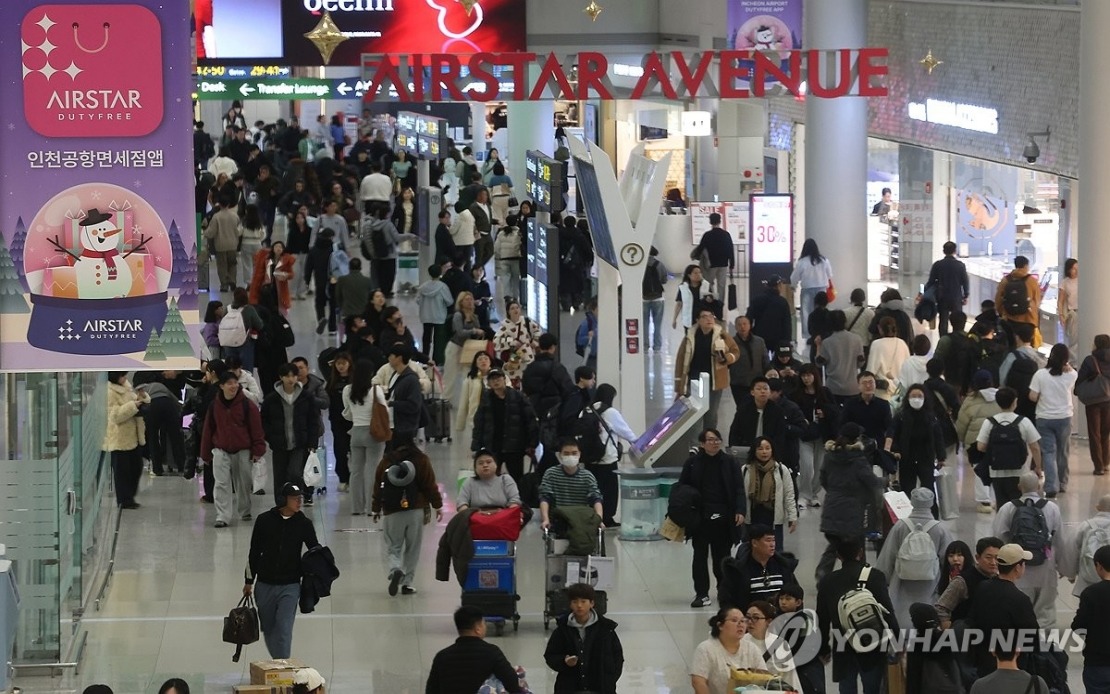
South Korea's tourism sector is experiencing robust momentum as the country crossed the 10 million foreign visitor threshold during the third weekend of June, positioning itself for what could be a record-breaking year. The Ministry of Culture, Sports and Tourism confirmed this significant milestone, which arrived roughly a month ahead of schedule compared to 2023, when the country reached the same figure in mid-July. This acceleration underscores the strengthening appeal of South Korea as a regional travel destination and signals sustained economic opportunity for the tourism industry across the nation.
What makes this achievement particularly noteworthy is that it represents the first time South Korea has surpassed the 10 million visitor mark within the opening six months of any calendar year since the country began systematically tracking such data. This earlier-than-expected inflection point suggests that officials' projections for 2024 may prove conservative, with a new annual record now within realistic reach despite various headwinds affecting international travel patterns throughout the region.
The rebound in inbound tourism has been remarkably swift and broad-based. May alone registered 1.95 million arrivals, a gain of nearly 20 percent compared to May of the previous year. This month-on-month growth reflects improving consumer confidence among potential visitors, reduced travel friction following pandemic-related disruptions, and South Korea's successful marketing campaigns throughout key source markets. The consistent upward trajectory across recent months indicates that the surge is not a temporary spike but rather a sustained recovery with underlying structural strength.
China remains the dominant source of visitors to South Korea, with Chinese nationals representing the largest contingent at 560,000 arrivals in May alone. Japan followed in second place with 360,000 visitors, while the United States contributed 210,000 arrivals during the same period. This geographic distribution reflects South Korea's strong appeal across Northeast and North America, though the Chinese share underscores the critical importance of maintaining healthy bilateral relations and travel facilitation with Seoul's largest neighbour. For Malaysian stakeholders, this composition is instructive, as it demonstrates how geography and cultural proximity shape tourism flows in East Asia.
Beyond headline numbers, officials are encouraged by evidence that international visitors are increasingly venturing outside Seoul's metropolitan region, suggesting that tourism development initiatives in provincial areas are gaining traction. Arrivals through regional airports climbed steadily from 230,000 in January to 360,000 in May, indicating a meaningful geographic diversification of visitor distribution. This trend is significant for regional economic development, as it spreads tourism revenue and employment opportunities beyond the capital and its immediate surroundings, reducing infrastructure pressure on Seoul while supporting smaller cities and rural communities.
Foreign visitor spending behaviour also reflects underlying economic confidence and purchasing power. Card expenditures by international tourists, encompassing both in-person transactions and online purchases, reached 2.12 trillion won—approximately US$1.38 billion—in May alone. Crucially, this marked the first occasion since South Korea began recording such data in 2018 that monthly spending surpassed the 2 trillion won threshold. This metric signals not only increased visitor volume but also substantial per-capita spending, which translates into measurable economic impact across retail, hospitality, dining, and cultural sectors throughout the country.
The achievement gains additional significance when contextualised against broader economic challenges affecting international travel. Officials specifically noted that despite elevated fuel surcharges stemming from Middle East geopolitical tensions, visitor arrivals still climbed 21 percent through May on a year-on-year basis. This resilience suggests that the appeal of South Korea as a destination is sufficiently strong to absorb cost pressures that might otherwise dampen demand. For Southeast Asian travel and tourism sectors competing in the same regional marketplace, South Korea's performance serves as both a benchmark and a cautionary example regarding competitive positioning and value proposition.
Looking ahead, government tourism officials are explicitly signalling their intention to sustain and accelerate this momentum through diversified promotional strategies. Kang Jung-won, heading the Ministry of Culture, Sports and Tourism's policy office, articulated plans to deepen collaboration with private-sector partners, most notably leveraging South Korea's globally influential K-pop industry alongside export-oriented companies. This multi-stakeholder approach recognises that tourism promotion in the modern era requires coordination across entertainment, commerce, and government sectors rather than relying solely on traditional destination marketing campaigns.
The strategic emphasis on K-pop as a tourism driver is particularly astute, as the industry has cultivated devoted international fan communities across Asia, the Americas, and beyond. Concert tours, fan events, and content-related pilgrimages generate both direct tourism revenue and multiplicative effects through accommodation, dining, and merchandise spending. This model of experience-driven tourism differentiation offers lessons for other Asian destinations seeking to amplify their competitive advantage in an increasingly crowded marketplace.
For Malaysia and other Southeast Asian nations, South Korea's tourism ascendancy presents both opportunities and competitive pressures. The region collectively captures significant visitor flows, and South Korea's success in attracting international tourists—particularly from China and Japan—indicates that sophisticated tourism ecosystems combining cultural attractions, entertainment infrastructure, and visitor-centric services command premium positioning. Malaysian tourism authorities may find instructive insights in South Korea's emphasis on geographic visitor dispersal and spending diversification beyond traditional hotspots, particularly as domestic destinations mature and require fresh investment and marketing angles to sustain growth trajectories amid intensifying regional competition.