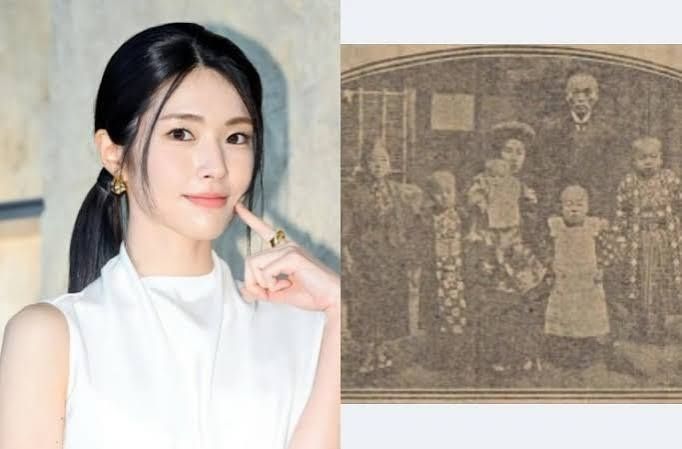
A surge in public interest around the historical records and family origins of actress Ahn Ha-young has overwhelmed one of South Korea's leading genealogy platforms, exposing deep sensitivities surrounding collaboration during the Japanese colonial era. The website, which translates from Korean as "in search of roots," became unable to handle the volume of traffic seeking information about the actress's ancestry following revelations that her great-grandfather may have had ties to pro-Japanese collaborators. The server infrastructure buckled under demand on the evening of August 12, becoming inaccessible for several hours, then experienced repeated crashes lasting minutes at a time throughout August 13 as curious citizens continued their searches.
The genealogy portal typically serves as a historical resource for South Koreans researching family lineages and understanding their place within the nation's recorded history. The database encompasses information on 287 distinct family lineages across South Korea, providing details on their geographical origins, historical significance, and contemporary population distribution. This comprehensive archive has long functioned as a valuable tool for those tracing ancestral connections or studying Korea's social and aristocratic structures. The sudden surge represents an unusual spike in engagement, reflecting how deeply questions of historical accountability resonate within South Korean society decades after the colonial period ended.
At the centre of the controversy lies Ahn Ha-young's account of her great-grandfather, whom she had publicly described on television as a pioneering physician. According to the actress's previous statements, Ahn Sang-ho established the first Western-style medical clinic in Seoul and served as attending doctor to Emperor Gojong, the monarch who reigned from 1852 to 1919 and witnessed Korea's loss of independence. This narrative had seemed straightforward—a family achievement to take pride in, a contribution to Korea's modernisation during a transformative period. However, once online users began raising questions about Ahn Sang-ho's connections to individuals involved in pro-Japanese collaboration activities during the thirty-five-year occupation, the family story became entangled with Korea's most contentious historical questions.
The allegations against the actress's ancestor appear to relate to networks of influence and patronage that operated during Japanese rule from 1910 to 1945. During this period, Korea experienced systematic attempts at cultural assimilation and economic exploitation. Koreans who collaborated with Japanese authorities—whether by taking positions in the colonial administration, profiting from Japanese-aligned business ventures, or otherwise facilitating occupation objectives—became known as collaborators, a stigma that persists in Korean historical consciousness. The precise nature of Ahn Sang-ho's alleged involvement remains subject to interpretation, but the very possibility that a family ancestor held problematic associations was sufficient to trigger public concern and investigative searches.
When digital communities raised these questions, Ahn Ha-young's entertainment agency initially pushed back, denying the allegations and defending the actress's honour. Rather than quieting the debate, this defensive posture appears to have intensified public curiosity. Korean social media users, emboldened by the agency's resistance, redoubled efforts to access historical documents and genealogical records that might clarify the facts. The episode illustrates how institutional denial can sometimes backfire in an age of distributed information seeking, transforming a potentially contained controversy into a widespread historical investigation. Every claim and counter-claim seemed to drive more citizens toward the genealogy website, each hoping to settle questions about collaboration and complicity in their own ancestral records.
Faced with mounting evidence and unrelenting scrutiny, Ahn Ha-young issued a public apology on August 12. The actress stated that she had been genuinely unaware of her family's historical involvement and expressed regret for having discussed her ancestry with pride during television appearances. The apology represented an acknowledgment that, regardless of her personal knowledge or intent, family history carries weight and meaning in Korean society. Her willingness to apologize contrasted sharply with the agency's initial denials, suggesting that sustained public pressure had persuaded her to reckon more honestly with the historical record. Yet the apology could not fully resolve questions about what exactly her ancestor did, or how the public should evaluate individuals who lived through the colonial period.
The timing of the controversy amplifies its symbolic significance within Korean national consciousness. The scandal erupted merely days before August 15, Liberation Day, the annual commemoration marking Korea's liberation from Japanese colonial rule in 1945. This holiday carries profound emotional resonance throughout South Korea, a moment when citizens collectively affirm their nation's independence and reflect on the suffering endured during occupation. The fact that questions about colonial-era collaboration surfaced so close to Liberation Day meant that Ahn Ha-young's family history became folded into broader national narratives about historical justice, moral reckoning, and the continuing relevance of colonial-era decisions.
For Malaysian and other Southeast Asian observers, the incident illuminates how deeply colonialism's legacies continue to shape East Asian politics and society. While Malaysia, Singapore, and other ASEAN nations similarly experienced Japanese occupation during the Second World War, each has developed distinct approaches to historical commemoration and accountability. South Korea's approach demonstrates the way that questions of collaboration and complicity remain live political and cultural issues, capable of generating passionate public engagement and institutional vulnerability. The genealogy website outage symbolises how historical questions are no longer the province of academics alone but have become matters of urgent public concern, searchable, debatable, and politically consequential.
The broader implications extend beyond Ahn Ha-young's family. The incident raises questions about how modern Koreans should relate to their ancestors' choices during the colonial period. Not every person who lived under Japanese rule collaborated actively; many were simply trying to survive. Yet the revelation that one's family lineage includes such associations triggers complex emotions around complicity, inherited shame, and historical accountability. The genealogy website's crash symbolises the weight of these questions—so many citizens simultaneously wanting answers about their own families' histories that the digital infrastructure could not sustain the demand. In a society where family honour and historical consciousness remain tightly interwoven, genealogical research becomes not merely genealogical but profoundly political.

