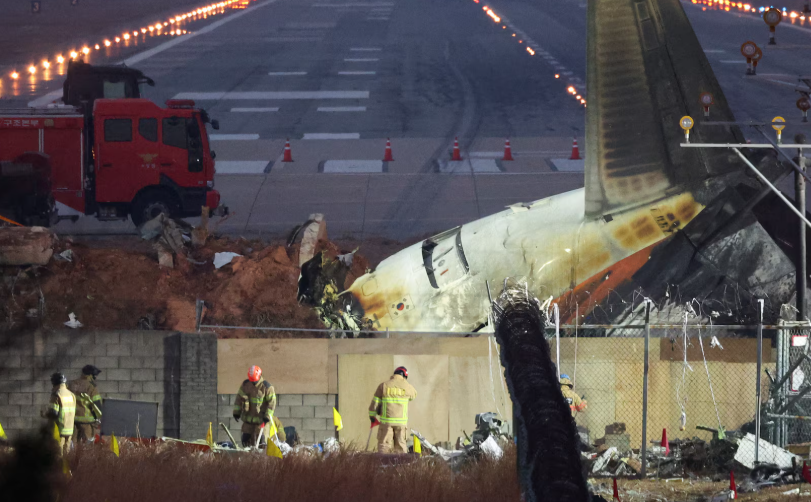
South Korean law enforcement executed a series of raids on Tuesday targeting Korea Airports Corp and related government agencies as authorities intensify their investigation into the Jeju Air disaster that claimed 179 lives late last year. The search operations, which included visits to the transport ministry and the Busan Regional Office of Aviation, represent a widening effort to gather evidence and determine accountability in one of the country's most serious aviation incidents in recent memory.
Korea Airports Corp, the state-owned entity responsible for managing the majority of South Korea's domestic airport infrastructure aside from the sprawling Incheon International Airport hub, has become a focal point in the criminal investigation. The raids underscore official suspicion that the airport operator and affiliated government bodies may bear responsibility for factors contributing to the crash or for inadequate emergency response procedures at Muan International Airport, where the disaster occurred on 29 December 2024.
The special investigative task force has so far identified 74 suspects in connection with the incident, a figure that reflects the broad scope of the inquiry spanning multiple agencies and operators. Among the charges being examined is professional negligence resulting in death or injury, a serious criminal charge that typically requires demonstrating that individuals in positions of responsibility failed to exercise appropriate care or follow proper protocols. Police have indicated that additional charges of causing a serious public disaster could be filed as the investigation develops.
Tuesday's operation marked the third occasion on which investigators have conducted a formal search of the transport ministry's offices and records. The repeated visits suggest that authorities believe critical documentation and evidence relevant to understanding both the immediate cause of the crash and the broader systemic failures may exist within the ministry's possession. The frequency of these raids indicates the scope and complexity of establishing a complete evidentiary record.
The investigation has pursued two interconnected lines of inquiry. First, authorities are working to determine the precise technical and operational factors that led to the aircraft's catastrophic failure at Muan International Airport. Second, investigators are examining whether the responsible institutions, including airport management, aviation authorities, and relevant government agencies, complied with established safety protocols and emergency procedures. This dual focus reflects a recognition that aviation disasters typically involve both mechanical or operational failures and questions about institutional preparedness and response.
For Malaysian aviation observers and policymakers, the rigorous accountability mechanisms being deployed in the South Korean investigation offer instructive lessons. The willingness of authorities to cast a wide investigative net, targeting not only the direct operator but also government agencies and infrastructure authorities, demonstrates how systems approach to aviation safety extends beyond airline conduct to encompass airport management, regulatory oversight, and emergency response coordination. Such comprehensive accountability frameworks remain essential across Southeast Asia, where many nations handle rapidly expanding aviation traffic with varying institutional maturity levels.
The Jeju Air disaster represents a watershed moment in South Korean aviation, prompting government action at the highest levels. The scale of criminal investigation, involving raids on major state institutions and accumulating charges against dozens of individuals, reflects the gravity with which authorities are treating both the incident itself and the broader question of whether adequate safeguards were in place. This response contrasts sharply with historical patterns in some regional jurisdictions where aviation accidents have received less intensive official scrutiny.
The implications for regional aviation safety protocols are significant. As Southeast Asian nations modernise their airport infrastructure and handling capacity, the South Korean case demonstrates the importance of robust institutional accountability mechanisms, clear chains of responsibility, and thorough post-incident investigation procedures. The involvement of multiple agencies in the Korean investigation reflects international best practice in aviation accident investigation, which typically requires coordination between airline regulators, airport authorities, military or defence institutions, and national safety boards.
The ongoing nature of the investigation means that additional details about the crash's causes and contributing factors will likely emerge over coming months. As the probe deepens, the questions raised about airport operations at Muan and the broader management of aviation safety in South Korea may inform policy discussions across the Asia-Pacific region. For travellers throughout Southeast Asia and indeed globally, the intensity of the South Korean investigation may serve as reassurance that serious aviation incidents do trigger comprehensive institutional accountability.
The criminal investigation into the Jeju Air disaster, far from concluding, appears to be entering a more intensive phase as authorities broaden their evidentiary base. The raids on 11 August signal that investigators believe they have identified specific areas where relevant documents, communications, and records may shed light on events leading to and following the crash. The eventual outcome of these investigations may reshape how South Korea and potentially other nations approach aviation safety oversight, emergency preparedness, and institutional accountability in the aviation sector.

