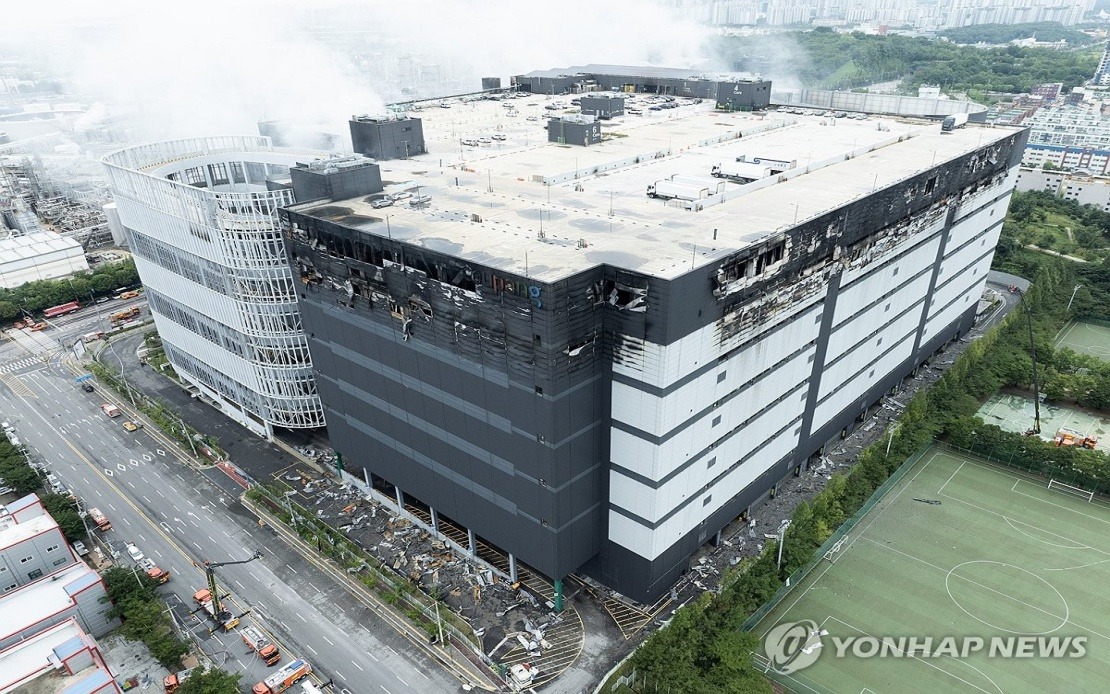
A devastating warehouse fire that erupted at a Coupang logistics facility in Incheon, just west of Seoul, has been declared under initial control following more than two and a half days of intensive firefighting operations. The blaze, which broke out Saturday, was finally brought under control by Monday evening at 8 p.m., marking a critical milestone in what proved to be one of South Korea's most challenging fire-suppression efforts in recent memory. The successful containment came after authorities mobilised an unprecedented response involving 812 firefighters and 231 pieces of equipment across the sprawling complex.
The scale of the emergency response underscores the severity of the incident and the complexity of managing large-scale warehouse fires in densely populated areas. South Korean authorities issued a national firefighting order on Saturday, coordinating resources from multiple regional fire services to combat the blaze. The decision to mobilise such extensive personnel and equipment reflected the critical nature of the situation, as flames threatened nearby residential areas and overwhelmed conventional firefighting approaches during the initial stages of the crisis.
Progressress in extinguishing the fire proved painfully slow during the first two days, hampered by the warehouse's intricate architectural design and the massive quantities of combustible materials stored throughout the facility. The Coupang warehouse, like many modern logistics hubs serving South Korea's booming e-commerce sector, contained diverse merchandise and packaging materials that burned intensely and released thick smoke. The compound structure of the building, with multiple interconnected sections and storage levels, created significant challenges for firefighting crews attempting to access and suppress hotspots. However, conditions improved substantially on Monday when rainfall swept through the region, providing natural assistance that helped firefighting crews gain the upper hand against the flames.
The human toll of the disaster extended well beyond the warehouse itself, as hundreds of residents in surrounding neighbourhoods were forced to abandon their homes. Local government officials issued evacuation orders late Sunday for all areas within 116 metres of the warehouse's ramp zone, affecting entire residential blocks in the vicinity. A total of 178 people sought temporary shelter at nearby schools that opened emergency accommodation facilities, reflecting the scale of displacement caused by the fire and its associated hazards.
The emergency prompted widespread disruptions to the local education system as authorities moved to protect children from potential health risks linked to heavy smoke and air quality concerns. One elementary school and fourteen daycare centres in the area were ordered to close on Monday, affecting hundreds of young students and their families. These closures highlighted how major industrial incidents in South Korea's densely packed urban areas can rapidly cascade into multiple sectors, disrupting normal life far beyond the immediate fire zone.
For Malaysian and Southeast Asian readers, the Incheon incident offers important lessons regarding industrial safety and emergency preparedness in rapidly developing e-commerce ecosystems. South Korea's logistics sector, which serves as a regional model for warehouse operations and supply chain management, faced a sobering reminder that even advanced infrastructure and operational standards require constant vigilance. The region's growing reliance on massive centralised distribution facilities to serve growing online shopping populations means similar risks exist across Southeast Asia's booming e-commerce markets, including Malaysia.
The incident also demonstrates the cascading impacts that major industrial fires can have on civilian populations and critical services. As Malaysian cities continue expanding industrial and logistics facilities near residential zones, planners and policymakers should examine how South Korea managed this crisis, particularly regarding evacuation protocols, shelter provision, and communication with affected residents. The coordination between multiple government agencies and fire services, while ultimately successful, only achieved containment after 61 exhausting hours, suggesting that prevention and early detection systems may prove more cost-effective than reactive responses.
The warehousing industry plays a crucial role in supporting the digital economy across Southeast Asia, with companies expanding their regional distribution networks to meet rising consumer demand. However, this expansion has sometimes outpaced corresponding investments in fire safety infrastructure, emergency response protocols, and community protection measures. The Incheon fire represents a cautionary tale about the potential human and economic costs of inadequate preparedness in industrial environments that operate continuously with minimal staffing and maximum inventory concentration.
Looking ahead, the incident will likely prompt reviews of warehouse fire safety standards across South Korea and potentially influence industry practices throughout the region. Insurance companies, logistics operators, and government regulators will undoubtedly scrutinise whether existing codes adequately address the unique hazards posed by modern warehouse designs and the volatile nature of stored goods in high-density facilities. For Malaysia, where warehouse construction and industrial expansion accelerate alongside e-commerce growth, such international incidents provide valuable reference points for developing more robust safety frameworks that prioritise both business efficiency and community protection.

