A South Korean woman in her 30s has been referred to prosecutors for allegedly orchestrating a large-scale ticket-scalping operation targeting K-pop concerts, including highly coveted BTS performances, through the deployment of automated macro software. The Seoul Metropolitan Police Agency announced the case on August 26, revealing that the suspect purchased approximately 2,600 tickets across multiple events between April 2023 and March 2026, circumventing standard purchase protections and reselling them at inflated prices. The investigation uncovered a sophisticated scheme that highlights growing vulnerabilities in South Korea's ticketing systems despite repeated crackdowns on such illicit activity.
Authorities allege the woman employed an automated programme to execute online ticket transactions at speeds far exceeding normal user capabilities, effectively overwhelming the standard booking process. Critically, she bypassed the per-person purchase limits that K-pop venues typically enforce by creating accounts under the names of family members and acquaintances. Most South Korean concert venues restrict individual buyers to one or two tickets per performance date specifically to prevent such accumulation and ensure genuine fans have access to shows. By fragmenting her purchases across multiple registered identities, the suspect was able to aggregate hundreds of tickets that would have been impossible to acquire through legitimate channels.
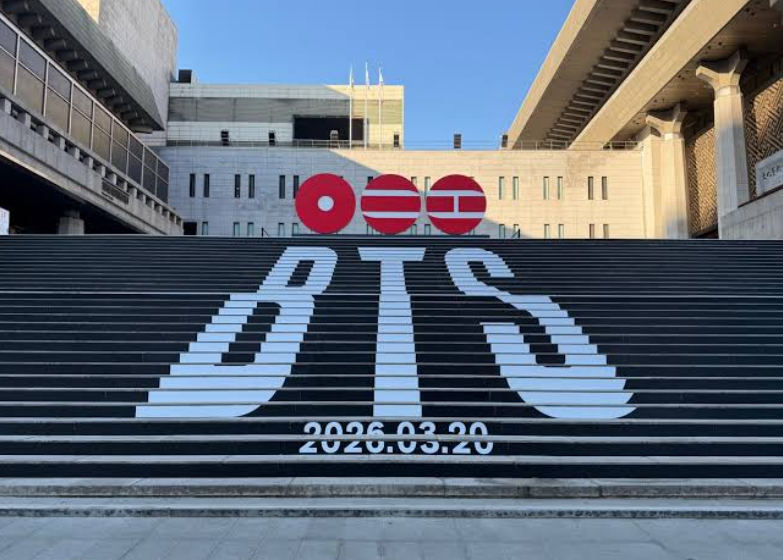
The case drew immediate attention when police detected suspicious activity during ticket sales for BTS' Gwanghwamun concert, which ultimately took place in March 2026. The event had triggered exceptionally high demand, prompting authorities to establish close coordination with the ticketing platform to monitor reservation patterns in real time. Despite these enhanced security measures, the suspect managed to secure nine tickets to the BTS performance before police intervention halted the transaction and prevented her from reselling them. This breach occurred even with heightened vigilance, suggesting that macro-based ticket bots continue to outpace industry defences.
Investigators determined that across the entire scheme spanning three years, the woman generated approximately 442 million won in illegal proceeds, equivalent to around US$319,000 at current exchange rates. Police have now sought a pre-indictment seizure and preservation order to freeze the alleged criminal profits, preventing asset disposal prior to trial. The significant financial scale of the operation underscores ticket scalping not as a minor infraction but as organised commercial fraud with substantial criminal proceeds that warrant aggressive prosecution.
The Seoul case represents one of multiple scalping operations uncovered recently by South Korean law enforcement. In a separate development in Ulsan, authorities arrested a man in his 30s who had developed his own macro programme to acquire over 1,700 K-pop concert tickets between November 2024 and October 2025. This suspect resold the tickets at markups ranging from three to thirteen times their face value, accumulating approximately 420 million won in illegal profits. The parallel cases demonstrate that ticket scalping has evolved into a systematic, technology-enabled criminal enterprise rather than sporadic individual exploitation.
For Southeast Asian observers, these cases carry particular resonance as K-pop's regional fanbase continues expanding across Malaysia, Singapore, Thailand, and Indonesia. K-pop concerts regularly sell out venues throughout the region within minutes of ticket release, creating identical conditions for scalper exploitation. The scalping phenomenon diverts significant revenue from concert promoters and artists while frustrating legitimate fans who face artificially inflated secondary market prices. As the industry grows, similar automated schemes are likely emerging across Southeast Asian ticketing platforms, suggesting regional authorities should examine South Korea's enforcement approaches as a potential model.
The timing of these prosecutions proves significant, arriving just days before stricter legislative penalties take effect on August 28. Revised provisions of South Korea's Public Performance Act and National Sports Promotion Act will empower authorities to impose administrative fines reaching up to fifty times the face value of illegally resold tickets. Under previous legislation, penalties were substantially lower, inadequately deterring sophisticated operators with access to macro software technology. The enhanced penalty framework represents a watershed moment in Seoul's approach to ticket scalping, shifting from mild enforcement to punitive measures that actually threaten scalper profitability.
These revised statutes reflect recognition that conventional legal tools had failed to stem the problem. By setting fines at fifty times the ticket value, authorities create financial consequences that exceed typical scalper profits, fundamentally altering the cost-benefit calculation for potential offenders. A scalper purchasing a 150,000 won ticket and reselling it at 900,000 won now faces potential fines of 7.5 million won, transforming the activity from lucrative side income into a financial disaster. The aggressive stance suggests South Korea views organised ticket scalping as sufficiently damaging to public welfare and entertainment industry integrity to warrant substantial criminal and administrative responses.
The investigation also exposes how existing purchase-limit mechanisms, though well-intentioned, prove inadequate against determined technological attack. Venue and platform operators designed single-ticket purchase restrictions with the assumption that enforcement would occur at the human behavioural level. Macro programmes effectively neutralise this human-scale protection by automating account creation and ticket purchases across multiple identities simultaneously, a task impossible for individual scalpers to execute manually. This technological arms race between scalpers and ticketing systems remains unresolved, requiring continuous platform investment in more sophisticated bot detection and account verification protocols.
The case also reveals law enforcement's increasing capacity to detect and investigate macro-based scalping through close real-time coordination with ticketing platforms. Police monitoring during the BTS concert sales identified suspicious patterns that distinguished automated bulk purchasing from legitimate customer behaviour. As ticketing companies accumulate more transaction data and refine algorithmic detection systems, authorities gain improved visibility into illicit activity. However, sophisticated scalpers continuously evolve their techniques to evade detection, suggesting this enforcement advantage may prove temporary without sustained investment in newer countermeasures.
For K-pop fans throughout Southeast Asia, the prosecutions and enhanced penalties signal that their favourite artists and promoters are pursuing aggressive legal remedies against scalping networks. This may gradually improve concert ticket availability as scalping becomes riskier and less profitable. Nevertheless, given the enormous profitability demonstrated by these cases, scalper innovation will likely continue matching law enforcement capabilities. The structural problem—overwhelming demand for limited K-pop concert tickets—ensures that secondary markets will persist until venues expand capacity or artists increase touring frequency sufficiently to satisfy regional fanbase appetite.
The Seoul cases demonstrate that South Korea recognises ticket scalping as a sophisticated criminal enterprise deserving prosecution under multiple statutes including information network violations and business obstruction, not merely transaction regulation under performance laws. This prosecutorial approach establishes clear boundaries that scalping represents criminality rather than entrepreneurial activity. Regional governments may eventually adopt similar frameworks as K-pop's commercial footprint expands and scalping operations grow correspondingly in Southeast Asian markets.

