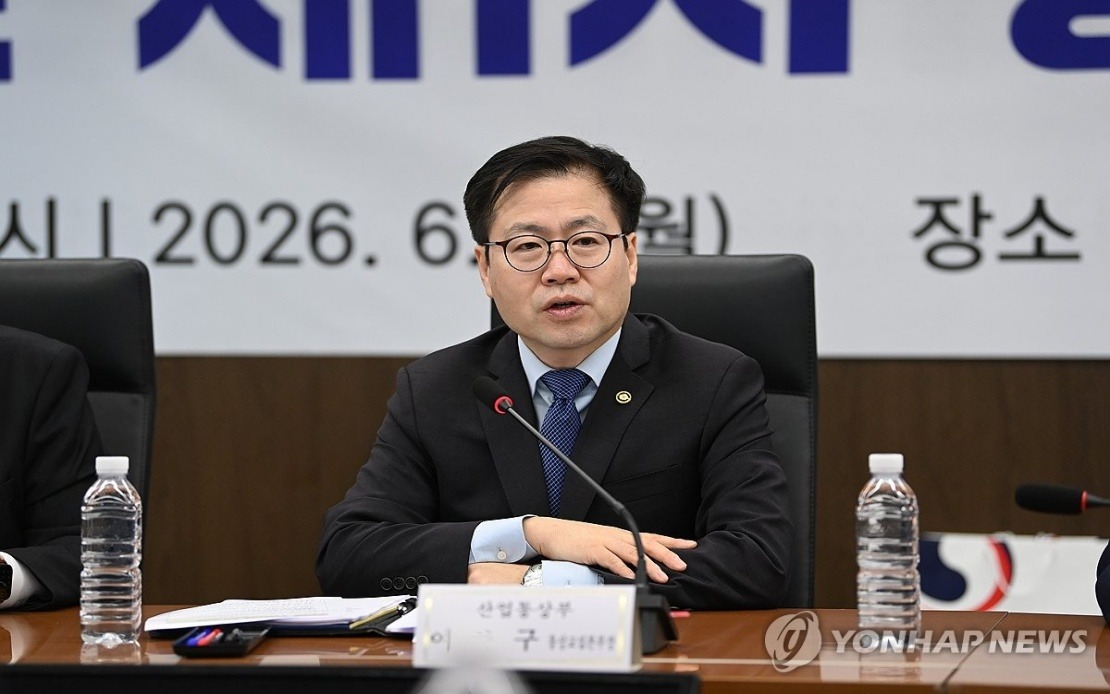
South Korea's chief trade negotiator has been removed from his position, the country's Ministry of Personnel Management announced on Friday, marking a significant personnel shift at a critical juncture in Seoul's fraught relationship with Washington over trade matters. Yeo Han-koo, who held the influential post overseeing negotiations with the United States, was dismissed without immediate public clarification regarding the underlying rationale. The timing of the move has raised questions across Seoul's government and business sectors, particularly given the mounting pressures that South Korea faces from American trade policy.
The South Korean government swiftly moved to distance the dismissal from ongoing tariff disputes, with officials insisting that Yeo's removal bore no connection to the contentious negotiations between Seoul and Washington. However, this public distancing appears designed to manage political perceptions rather than address underlying concerns about the country's trade strategy. Yeo himself responded to speculation about personal misconduct by categorically denying such claims and suggesting he might pursue legal remedies against what he characterized as false reporting. The defensive posture suggests that whatever circumstances surrounded his departure, they remain politically sensitive and potentially damaging to the administration's credibility.
The dismissal arrives at an exceptionally delicate moment for South Korea's bilateral trade relations with its most powerful ally. Seoul currently faces mounting American demands to accelerate and expand its investment commitments under an existing tariff agreement, while simultaneously managing a separate dispute concerning penalties levied against Coupang, the American e-commerce platform, over violations related to personal data protection. These overlapping issues highlight the complexity of managing trade relations when political and regulatory matters intersect, leaving little room for miscalculation or perceived weakness.
President Donald Trump's recent actions have substantially escalated the pressure on Seoul. On Thursday, just one day before Yeo's dismissal became public, Trump signed a proclamation implementing new tariffs targeting drones and related components. Most significantly for South Korea, this action included a 15 percent tariff on imports from the country, directly affecting one of Seoul's emerging technological sectors. This represents a tangible manifestation of the broader tariff threats that have characterized recent US trade policy, moving from rhetorical warnings to concrete economic measures that directly impact Korean manufacturers and exporters.
Yeo's background and previous experience underscored his significance to Seoul's trade strategy. He had previously held the position of trade minister during the administration of Moon Jae-in, giving him established relationships and institutional knowledge regarding bilateral negotiations. His reappointment following Lee Jae Myung's assumption of power in May 2025 suggested continuity in approach despite the change in administration. This experienced hand was deemed necessary precisely because negotiations with the Trump administration had proven particularly challenging and unpredictable, requiring someone with historical perspective on US trade dynamics.
Since his reappointment, Yeo had assumed central responsibility for managing South Korea's responses to multiple American trade initiatives. His portfolio encompassed not merely tariff negotiations but the broader architecture of Seoul's economic engagement with Washington, including the delicate task of demonstrating investment commitments that would satisfy American demands while remaining financially feasible for South Korean businesses. The complexity of these negotiations should not be underestimated; they involve competing domestic political pressures, the interests of multiple industrial sectors, and the need to maintain broader strategic alignment with the United States despite trade disagreements.
For Southeast Asian observers, South Korea's predicament offers instructive lessons regarding the challenges of managing trade relations with an unpredictable American administration. Malaysia, Vietnam, Thailand, and Indonesia all face similar pressures regarding tariffs, investment requirements, and regulatory compliance with American standards. The rapid dismissal of an experienced negotiator, whether connected to tariff discussions or not, signals that Seoul's government perceives the situation as sufficiently serious to warrant personnel changes at senior levels. This suggests the administration believes fresh approaches or perspectives may be necessary to navigate the current environment.
The episode also illustrates the vulnerability of mid-sized economies dependent on sustained market access to the United States. South Korea, despite its advanced manufacturing capabilities and technological sophistication, remains vulnerable to American tariff threats that can affect specific sectors disproportionately. The drone and components tariff exemplifies this risk; a single proclamation can suddenly impose meaningful costs on Korean exporters in targeted industries, with limited avenues for immediate response beyond diplomatic negotiation.
The situation underscores broader questions about the sustainability and predictability of the current international trade system. South Korea, like most Asian economies, has built its prosperity on relatively open access to American markets. The shift toward strategic tariffs and conditionality, where trade benefits become tied to investment commitments or regulatory alignment, represents a fundamental change in the terms of engagement. Negotiators in Seoul, as well as throughout Southeast Asia, must now manage not just traditional trade negotiations but navigate increasingly politicized and unpredictable American trade policy.
Yeo's departure, whatever its ultimate cause, removes from public view one of Seoul's most experienced voices in these negotiations. His successor will inherit an extraordinarily challenging portfolio at a moment when American tariff threats have moved from theoretical to actual, and when the bar for demonstrating satisfactory progress to the Trump administration appears to rise continuously. The question facing Seoul is whether personnel changes alone can produce the diplomatic breakthroughs necessary to reduce American tariff pressure, or whether structural adjustments to South Korean economic strategy will prove necessary.
Beyond the immediate bilateral context, South Korea's experience carries implications for the broader Asian trade environment. If Seoul, with its advanced economy and strategic importance to the United States, proves unable to substantially reduce tariff pressure through negotiation, this suggests that smaller and less strategically situated Asian economies may face even greater constraints. The coming months will reveal whether South Korea's leadership transition produces tangible results in negotiations with Washington, or whether the country must adapt its economic strategy to accommodate a more protectionist American trade posture.

